
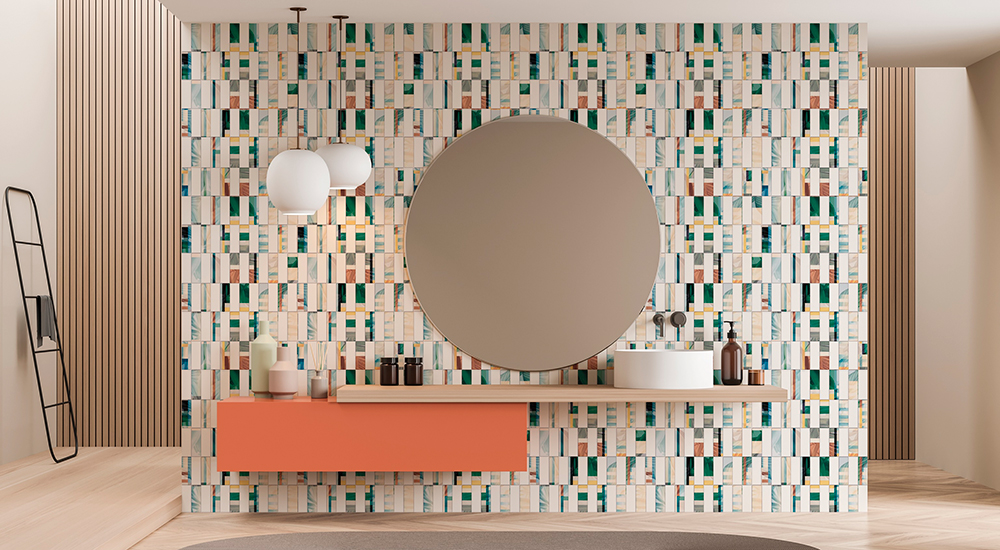
As the global design industry looks toward what comes next, ceramic tile is taking on an increasingly expansive role in the built environment, shaped by materiality, craftsmanship and technology. At Cersaie 2026, the International Exhibition of Ceramic Tile and Bathroom Furnishings, more than 70 ceramic tile manufacturers representing the Spanish sector gathered in Bologna, Italy, to introduce new collections and explore the design forces shaping the year ahead.
Spain’s presence reflected an industry balancing advanced production with a renewed appreciation for craftsmanship, tactile expression and material authenticity. As the second-largest exhibiting group after the host country, Spanish manufacturers showcased how technology can expand the creative potential of ceramic through new surfaces, formats and applications.
From warmer palettes and expressive textures to larger formats and contemporary interpretations of historic materials, the latest collections from exhibiting Spanish brands reveal a design language that is both rooted and forward-looking. The following trends from Tile of Spain highlight the ideas and innovations emerging from Spain’s ceramic industry and shaping design for 2027.
Warmed-up Neutrals

Warm, earthy hues will shape the foundation of ceramic palettes in 2027, replacing the cool whites and grays that once defined contemporary interiors. Spanish manufacturers are embracing deep creams, chestnut browns and ruddy ochres, which bring a sense of comfort and depth, while softened whites, grays and blacks provide layered accents rather than stark contrast. The movement toward warmer color is anything but subdued. Rich forest greens and ocean blues add saturated moments to earth-toned schemes, creating spaces that feel grounded, expressive and deeply inviting.
Design Through the Ages
Nostalgia and craftsmanship are inspiring a renewed interest in the design genres of the past. Mid-century modernism, seventies-inspired forms, Art Deco geometry and Art Nouveau curves are being reinterpreted through a contemporary lens. At the same time, handmade aesthetics continue to gain momentum, with glazed ceramics, Mediterranean finishes and Victorian-inspired subway tile bringing an artisanal character to modern spaces. Natural material references are also evolving, from cross-cut travertine and veined limestone to raw-finish wood looks influenced by Scandinavian and Japanese design.
Supersized Formats
Large-format tile continues its rapid expansion across residential and commercial applications, with 24-by-48-in. formats increasingly replacing traditional 12-by-24-in. proportions. Gauged porcelain slabs and panels are also gaining traction as fabrication and installation expertise becomes more widespread, opening new possibilities for floors, walls, facades and countertops. At the opposite end of the spectrum, small-format tile remains an enduring favorite, with the resurgence of Zellige-inspired aesthetics driving renewed interest in square formats and artisanal compositions.
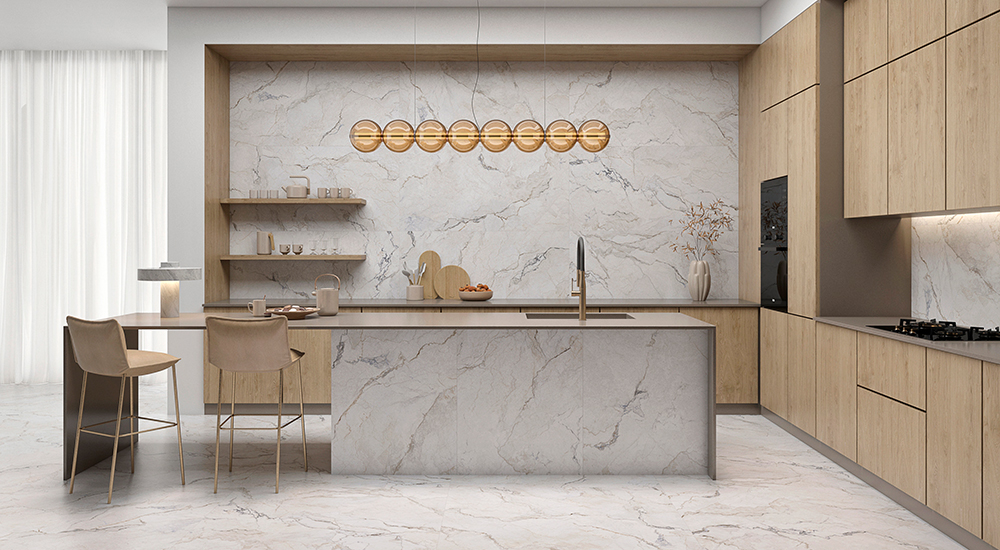
Emotion Ceramics, Bellagio
The Tactile Surface
Surface is becoming an increasingly important part of the sensory experience of ceramic tile. High-gloss finishes are giving way to matte, honed and satin surfaces that create a softer, more nuanced visual language while inviting touch. Soft-touch glazes and three-dimensional reliefs, including fluting, carving and subtle rippling, transform tile from a flat finish into a multisensory architectural element. Advances in digital technology are also allowing surface texture and graphic detail to work in harmony, creating wood and stone looks where the visual pattern and physical texture align with remarkable precision. On floors, micro-textured surfaces add another layer of performance by enhancing slip resistance without compromising design
Soft Metallics
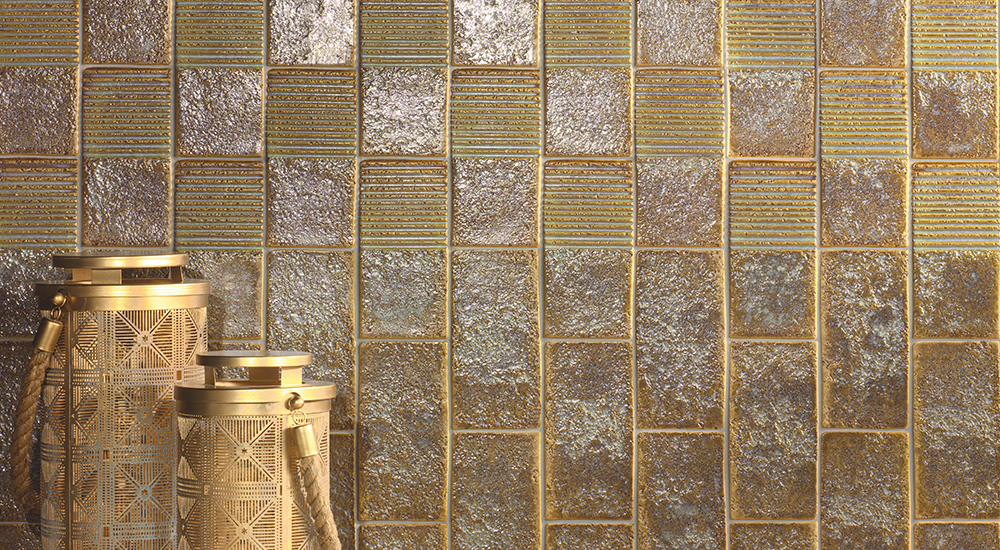
Natucer, Biscuit
As ceramic palettes become warmer, so too do the metals that accompany them. Burnished and brushed golds and brass are emerging as preferred accents over cooler finishes such as chrome and brushed nickel, appearing across plumbing, lighting and furniture. Spanish ceramics are echoing this shift through subtle golden details, from warm veining in marble looks to metallic chips in terrazzo and golden grains in wood-inspired designs. Together, these complementary materials create a cohesive visual language, allowing ceramic surfaces and metal accents to reinforce one another throughout a space.