Sustainability is now a core consideration in kitchen and bath design, but many clients still hesitate when eco-friendly design options feel costly, complicated or aesthetically limiting. The opportunity for designers is not simply to specify greener products, but to clearly communicate their value: long-term performance, healthier interiors, lower resource use and design integrity. Gaining client buy-in depends on connecting sustainability to the priorities clients already care about.
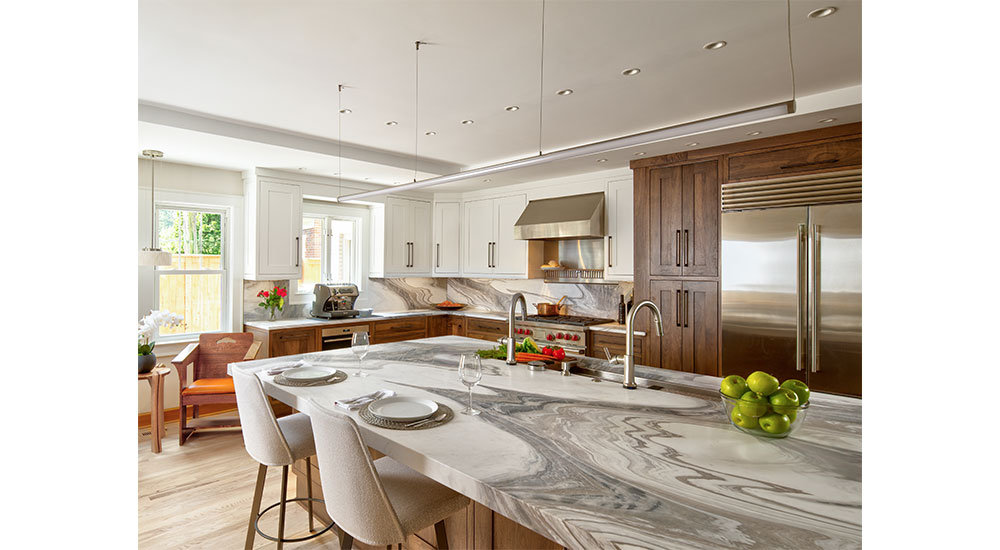
Above photo: This kitchen designed by Adam Gibson features locally made walnut cabinetry with zero-VOC adhesives and finishes, dimmable light fixtures, an infusion of natural light so artificial lighting is only needed at night and finished-in-place flooring with zero-VOC finishes. Photo credit: Adam Gibson Photography
The First Sensible Steps
Start by making sustainability personal and practical. In kitchen renovations, frame energy-efficient appliances around lower utility bills and long-term value, not just reduced carbon impact. In bathrooms, present low-flow fixtures and dual-flush toilets as performance-driven upgrades that conserve water without compromise. When clients see sustainability as a smart investment rather than a moral obligation, buy-in becomes much easier.
Health and wellness are equally persuasive. Many homeowners care deeply about indoor air quality and the materials their families live with every day. Low-VOC finishes, formaldehyde-free cabinetry, reclaimed wood, bamboo and recycled glass can be presented not only as sustainable choices but as healthier, design-conscious selections that support everyday well-being.

Aesthetics remain essential. Many clients still assume sustainable design means sacrificing style, so visual proof matters. Recycled glass tile, reclaimed wood and sustainable concrete alternatives can deliver character, warmth and sophistication while supporting environmental goals. A strong portfolio of polished, eco-conscious projects helps clients see sustainability as part of the design vision, not a compromise.
Helping Homeowners Grasp the Concept and the Cost
Education is key to building confidence. Many clients are skeptical simply because they do not understand what makes a product sustainable. Explain certifications such as Energy Star, WaterSense and FSC in plain terms and connect them to everyday performance. Whether discussing insulation, induction cooking or water-saving fixtures, clear explanations help clients feel informed rather than pressured.
Addressing cost concerns head-on builds trust and credibility. Rather than avoiding price discussions, present cost-benefit analyses that account for long-term value. While sustainable materials or systems may carry higher initial costs, many offer superior durability, lower maintenance requirements and significant operational savings.
Solar panels for new construction, for example, represent a substantial investment but can dramatically reduce or eliminate electricity bills for decades. Energy-efficient windows might cost more than standard options, but they prevent heat loss in winter and heat gain in summer, reducing HVAC strain and costs. Presenting financing options, available rebates and tax incentives further demonstrates that eco-friendly choices are more accessible than clients might assume.
Setting Standards
Finally, connect sustainable choices to the client’s larger values. Many homeowners want their homes to reflect care for the environment, responsible resource use and long-term stewardship. For clients planning to age in place or pass a home to the next generation, sustainable design can also represent durability, timelessness and lasting value.
Client buy-in starts with meeting homeowners where they are: budget, aesthetics, health, performance and personal values. When sustainability is presented as an enhancement rather than a sacrifice, hesitation often turns into enthusiasm. Done well, an eco-friendly renovation is not only better for the planet. It creates healthier, more efficient, more enduring homes that clients can feel good about for years to come.