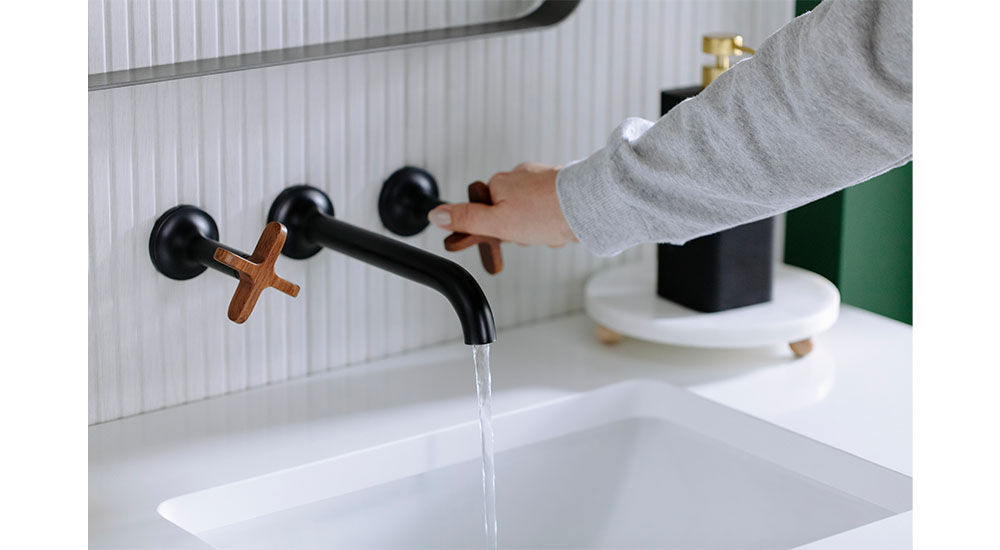
After years of bold statements and rapidly changing plumbing trends, I’m seeing homeowners return to traditional details embracing furniture-style vanities and unlacquered brass to classic cabinetry and natural stone. They also expect the convenience of modern functionality and technology. Looking toward 2027, the word I keep coming back to is softness.
Homeowners are bringing traditional and modern together with softer finishes, familiar silhouettes and thoughtful technology integrations to create spaces that feel collected rather than overly designed. They are pairing furniture-style vanities, unlacquered brass and natural stone with conveniences, including touchless faucets and integrated water systems. It reminds me of Diane Keaton’s style: effortlessly classic, a little unexpected and somehow always relevant.
Technology Meets Timeless
Think about how often the kitchen faucet is used compared with almost anything else in the room. We spend hours selecting the perfect range or refrigerator, yet the kitchen faucet is arguably one of the hardest-working fixtures in the home. It handles everything from filling stockpots and rinsing vegetables to cleaning up after dinner.
That’s where I see technology earning its place. Touchless operation makes sense when your hands are covered in flour or you’re handling raw ingredients. Homeowners can appreciate that these features are available in a wide variety of styles and finishes so there’s something for everyone. Matching sink top switches and accessories help keep the installation cohesive.

Function Becomes a Design Feature
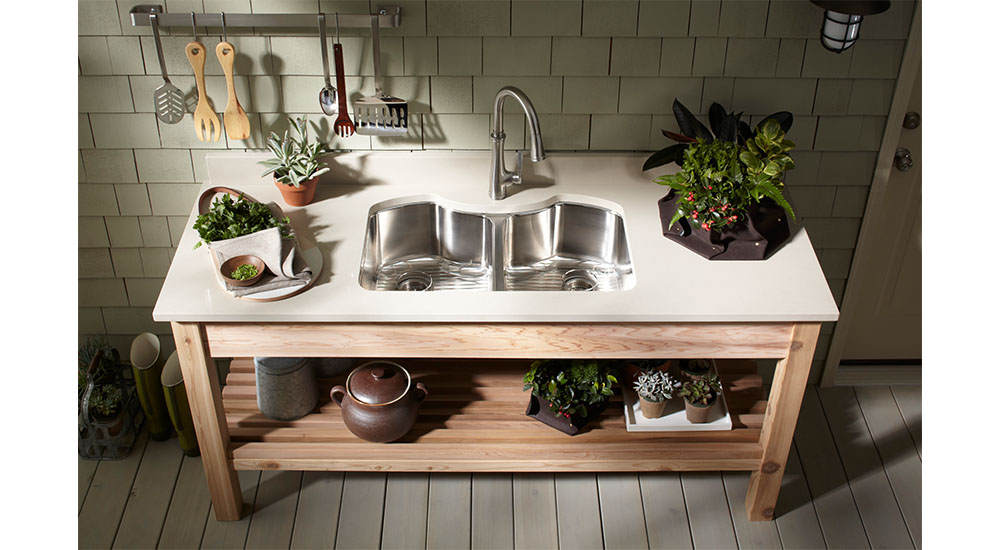
Photo: Courtesy Ferguson Home
A 60-inch sink is a significant commitment. It affects the cabinetry below, the counter space on either side and often the way an entire kitchen functions.
Yet oversized 48- and 60-inch sinks, trough configurations and workstation designs are attracting attention for good reason. A workstation sink with a cutting board, colander and drying rack gives homeowners more ways to use the same stretch of counter. Food preparation, cleanup and entertaining all influence how people select and position these fixtures.
Materials deserve equal attention. Fireclay, cast iron, granite composite and stainless steel remain popular, with homeowners weighing appearance, durability and maintenance. Black and brown composite sinks also give homeowners alternatives to the white basins and stainless-steel finishes we’ve seen for years.
Personally, I’m love fireclay with polished nickel. The pairing has enough detail for a traditional kitchen or a more contemporary setting.
A More Considered Countertop
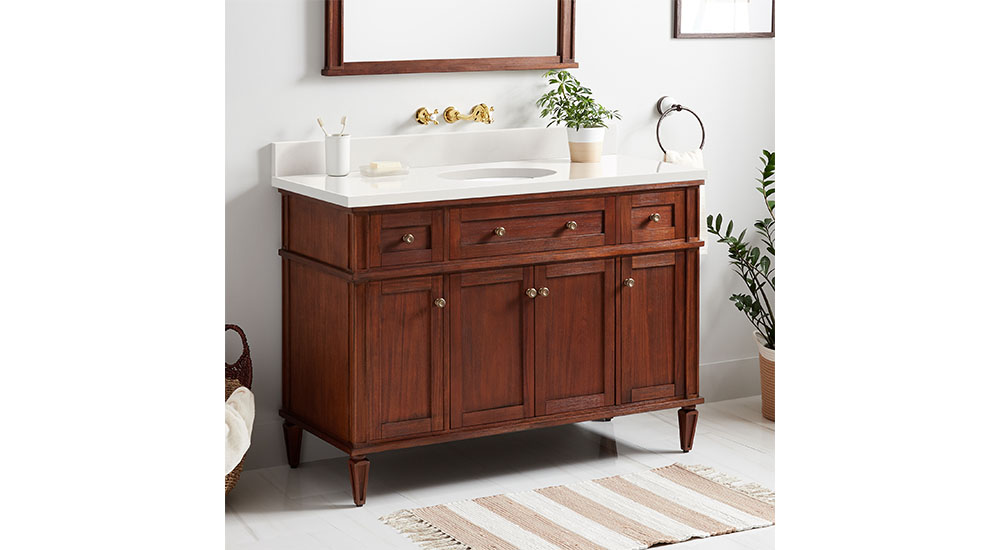
Photo: Courtesy Ferguson Home
When someone chooses a beautiful slab of marble, their first instinct is not to cut five holes in it.
That’s the reason I’m interested in how faucets, dispensers and controls are positioned. Chilled and sparking water systems, for example, are increasingly available through integrated faucets or separate dispensers located away from primary work surfaces. Homeowners are becoming more selective about countertop cutouts, favoring uninterrupted surfaces that showcase the materials themselves.
In bathrooms, wall-mounted faucets free up space around the basin. Integrated sinks reduce visible seams, and carefully positioned controls leave more of the stone exposed.
Warmth, Character and Living Finishes
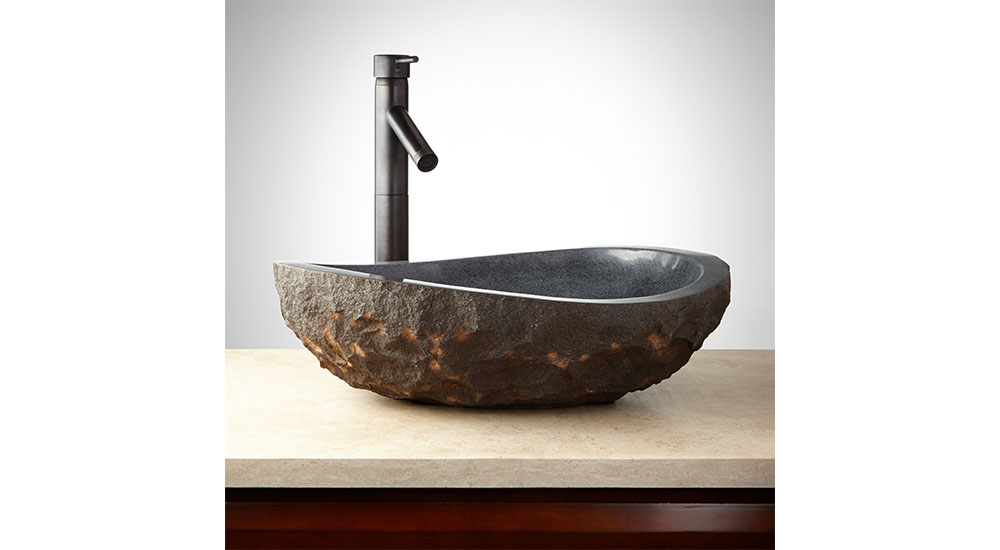
Photo: Courtesy Ferguson Home
Dare I say we’re seeing some familiar trends from the early 2000s making their way back into design? Traditional and colonial influences are returning to design conversations, bringing renewed interest in pewter, wrought iron and bronze undertones.
What I find appeals about unlacquered brass and certain bronze finishes is that home has to be comfortable with change. The areas around faucet handles darken and patina with handling.
I’d also rather see a bronze faucet paired with pewter cabinet hardware, rather than trying to match every metal in the room. French-inspired ranges have brought brass into kitchens alongside stainless steel appliances. There’s room to repeat that brass elsewhere, or to let the range stand on its own.
Familiar Forms, New Applications
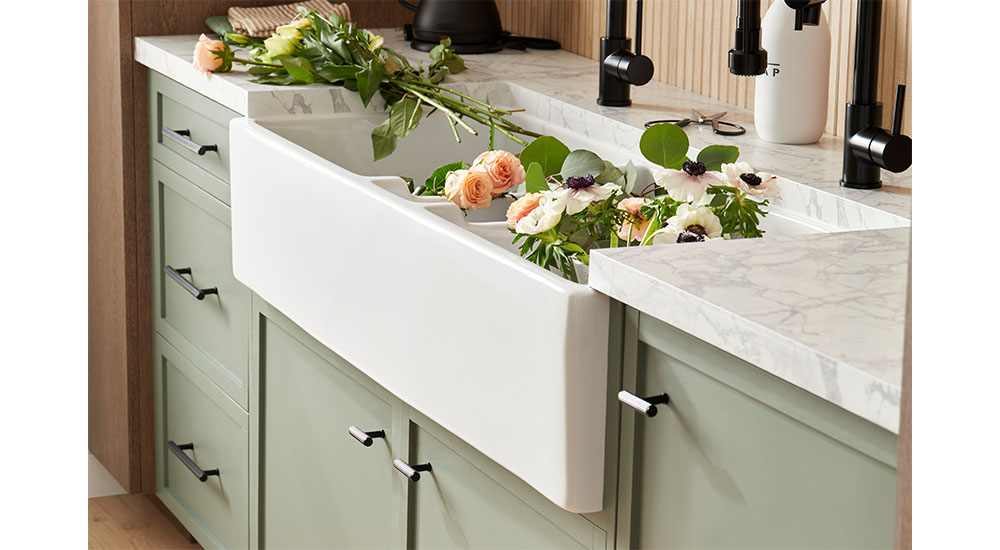
Photo: Courtesy Ferguson Home
Why should an apron-front sink be limited to the kitchen? In a garden room, its deep basin provides space for tools, pots and arranging flowers. An oversized sink might be equally useful in a secondary bathroom where several family member need room to wash up.
Outdoor kitchens present another opportunity. Marine-grade stainless faucets allow outdoor kitchens to carry the same design aesthetic as indoor spaces while offering materials suited to various weather conditions.
When we stop treating familiar fixtures as belonging to only one room, creativity emerges. Familiar forms become opportunities for more personalized solutions.
For me, the most exciting part of looking ahead to the plumbing trends of 2027 is that design versatility. A finish doesn’t need to remain pristine and everything doesn’t have to match. The most beautiful spaces have consistently felt personal, functional and collected. And if that’s the direction design is taking, I think we’re moving in exactly the right direction.
—Caroline Danielson, Senior Director of Showrooms, Ferguson Home