
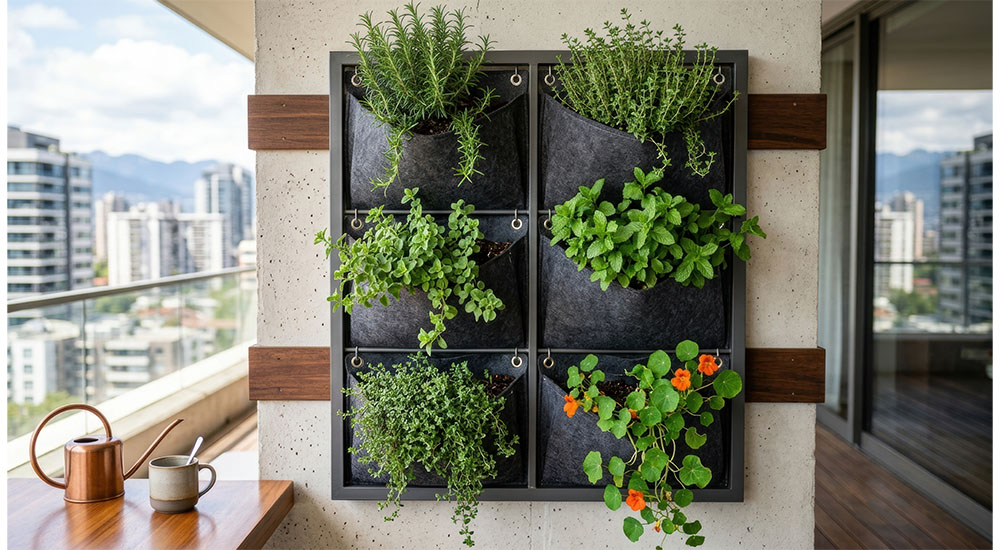
The design space is seeing a broader move toward houseplants in kitchen and bath spaces, called houseplant maximalism. In a high-end kitchen, the strongest brief is narrow: a living herb wall-garden conveniently located near the prep area, selected to suit the room’s environmental conditions.
To keep plants healthy, a living herb wall needs light, drainage, access, heat separation and a maintenance plan before choosing the plants to include. Here’s a closer look at these points.
Proximity to the Range Hood
The wall above and beside a range hood is exposed to heat, grease, dry moving air and cleaning residue. Conditions can shift within inches depending on windows, undercabinet lighting, ducting and make-up air.
Do not install edible plants in the hood’s exhaust path or grease plume. Parsley and chives have soft leaves that mark when they collect oil. Rosemary, thyme and oregano tolerate drier air, but still need steady light and separation from hot airflow.

A side wall, shelf bay or narrow vertical frame near the prep zone is usually the better location. The client can cut herbs while cooking, and the plants stay out of the dirtiest air column.
Millwork, Water and Herb Wall Access
Cabinetry and millwork teams should confirm five details with the designer before fabrication and installation:
● Access to irrigation lines, reservoirs or removable planters
● Drainage paths that avoid wood, stone seams and electrical outlets
● Grow light placement before ceiling and cabinet lighting plans close
● Leaf-cleaning access near cooking areas
● Clearance for plant removal without disturbing surrounding finishes
Tight planter pockets are risky when they cannot be serviced. A removable planter, lined niche or rail system is often easier to maintain than a built-in pocket wall behind finished millwork.
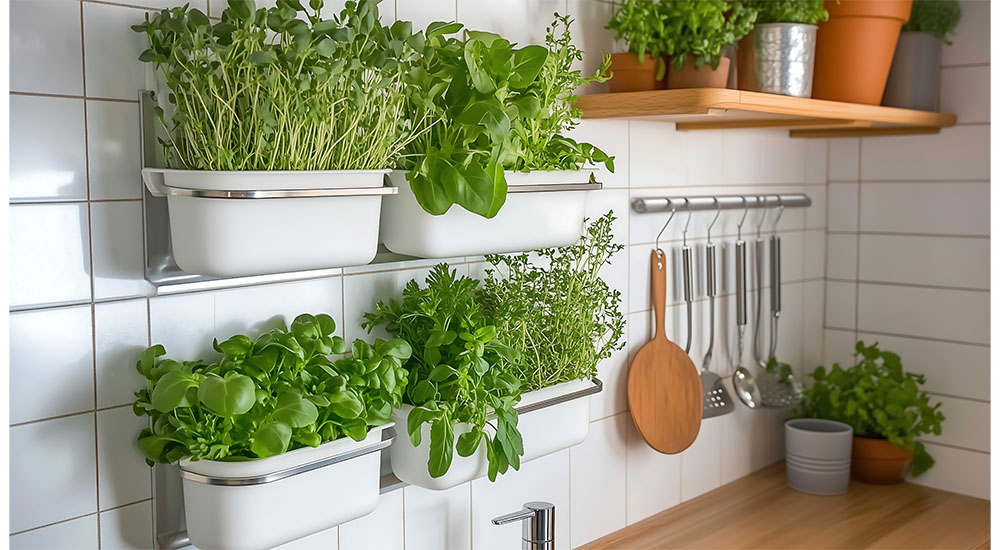
Image: AdobeStock_Hanna Bernaz
Plant Selection by Light and Use
Parsley, mint, chives, oregano and thyme are useful starting points when the kitchen has strong natural light or dedicated grow lighting. Rosemary, sage, lemon balm, marjoram, chervil and bay laurel need closer control of light and watering.
Placement should follow how the plants will be cut. Parsley, chives and mint belong in the easiest pockets to reach. Woody herbs can sit higher or farther from the main prep surface if they receive enough light and dry between waterings.
Do not sell the herb wall to clients as being permanently full of lush greenery. An edible wall gets harvested, so bare stems, uneven growth and plant swaps should be expected.
Garden Review Before Final Drawings
A plant design team should review the kitchen before elevations are locked in. Tula House’s interior plant design work covers design, installation and maintenance planning, which matters when planting becomes part of the construction package.
That review should test the wall against the room, not the concept image. The team can flag late grow-light placement, drainage without a safe endpoint or a plant list chosen before anyone has checked the levels of natural light.
Care Assignment at Handoff
The handoff document should assign each recurring task to a person or service team. Watering, pruning, leaf cleaning, pest checks and plant replacement should not sit in a vague owner-responsibility bucket.
This is critical to ensuring the herb wall design stays intact after the first season. A living wall that can be reached, cleaned and replanted has a better chance of holding its shape after installation.
Herb Wall FAQs
Are herb walls appropriate for every kitchen? No. A kitchen with poor light, limited service access or no appetite for recurring care may be better suited to removable herb pots or a shelf near a window.
Should herbs be grown in soil or hydroponic pockets? Either can work, but the maintenance model changes. Soil-based planters are easier for many homeowners to replace. Hydroponic systems need closer attention to water quality, pump access and nutrient dosing.
What should designers know before specifying grow lights? Confirm location, output, heat, color temperature, controls and replacement access. The fixture should support plant growth without making the counter feel like a greenhouse display.
—Andrew Lemieux is a content strategist for Tula House, a Brooklyn-based plant shop and garden design studio