
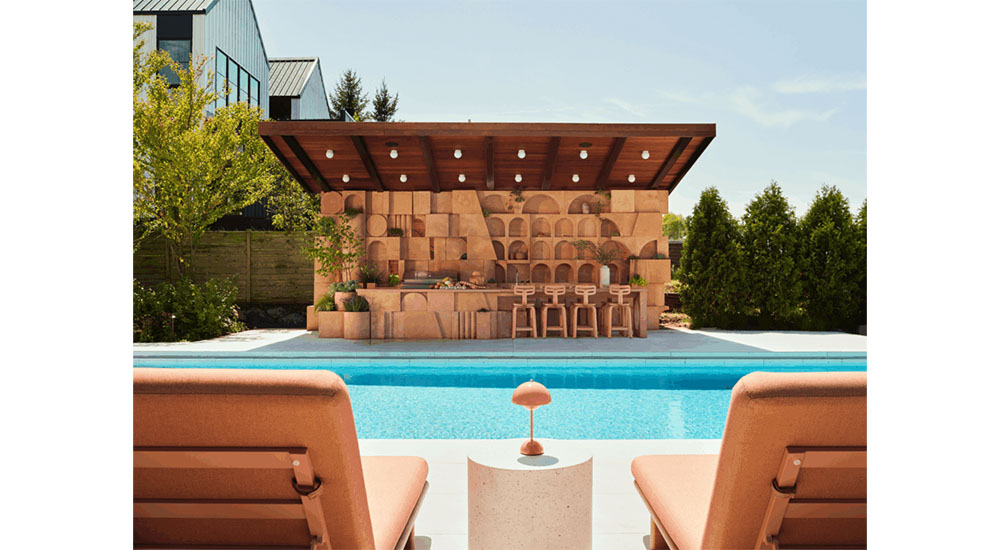
In uncertain times, there is a growing desire – a need, really – for a personal retreat that offers reassurance on both physical and psychological levels. Recently, we’ve witnessed the bathroom playing that role, with spa-worthy accoutrements and therapies galore. Now it’s time to move that experience to outdoor living spaces, where nature can prove its restorative powers.
Above: For Robert Remer, principal of the Brooklyn-based design studio Opiary, biophilic design is about fundamentally reconsidering how humans commune with nature. In this outdoor Spolia Kitchen project, concrete modules are combined into an organic and geometric composition that references the inherent structures of nature. opiary.com
It’s more than a gut feeling. In its latest study on luxury outdoor kitchens, the NKBA confirms that people are increasingly looking to connect with nature for wellness, balance and restoration. By looking for linkages between indoors and outside, designers can make the most of this situation.
“When I’m asked to visit homes for a kitchen remodel, I look for opportunities to create harmony between inside and outdoor entertaining. I do not ask homeowners if they want an outdoor kitchen. In the process of interviews, I find out if they love the outdoors and I bring them possibilities they couldn’t have imagined for their home,” said Nar Bustamante, founder of Nar Design Group in Sacramento, Cal.

Creating Outdoor Rooms
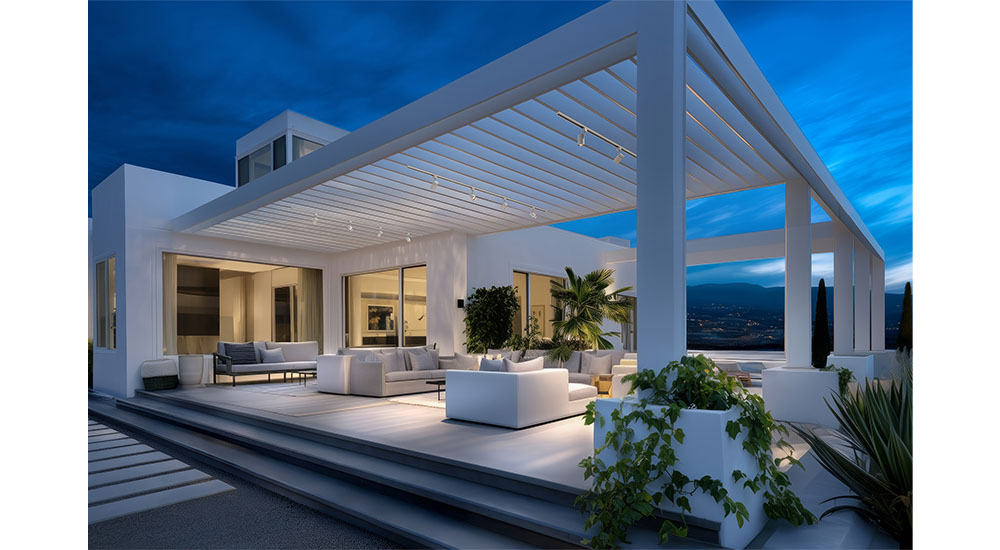
The low-voltage/12-volt Outdoor X Track System from WAC adapts to layouts, spacing and changing design needs. Field cuttable sections and flexible connectors allow lighting to evolve with any outdoor space. wacgroup.com
According to Houzz, homeowners are increasingly approaching their yards as collections of garden rooms – distinct outdoor zones with defined purposes. Instead of one open expanse, landscapes are divided into destinations: dining patio, fire lounge, play lawn, quiet reading nook surrounded by greenery.
Designers can gain the trust of clients by encouraging them to invest in features that create unique experiences, extend usability or deliver daily pleasure and skip anything that requires constant maintenance, energy or cleaning to enjoy.
Making the Connection
Maintaining the continuity between indoors and outdoors becomes a conscious design choice, achieved through materials, proportions and functions.
Consistent flooring materials represent the most effective method for establishing visual connections between indoor and outdoor spaces. Large-format porcelain tiles, polished concrete and natural stone installations can transition smoothly from interior floors to exterior patios, creating expansive, unified surfaces that blur traditional boundaries.
Retractable glass walls and sliding door systems create flexible links between indoor and outdoor spaces, and can help regulate the environment depending on weather conditions.
Coordinating the color palette ensures visual harmony between interior and exterior design elements. Neutral tones with strategic accent colors create cohesive environments that feel intentional and sophisticated rather than disconnected or competing for attention.
Let the Outdoor Environment Guide Your Design
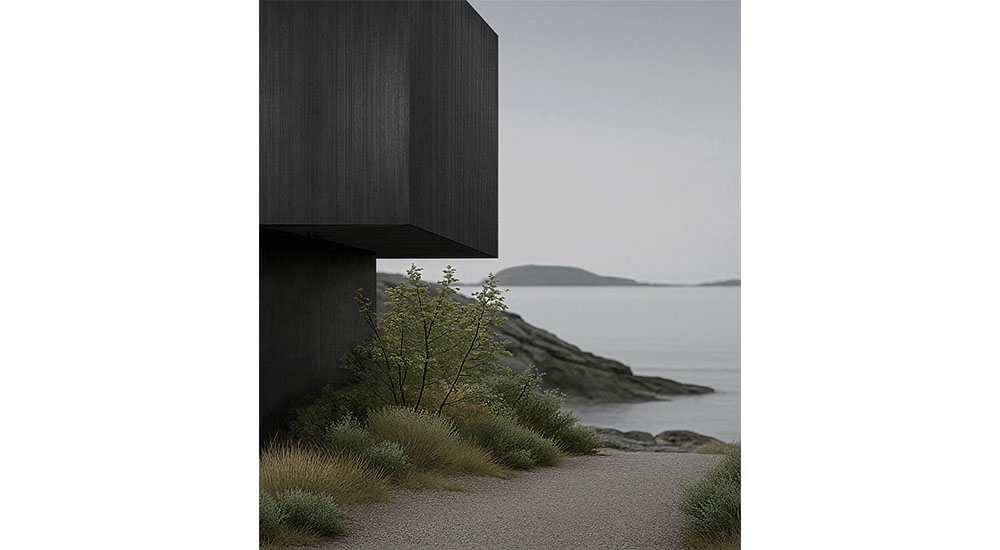
Selecting materials that complement the landscape sets the tone for outdoor living spaces. The color and texture of the Obsidian surfacing by NEOLITH makes it a suitable cladding for this rocky waterside site. neolith.com
Instead of imposing a look, consider the textures, tones, and mood of the outdoor environment. Ask what finish matches the soil, stone or urban palette? How does light move across the yard? What sounds or scents are found in this setting?
When nature (or the city) takes the lead, the result is a space that feels timeless, as if it’s always belonged there.
Cross-Trade Teamwork
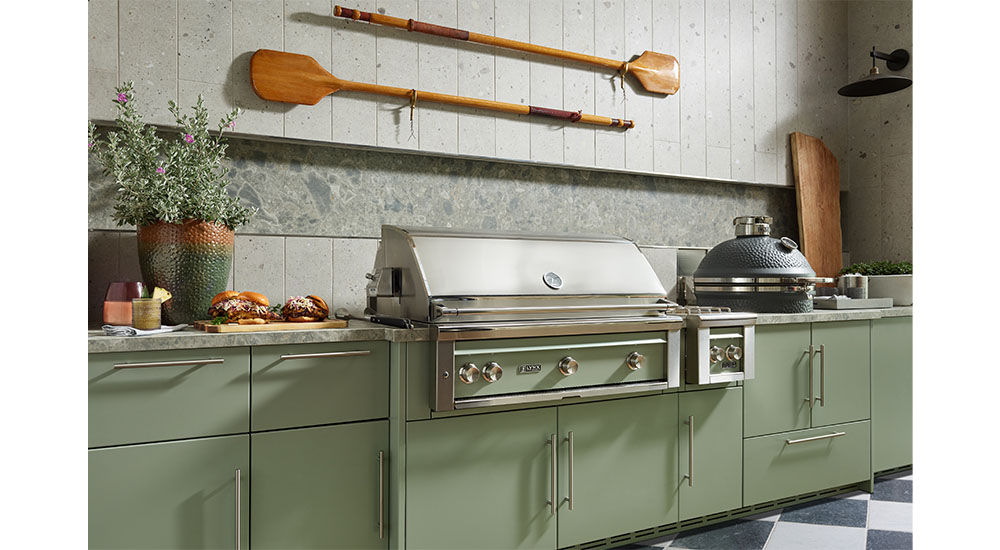
A new collaboration between LYNX outdoor cooking appliances and marine-grade cabinetry producer John Michael Studio delivers a highly customizable foundation for the modern indoor or outdoor kitchen. Photo: Nathan Kirkman Photography lynxgrills.com
Many homeowners have some sense of what goes into a bathroom or kitchen renovation but few understand the amount of work necessary to prep the ground, properly grade, manage water, remove trees or bury conduit.
Educating clients early about the infrastructure necessary for outdoor projects and the cost associated with that infrastructure will help avoid misunderstandings and better set expectations. Recommending best-in-class class materials and equipment that will last and perform in outdoor conditions is important.
Outdoor projects frequently demand contractors from different trades, who, depending on their expertise, may need learn to collaborate and communicate in new ways.
While that can be intimidating, there is an upside to it. Elma Gardner, CMKBD, owner of Davis, Ca.-based By Design, said, “Exposure to great landscape designers and engineers gave me great partners for collaboration and reinforcement. Offer your design services in exchange for layout and material selection.”
Taking Health & Wellness Outside
Wellness areas including yoga platforms, meditation spaces and exercise zones extend indoor fitness routines to outdoor environments. Design features that engage the senses are key to these outdoor elements.
Designs for outdoor workout or yoga spaces should include shade structures to ensure users don’t overheat in the sun. Orienting these toward a picturesque, calming view will visually enhance the experience, and the sound of running water can supply an auditory balm. Depending on the size of the site, a small stone fountain or a large, complex water feature can provide the soothing music of a flowing stream.
Professional-grade outdoor flooring provides stable, cushioned surfaces suitable for various healthy activities while withstanding weather exposure and maintaining safety standards. Options include rubber tiles, wood decking, hard-packed gravel or sand. Artificial turf, while soft underfoot, retains heat and is generally not recyclable.
Thermal Comfort in Outdoor Living Spaces
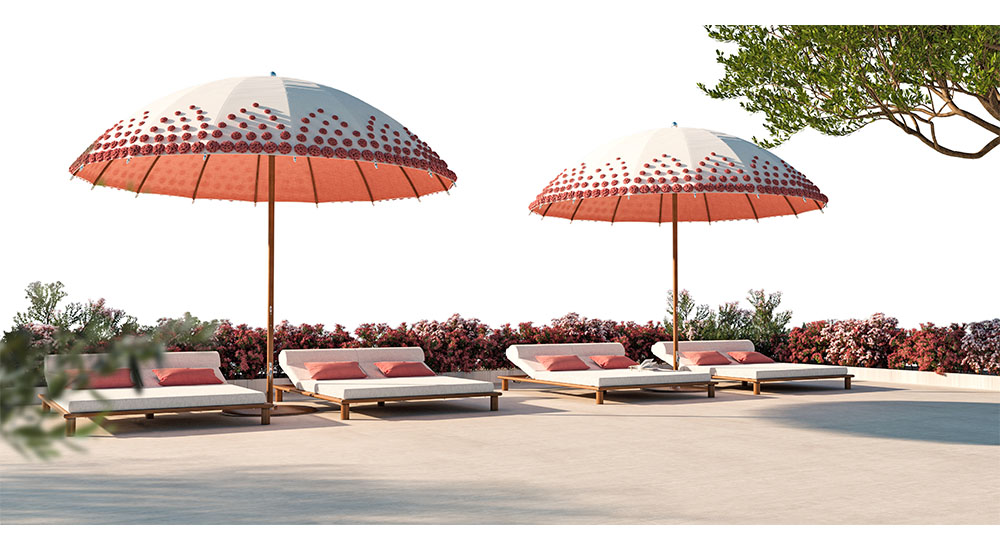
Where permanent structures aren’t feasible, portable shelters, like the Bolero Ombré Blossom umbrellas from TUUCI, can provide both shade and style. tuuci.com
As weather patterns become more extreme, heating and cooling outdoor spaces requires more thoughtful design. Choosing the right outdoor ceiling fan starts with understanding the environment it will live in.
Not all outdoor spaces face the same exposure. Covered porches and screened patios typically need damp-rated fans, designed to handle humidity and occasional moisture. Open patios, pergolas and gazebos require wet-rated fans with sealed motors and protective finishes that can stand up to direct rain, snow and coastal conditions.
Designers should also consider airflow and placement, ensuring the fan works with natural breezes and seating layouts, as well as ceiling height and structure for proper clearance, secure mounting and safe operation.
“When these conditions are considered from the start, an outdoor ceiling fan becomes an essential comfort feature, helping patios and porches stay usable, comfortable and inviting all season long,” said Abbi Ice, senior director of brand and digital marketing for Hunter Fan Company.
When it comes to warming outdoor spaces, different heating technologies and formats extend the outdoor season and maximize clients’ ROI. As with cooling systems, the selection of these systems is largely dependent on conditions specific to the site.
For targeted warmth, electric infrared heaters can be wall-mounted, ceiling-mounted or freestanding. Unlike electric heaters, propane heaters are designed to heat the air. Wood-burning or natural gas fire pits are typically better for setting the ambiance of an outdoor space rather than keeping it warm. Tabletop electric heaters are another option, but their relatively low output limits their effectiveness.
Essential Outdoor Design
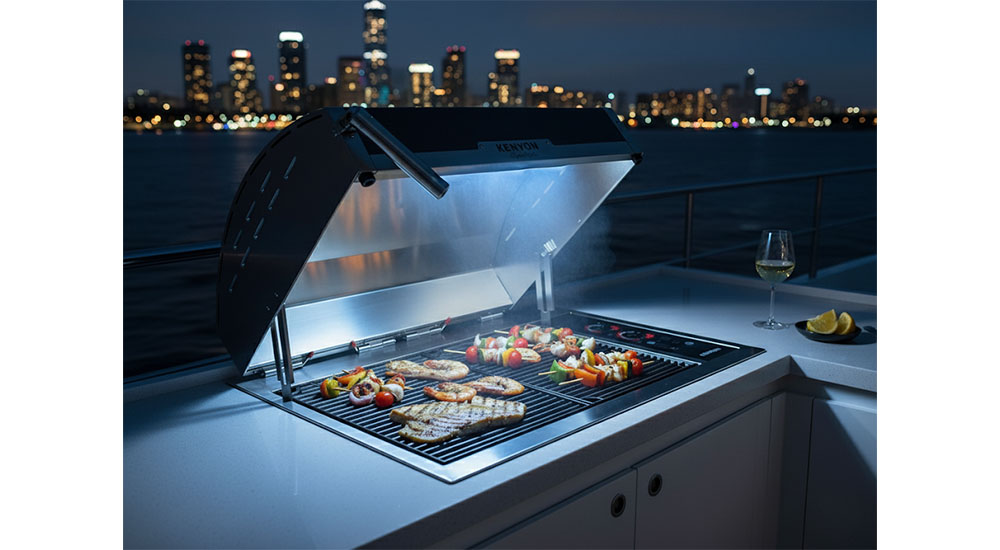
Integrated into the handle of the KENYON Signature Grill, a LED illuminates the cooking surface. It’s a practical feature for locations with limited light. cookwithkenyon.com
Expanding your design vision to the outdoors is no longer just about adding amenities – it’s about creating harmony between the built environment and the natural one. As wellness continues to shape how people want to live, designers have an incredible opportunity to guide that transformation, crafting homes that don’t just look beautiful but feel restorative. The backyard, once considered secondary, has become the next great canvas for innovation in wellness design.