
Step into a well-designed kitchen or bath, and you feel it before you name it. The air seems calmer. The surfaces invite touch. Light settles softly across stone and wood. These rooms are no longer just functional zones. Through using sensory elements, they shape mood, focus and even stress levels in subtle, measurable ways.
Designers have begun paying closer attention to what might be called biophilic touchpoints; small natural elements woven into interiors to create a quiet connection to nature. In kitchens and baths, where daily rituals unfold, these details carry unusual influence.
Indoor Planting Niches That Do More Than Decorate
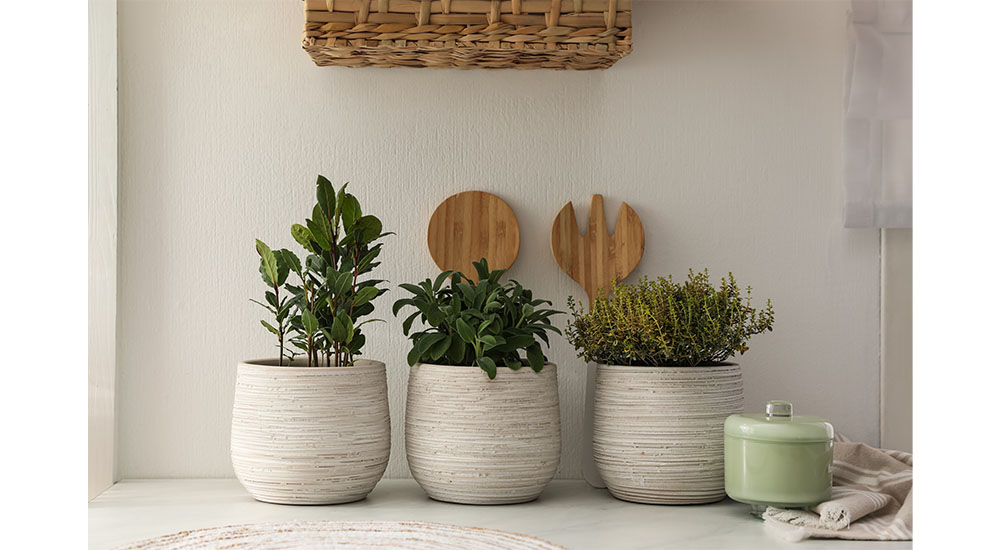
Image: AdobeStock_New Africa
A row of herbs tucked into a recessed wall niche changes the experience of cooking. It introduces fragrance, texture, and a visual rhythm that stainless steel alone cannot provide. Pocket planters, shelf pots, and built-in greenery nooks can serve as common touchpoints. In a kitchen, these features become both practical and restorative.
Bathrooms benefit in a different way. A small planting ledge near a soaking tub softens hard edges and reduces the sterile feel that tile-heavy spaces sometimes develop. Plants have been shown to capture particulates and contribute to oxygenation, but their psychological effect may be just as powerful. Natural elements lower cortisol and mental fatigue. That matters at 6 a.m. when the day has not yet begun, and at 10 p.m. when it needs to end.

Scale matters. A single potted fern on a crowded vanity feels accidental. A proportional niche integrated into millwork feels intentional. It’s a good idea to choose touchpoints proportional to the room and positioning them strategically near activity zones. In kitchens, that may mean near prep areas or breakfast banquettes. In baths, near vanities or windows where light is strongest.
Green Walls and Vertical Life
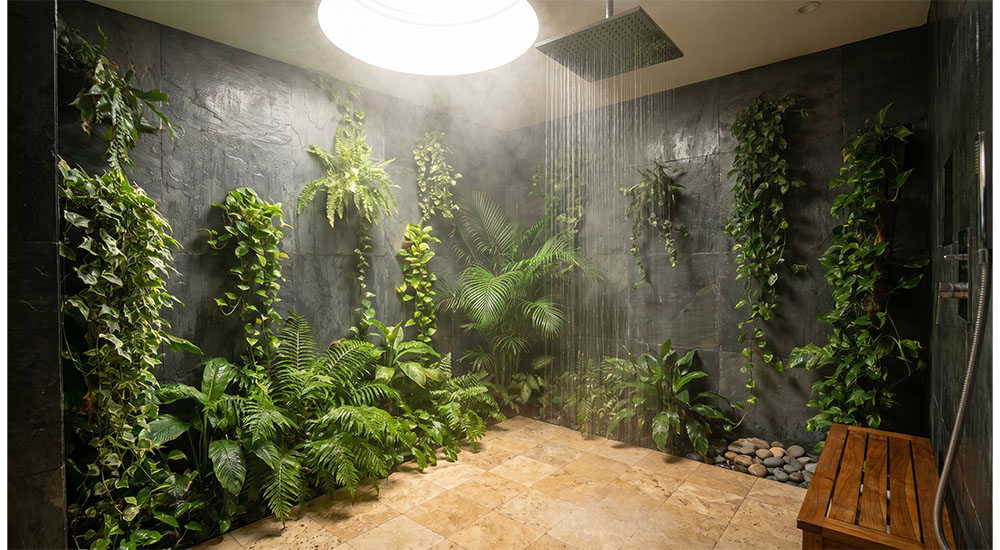
Image: AdobeStock_Katsiaryna
Green walls, whether living panels or preserved moss installations, introduce vertical movement in rooms dominated by cabinetry and tile grids. In kitchens with high ceilings, a narrow vertical garden can break up expanses of painted drywall. In powder rooms, a moss wall becomes a focal point that absorbs sound and diffuses harsh acoustics.
There is a practical side. Vertical greenery consumes less floor space, making it suitable for compact urban kitchens. It can anchor open shelving compositions, offering contrast to glassware and ceramics. Maintenance must be addressed early, including planning for hardy species, watering routines and easy access. Designers who ignore this step risk turning a fresh installation into a neglected afterthought. The most successful green walls feel effortless. Behind the scenes, they are carefully supported.
Natural Textures That Invite Touch
Image: AdobeStock_VICUSCHKA
Texture shapes perception in ways color alone cannot. Wood grains, stone finishes, woven fibers, and bio-based materials all function as tactile touchpoints. In kitchens, rift-sawn oak cabinetry with visible grain introduces warmth against polished quartz. Honed marble counters feel cool under the palm, grounding busy mornings with a sense of solidity.
Bathrooms thrive on material contrast. Pairing smooth porcelain tile with a woven laundry basket or a teak shower bench adds layers that prevent the room from feeling clinical. Stone sinks with subtle veining catch light differently throughout the day, offering quiet variation that keeps the eye engaged.
These materials do more than please the senses. Nature-backed environments encourage focus and a stronger connection to surroundings. In a kitchen where multitasking is routine, that grounding influence supports concentration. In a bath intended for recovery, it promotes calm.
Light, Water and Subtle Movement
Natural light remains one of the most powerful sensory elements. Maximizing daylight, then supplementing with grow lights where needed, supports both plant health and human comfort. Diffused lighting over textured surfaces produces depth rather than glare.
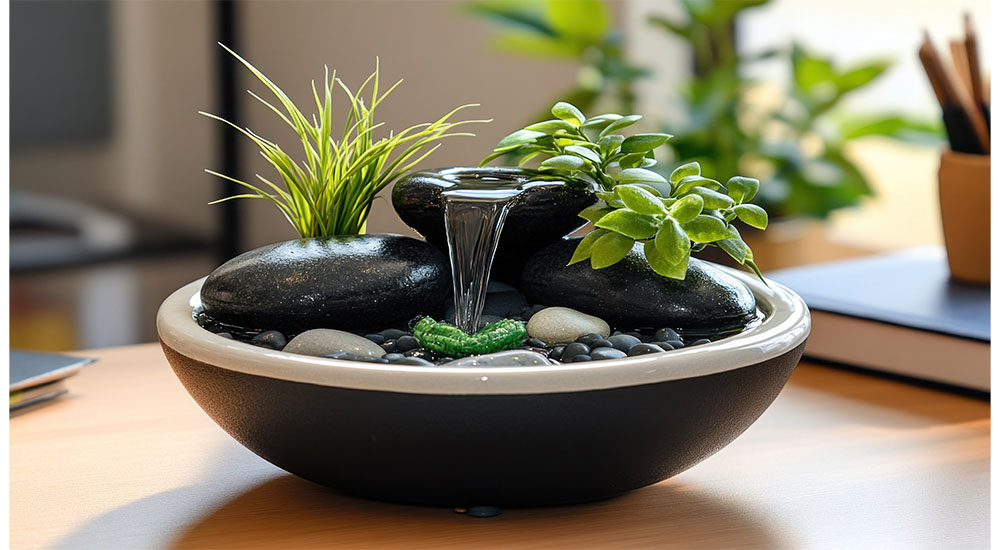
Image: AdobeStock_azi
Water features, such as small fountains or wall cascades, are more common in spa-like bathrooms, yet even a gentle trickle introduces sound that masks household noise. The result is a shift in the atmosphere. Kitchens tend to rely on functional plumbing sounds. Bathrooms can turn water into a sensory asset.
Using Sensory Elements With Restraint
There is a temptation to layer every available natural element into a single project. The result can feel cluttered. Successful sensory design exercises restraint. A moss panel paired with warm wood cabinetry may be enough. A simple herb niche with natural stone backsplash can carry a kitchen’s personality without additional embellishment.
The goal is not a spectacle. It is immersive. Kitchens and baths shape daily life in repeated, intimate ways. By weaving in planting niches, vertical greenery, tactile materials, and thoughtful lighting, designers influence how those routines feel.
A well-placed fern, a textured slab of limestone, a softly lit wood grain cabinet door. Small details. Lasting effect.
—Jeffrey Schwartz is president of JS Homes, a family-owned, Delaware-based home builder. He has more than 45 years of experience in the home building industry.