Collaboration is something that gets talked about often in residential remodeling, but in reality, it can look very different from project to project. For us at Kitchen Design Concepts, a Dallas-based remodeling firm, our process always starts the same way: establishing a strong foundation in layout, function and material selection. From there, we bring in the right partners at the right time to elevate the final result.
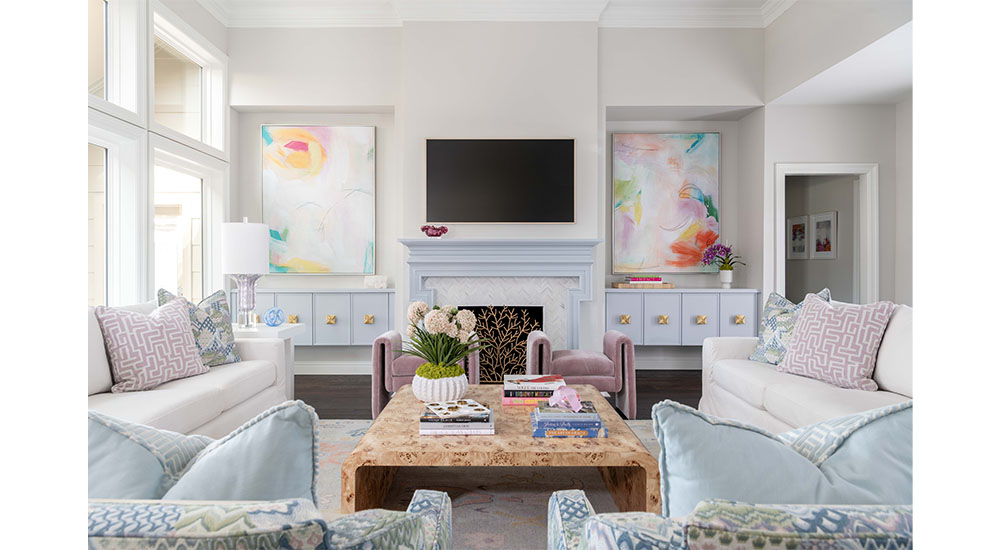
For this project, the KDC team led a full-home remodel, reworking the layout and making key decisions around spatial flow, cabinetry and finishes. While this was our first time working with The Collective, their aesthetic played an important role in shaping the overall design direction. The homeowner was drawn to their pastel color palettes and feminine silhouettes, which influenced material selections throughout the home, from tile and flooring to wallpaper and color.
The connection came together organically through the client. She had visited The Collective’s storefront in Lakewood while gathering inspiration, and their aesthetic immediately resonated with her. I was already familiar with their work, so once we saw how strongly she was drawn to their style, the collaboration felt like a natural fit.
That influence carried through the early design phases, but the actual collaboration came later, during furnishings. We saw an opportunity to bring The Collective in at the beginning of that phase so the vision could carry seamlessly into how the home would ultimately be layered and lived in. Kitchen Design Concepts led all layout, functional and remodeling decisions, while collaborating with The Collective during the furnishings phase to source and develop pieces that aligned with the overall design vision.

Collaboration and Cohesion
“Kitchen Design Concepts brought us in early in the furnishings phase to collaborate on custom pieces, allowing us to create designs that felt fully cohesive with the overall vision,” said Taylor Cunningham, studio designer at The Collective.
Because furnishings are typically introduced after construction is complete, involving The Collective earlier allowed for a more intentional and integrated approach – one where the final layers didn’t feel like an afterthought, but a natural extension of the design.
Communication throughout the project was a mix of in-person meetings, email and text, depending on the phase. During the furnishings stage, I worked closely with Cunningham, along with the art and accessories team, Mollie and Alisa. Taylor and I connected regularly, typically every couple of weeks, to review selections, fabrics and overall direction.
The client and I also visited The Collective’s showroom several times to select artwork and accessories together, while much of the furniture development happened between our teams. I would then bring concepts, materials and pieces back to the client for approval to ensure everything remained aligned with the broader design vision.
The Collective’s role went beyond sourcing. Their team translated the established design direction into bespoke furnishings that feel fully integrated into the home. Custom pieces, including two pairs of Mollie swivel chairs, a Blair side table and a custom bench, were designed specifically for the project, with careful attention to proportion, materiality and how each piece would live within the space.
One of my favorite moments appears in the primary bathroom, where the Blair table is styled beside the soaking tub, turning a functional space into something more layered and personal.
The home itself required a full rethink. Like many homes from the 1980s, the layout had inefficiencies, including a long, narrow primary bathroom with an exposed toilet, a sunken tub, and a small shower. Closets throughout the home were undersized, and spaces like the laundry room lacked functionality.
Because the house sits on a slab foundation, relocating plumbing required careful planning, but it also created an opportunity to rework the layout in a more meaningful way.
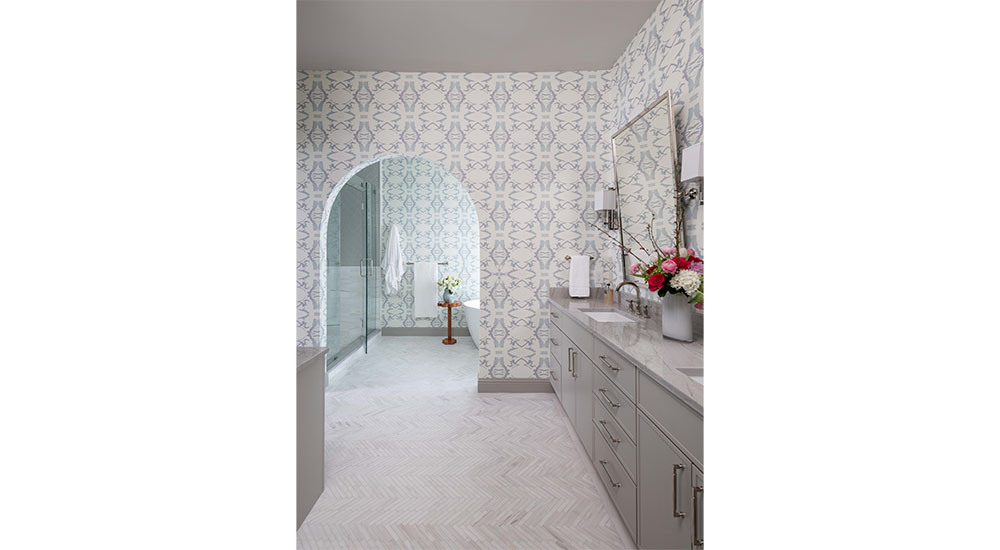
Photo: Kitchen Design Concepts
In the primary bathroom, we introduced a more intentional layout with a freestanding tub and walk-in shower, unified by an arched spa zone that defines the wet area and creates a sense of privacy.
The Jack and Jill bathroom was also reconfigured. By relocating closets, we were able to expand the footprint and incorporate a large walk-in shower with bold patterned tile, improving both function and storage.
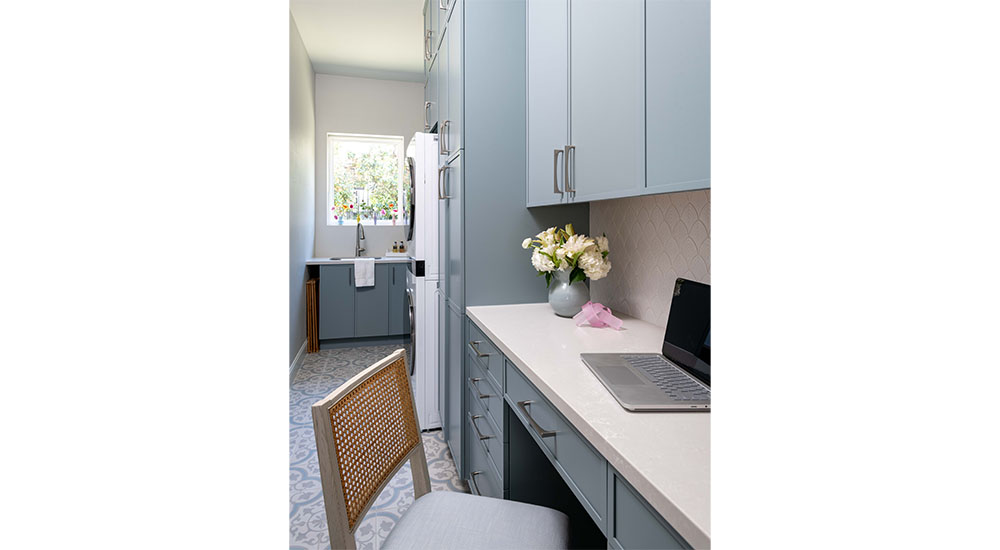
Photo: Kitchen Design Concepts
The laundry room was reimagined as a more versatile space. We reclaimed an awkward closet, added custom cabinetry, and incorporated a built-in desk so the room could work harder for the homeowner day to day.
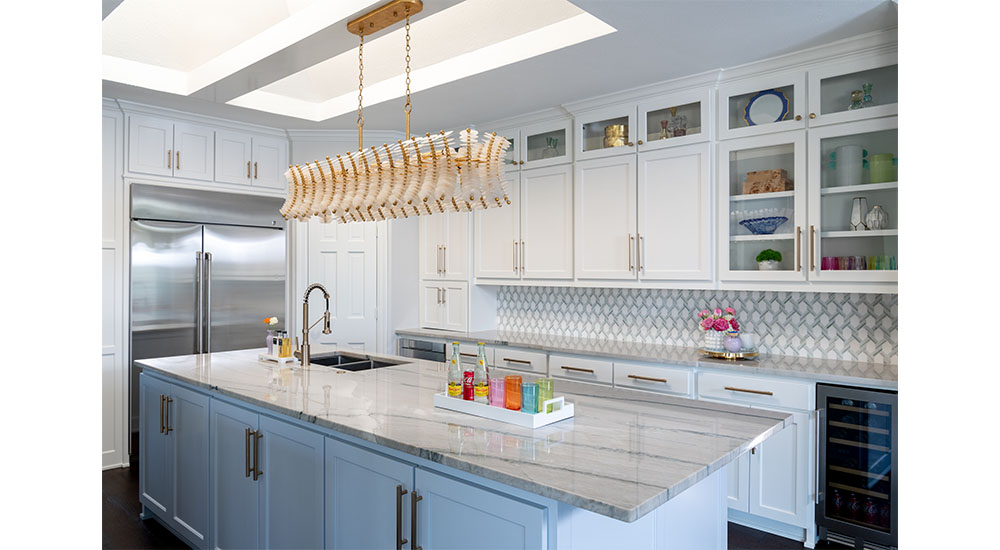
Photo: Kitchen Design Concepts
The kitchen was more of a refinement than a full renovation, but it was important that it felt connected to the rest of the home. Updates to the island, backsplash, and lighting helped align the space with the overall design direction.
Across all spaces, the goal was consistency without repetition. Materials like marble, tile and wallpaper were used throughout in a way that felt intentional and tied back to the larger vision.
Bringing The Collective into the furnishings phase early allowed for a more thoughtful layering of the home. Their pieces enhance key moments throughout the space, reinforcing the color-forward, collected aesthetic without competing with the architectural and design decisions established during the remodel.
Solving Problems Together
There were challenges along the way. Plumbing relocations, timelines, and custom fabrication required flexibility. What made this project successful was a shared focus on the end result, with each team contributing at the right moment in the process.
When challenges arose, whether related to lead times, delivery delays, pricing changes or fabrication and installation, Taylor and I worked closely together to resolve them directly. We would align on solutions between our teams first, then communicate clear updates and next steps to the client.
Throughout the process, our team remained responsible for the overall project and client experience, ensuring communication stayed centralized and seamless.
“Working peer-to-peer allows for a thoughtful design dialogue, especially when each team brings a clear perspective to the table,” said Cunningham.
For us, that is what collaboration really means. Kitchens and bathrooms are some of the most functional spaces in a home, but they are also part of a bigger picture. When the foundation is thoughtfully designed and the final layers are brought in with intention, the result feels complete, both visually and in how the home functions day to day.
—Lane Taylor is senior designer at Kitchen Design Concepts