Anand Krishnan, CEO of Cyncly, spoke with KBB about the latest in AI news.
Q: How would you describe the current moment for AI in the kitchen and bath industry?
For decades, moving from a homeowner’s mood board into a plan you could actually build was a long, often exhausting manual process. Today, purpose-built AI is finally bridging that gap. It’s the biggest jump in productivity we’ve seen since the industry traded in paper and pencils for design software. As we look toward the future, our focus is on industry-specific intelligence designed specifically for the spaces-for-living industry.
The bottom line: we are using AI to take the hard work out of the dream work, making it possible to get from inspiration to a completed design without all the manual heavy lifting in between.

Q: Many designers and retailers have experimented with general AI tools. Where do you see their limitations?
In recent years, many of us – and our customers – have experimented with AI. While general AI tools can draft an email or generate a beautiful image of a kitchen, these tools lack the industry-specific logic required by professionals. The problem is that most design apps think they are painting pictures, not designing kitchens.
Because they don’t understand the built-in engineering rules that go into a real project, they often produce stunning visuals featuring products that don’t exist in your catalog or layouts that are physically impossible to build. At best, you spend hours trying to recreate that “painting” from scratch in your CAD software. At worst, you’re stuck dismantling a customer’s unrealistic expectations.
Q: So what does a true breakthrough in AI look like for this industry?
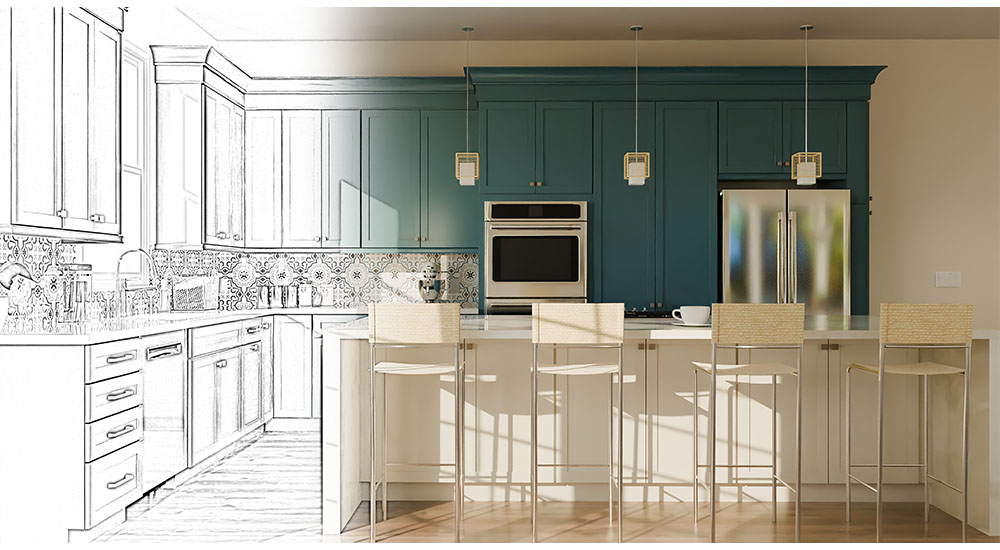
The real breakthrough isn’t a pretty picture, but in AI that connects inspiration to real-world design. It means taking a lifestyle photo and instantly turning it into a 3D layout that is powered by precise catalog data. Every cabinet, handle, and appliance is a real, orderable product that fits the exact dimensions of the room. By bridging the gap between a consumer’s dream and a retailer’s catalog, we save hours of manual work and make sure the design is actually buildable from day one.
Q: There is some concern that AI could replace designers. How do you respond to that?
I understand the anxiety, but the reality is that AI isn’t replacing the designer, but rather empowering them. First, it changes how the relationship starts. With AI, the sale begins at the customer’s kitchen table in their peak moment of inspiration. AI can work 24/7 to pull a homeowner from an initial idea through to designer engagement, delivering more leads that are much better qualified.
Once the project begins, AI acts as a co-pilot, automating tedious tasks such as room measurements via a smartphone scan, or cabinet clearance checks. By taking over these repetitive technical tasks, AI allows designers to focus on what they do best: creative problem-solving, and guiding clients through an emotional purchase. In a market with tight labor and high consumer expectations, this efficiency allows independent businesses to stay competitive.
Q: Beyond the design phase, where else can AI make an impact?
The true power of AI is its ability to connect the entire journey from inspiration to installation. The magic can be easiest to see at the front-end inspiration and design phase; for example, AI-powered assistants and online inspiration tools convert website visits into qualified leads even outside of showroom hours. But we’re also seeing the benefits on the back end, where AI-driven tools are now helping manufacturers and retailers manage the complexities of the supply chain.
When a designer makes a change in the showroom, the price updates instantly and the factory gets a verified list of exactly what to build. This ensures that what the customer sees is exactly what gets delivered.
Q: What does this mean for the future of kitchen and bath professionals?
The mission of the kitchen and bath professional is to make spaces amazing. AI is the most powerful approach we have ever had to achieve that goal. Embracing purpose-built innovation that respects the nuances of the trade changes how we work and elevates the entire consumer experience. The future of our industry is augmented, with technology working in support of professionals. Ultimately, we are using AI to handle the technical data so humans can focus on the human connection.