Today’s best kitchens and baths do more than look beautiful; they respond to how clients want to live. Recent research points in the same direction: Smart home technology, wellness, personalization, simplified interfaces and seamless integration are all gaining momentum in kitchen and bath design. In other words, technology is moving away from novelty and toward better living. When handled well, it does not compete with good design, it deepens it.
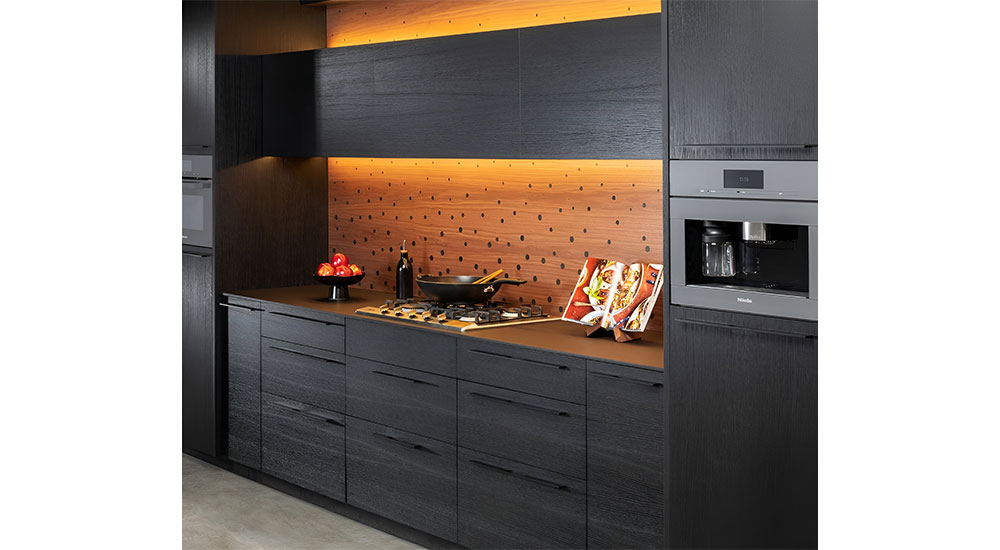
Above photo: Häfele Lighting is an integrated system that includes drawer-activated illumination and tunable lighting to provide ambiance and assist with tasks. Photo credit: Häfele
Paybacks for Projects
For designers, home technology offers one of the most valuable upgrades any project can deliver: simplicity. A single elegant keypad can replace banks of switches. Layered lighting scenes can shift a kitchen from bright prep mode to warm entertaining mode. Shades, lighting, music and climate can be managed in a far more intuitive way. The result is less visual clutter, less app fatigue and a home that feels calmer and more intentional.
Smart technology also lets designers shape daily rituals more thoughtfully. In the bath, layered vanity lighting, nighttime pathway lighting, automated privacy shades, steam and a personalized shower experience can make the space feel more like a retreat than a utilitarian room.

In the kitchen, tunable lighting and intuitive controls can support everything from early-morning coffee to late-night cleanup. These are not gimmicks; they are quality-of-life upgrades clients notice every day.
Wellness Advantages
NKBA’s latest bath reporting ties technology growth directly to health-oriented features, stress reduction and more individualized routines, while lighting remains one of the top priorities in bath design. Tunable lighting, better daylight control, better acoustics and integrated air quality and water solutions all help create spaces that feel healthier, more restorative and easier to enjoy.
Obscure & Unconventional Design
Another growing opportunity is hidden technology. Designers have long wanted the benefits of technology without the bulky, obvious look that can interrupt a carefully designed room. Today, flush-mounted controls, hidden charging, invisible speakers, mirror displays and other discreet interfaces allow technology to fade into the background until it is needed. That is a major reason smart tech now fits more naturally into high-style kitchens and baths.
One especially exciting category is digital canvas art, also known as “new media art.” HTA’s digital art coverage notes that architects and interior designers are embracing new media art to turn the usual black rectangle into a focal point, while newer digital canvas technologies allow still or motion-based artwork to be displayed in ways conventional art cannot. A designer can even collaborate with a client and a digital artist to commission custom abstract motion pieces that reinforce the mood and identity of the space. For inspiration, see bit.ly/digital-canvas-art.
Smart technology is a gamechanger because it gives designers new tools to shape comfort, ambiance, simplicity and delight. And for clients, that means a home that not only looks exceptional but lives exceptionally well.
When technology is considered early and integrated thoughtfully, it strengthens the design instead of forcing compromises later. With a qualified home technology integrator, smart features become less about gadgets and more about creating a home that feels more elegant, more intuitive and better aligned with how your clients want to live.