
In today’s residential design landscape, space is at a premium. Whether working within compact urban footprints, remodeling older homes or simply responding to homeowners’ desire for cleaner, more functional interiors, kitchen and bath designers are increasingly tasked with doing more with less. While cabinetry, fixtures and layout typically lead the conversation, plumbing systems play a critical, yet often overlooked, role in determining how much usable space a design truly delivers.
From behind-the-wall innovations to smarter under-sink configurations, modern plumbing solutions are evolving to support both aesthetics and functionality without compromising performance or accessibility. By understanding these options, you can better collaborate with installers and deliver spaces that feel larger, work harder and remain serviceable over time.
1. Rethinking Under-Sink Space with Space-Saving Tubular Systems
One of the most impactful areas for space optimization is also one of the most constrained: the cabinet area beneath sinks. Traditionally, this space is crowded with tubular drain assemblies, protruding shutoff valves, and supply lines that extend several inches into valuable storage real estate.
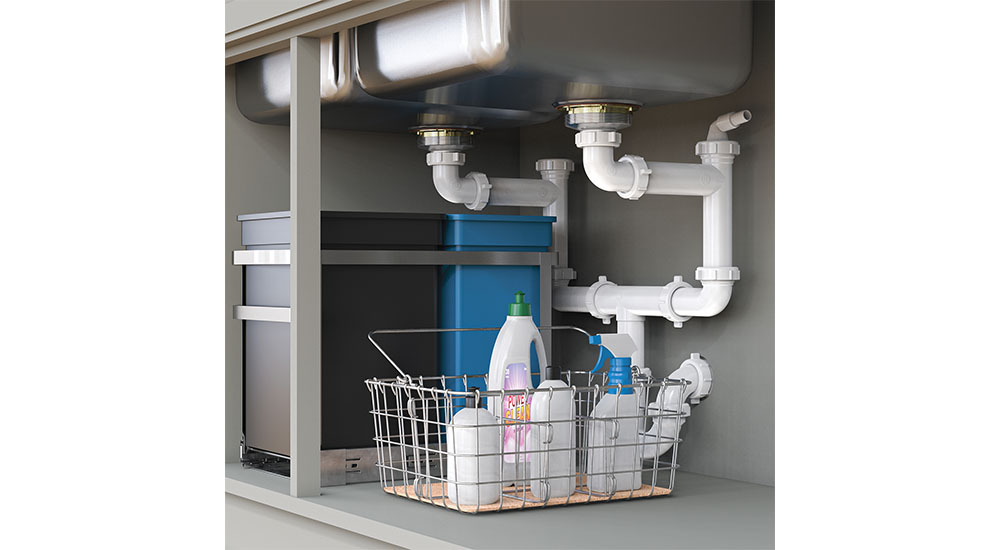
Photo: Oatey Co.
New approaches to tubular drainage are helping to reclaim that space. By reconfiguring the geometry of the drain assembly to sit tighter against the back wall of the cabinet, space-saving sink drain tubular systems (above) reduce the footprint of plumbing components without sacrificing flow performance or code compliance.

The result is a more open cabinet interior – especially beneficial in kitchens where storage is at a premium or in bathrooms with integrated drawer systems that must clear plumbing components. Even small dimensional improvements matter. Shaving off a few inches within the cabinet can make the difference between usable storage and wasted voids – particularly as homes trend toward smaller layouts.
Space-saving sink drain kits help solve a common design conflict: Modern cabinets, vanities, drawers and organizers often compete for the same space as the P-trap. Traditional tubular plumbing can force you to give up storage space, modify drawer layouts, or accept a less-organized cabinet interior. Space-saving sink drain kits push the P-trap back, helping preserve usable cabinet space for pull-out organizers, waste bins, drawers, and cleaning supplies.
The telescoping design is also important. Designers often specify sinks, vanities and cabinets before the exact drain alignment is known in the field. If the sink drain and wall outlet do not line up, traditional installations may require extra fittings or field modifications.
These kits are designed to adjust horizontally and vertically, making them more forgiving when the finished design meets real-world plumbing conditions.
2. Recessed Connections with Modular Supply Boxes
Another key opportunity lies in how water supply connections are handled. Traditional shutoff valves typically extend two to three inches from the wall, creating obstructions that interfere with drawer, shelving, sprayers, or appliance placement. Recessed supply boxes offer a cleaner, more compact alternative.
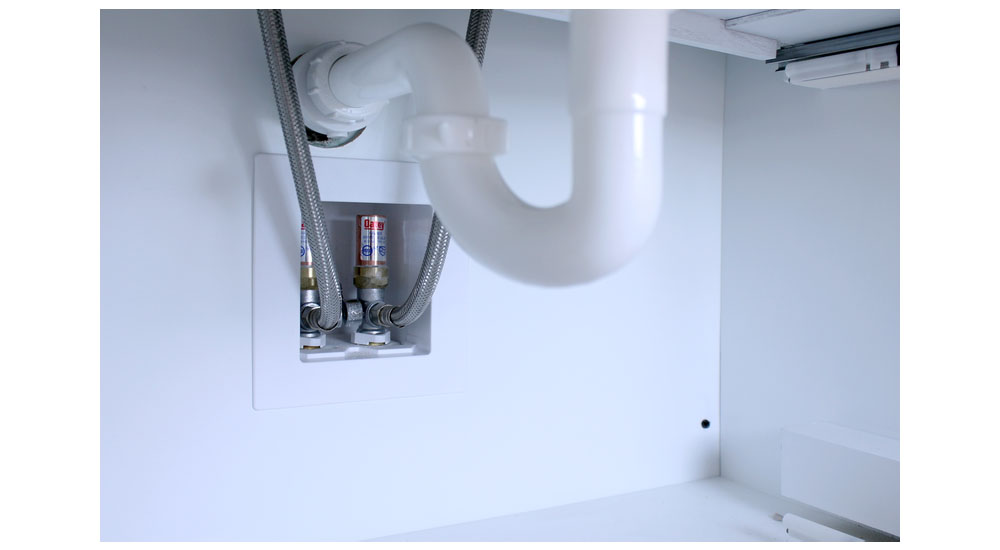
Photo: Oatey Co.
Installed within the wall cavity, supply boxes house shutoff valves in a contained enclosure (above) allow connections to sit nearly flush with the wall surface. This seemingly minor adjustment can yield several benefits:
● Improved clearance behind appliances: In kitchens, recessed ice maker or refrigerator connections allow units to sit closer to the wall, maximizing walkway space and improving alignment with cabinetry.
● More functional cabinetry: In bathrooms and kitchens with deep drawers or pull-out organizers, eliminating protruding valves reduces the need for cutouts or modifications.
● Cleaner aesthetics: By concealing valves within a finished box, designers achieve a more streamlined look – especially when paired with faceplates that can be wallpapered or painted.
Laundry rooms and utility spaces also benefit from recessed boxes, particularly in tight layouts where every inch of depth matters. While the space savings may be measured in inches, the cumulative effect across multiple fixtures can significantly improve overall usability.
Space optimization is not just about physical dimensions – it’s also about visual clarity. Cluttered plumbing can draw the eye and make a space feel smaller than it is. Concealed or integrated solutions help maintain clean sightlines, which is especially important in open-concept or highly styled environments.
Recessed supply boxes can be painted or finished to blend into surrounding surfaces, reducing visual noise. This is particularly valuable in exposed applications, such as behind pedestal sinks or in open vanity designs where plumbing is partially visible.
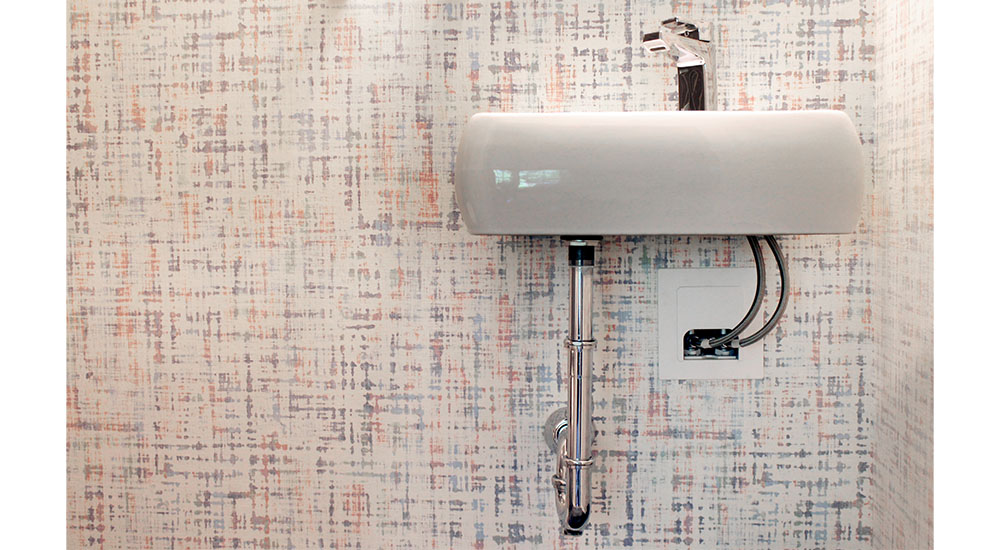
Photo: Oatey Co.
Pedestal and wall-mounted sinks present a unique challenge. While they create an open, airy aesthetic by eliminating bulky cabinetry, they also expose plumbing components that are typically hidden.
Recessing valves into the wall in these scenarios (above) not only improves appearance but also enhances accessibility for maintenance – avoiding the tight, hard-to-reach configurations often found behind pedestal bases.
3. Fixture Selection and Layout Strategies to Maximize Space
Beyond piping and connections, fixture selection plays a major role in space efficiency. Several plumbing-related design choices can help maximize usable space:
● Integrated Faucet Designs: Modern kitchen faucets increasingly incorporate pull-down or pull-out sprayers directly into the spout, eliminating the need for a separate side sprayer. This frees up deck space on the sink or countertop, providing more room for accessories and simplifying the overall look.
● Corner and Compact Fixtures: In small bathrooms, corner sinks can transform underutilized areas into functional zones. While not suitable for every layout, they can be highly effective in powder rooms or secondary baths with limited space.
● Wall-Hung and Concealed Systems: Wall-mounted toilets and sinks, along with in-wall tank systems, create the illusion of more space by freeing up floor area and reducing visual bulk. In the case of toilets with in-wall tanks, the bulky reservoir is relocated inside the wall cavity, leaving only a flush plate visible. This not only streamlines the design but also opens opportunities for shelving or decorative elements above.
While these systems may require more planning and coordination during installation, they offer meaningful spatial and aesthetic benefits in the finished space.
4. Tankless Water Heaters to Reclaim Mechanical Space
Mechanical systems also present opportunities for space savings. Traditional tank-style water heaters occupy significant floor space – often in closets, basements, or utility rooms. Tankless water heaters, by contrast, mount on the wall and feature a much smaller footprint.
By eliminating the need for a large storage tank, tankless systems free up valuable square footage for storage or other uses. In smaller homes or multifamily units, this can significantly affect overall livability.
5. Adaptable Plumbing Systems to Avoid Extensive Rework
Space optimization becomes more complex in renovation scenarios, where existing plumbing locations and structural constraints limit design flexibility. In these cases, adaptable plumbing solutions can help designers achieve their goals without extensive rework.
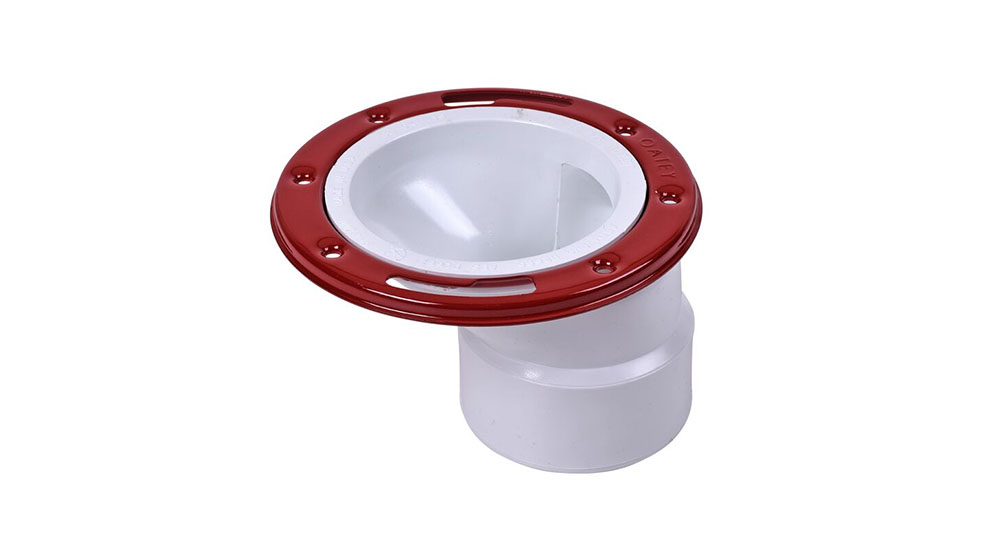
Photo: Oatey Co.
Offset toilet flanges (above), for example, allow a toilet to be repositioned slightly without relocating the entire drain line. This can be useful when trying to accommodate a larger vanity or improve spacing between fixtures.
The Role of Collaboration
Ultimately, maximizing space through plumbing requires close collaboration between designers, plumbers, and building contractors. Early coordination ensures that plumbing layouts support the intended design rather than constrain it.
For example, knowing the exact dimensions and configuration of cabinetry in advance allows plumbing rough-ins to be positioned more precisely—avoiding conflicts with drawers, shelves, or appliance placements. Similarly, selecting space-saving components early in the design process helps prevent last-minute compromises.
Many space-related challenges arise not from product limitations but from poor planning or improper installation. Thoughtful design, combined with the right plumbing solutions, can prevent these issues before they occur.
By leveraging innovations such as space-saving tubular drains, recessed supply boxes, integrated fixtures and compact mechanical systems, designers can unlock hidden potential within even the tightest layouts. Just as importantly, these solutions support long-term usability, ensuring that spaces remain accessible and serviceable for years to come.
—Sean Comerford is Manager, Inside Sales and Tech Support, at Oatey Co. He is a third-generation tradesman with nearly 20 years of plumbing experience, including serving as the lead plumber for commercial/residential new-construction, service and fire protection jobs.