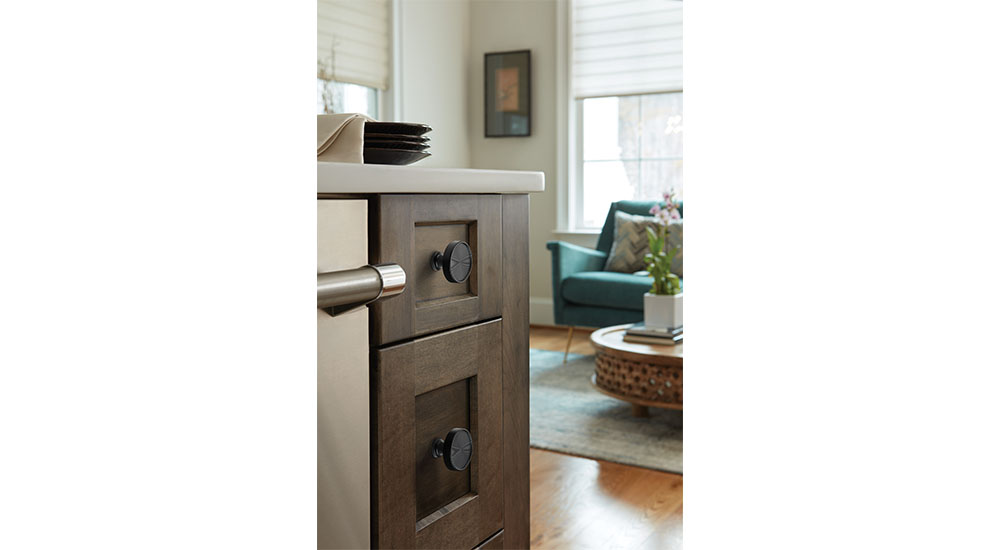
No longer an afterthought, cabinet hardware has evolved into a true design element. Today, it’s about pieces that stand out – bolder silhouettes, greater surface area and details that make an impact. From thoughtful sizing to layered finishes and statement backplates, hardware selections are more intentional and customized than ever before.
One of the most important best practices in cabinet hardware is the use of variety. Designers are combining knobs with varying pull sizes to create a more tailored look. This requires close attention to scale and proportion. As a general rule, a pull’s length should be no more than half the width of a drawer or one-third the height of a door – but it’s perfectly acceptable to go longer for a more dramatic look. When balanced well, this variation creates a layered and elevated result.
Accessibility and inclusive design are also shaping hardware decisions. Rather than being limited to aging-in-place applications, these principles now focus on the comfort of all users. U-shaped pulls and similarly ergonomic forms support ease of use while maintaining a refined aesthetic.
Emerging alongside this trend is the rise of decorative backplates. No longer just functional cover-ups for wear-and-tear, they are now design features in their own right. As vintage-inspired and modern traditional interiors gain traction, stepped profiles, cutouts and sculptural forms are being used to add depth and structure. Backplates act as framing elements that can elevate simple knobs or add a more traditional tone to pulls.

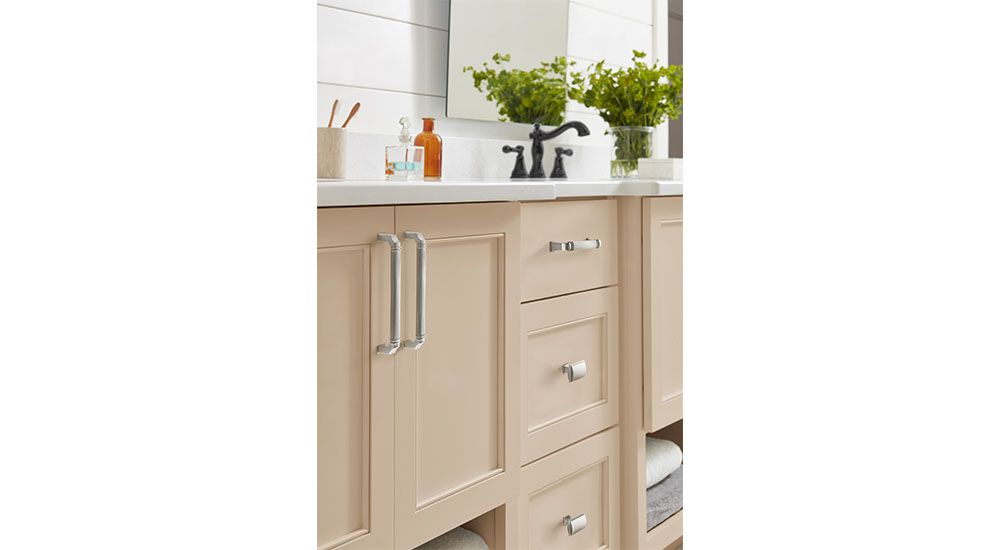
Photo: Amerock
Cabinet material, color and texture also play a defining role in hardware selection. Whether paired with warm woods, painted finishes or mixed palettes, hardware can either harmonize with or contrast against the surface to shape overall tone.
Broader design movements continue to influence hardware aesthetics. Contemporary minimalism remains strong, often layered with subtle mid-century influences seen in collections such as Merced and Dupont Circle, where geometric restraint defines the form. At the same time, modern traditional design, reflected in pieces like the Townsend collection, leans into refined detailing without excessive ornamentation. Across styles, layering remains the defining theme, with designers mixing finishes, textures, and silhouettes for depth.
Trends in Cabinet Hardware
Gold finishes continue to grow in popularity largely due to their warmth and sense of luxury. However, as they become more common, designers are also turning to alternatives, like polished nickel and mirror-like chrome-inspired tones, for brightness and contrast in spaces saturated with warmer metals. Dark brushed bronze is also evolving, with newer interpretations featuring minimal highlights for a more modern take on a traditional finish. Mixing metals remains relevant but more deliberate. For example, designers are choosing a dominant finish for larger focal points like faucets and lighting, while selecting a secondary finish to play a supporting role.
Looking ahead, hardware trends will continue shifting toward highly personalized spaces that feel layered, storied and collected over time. Designers will continue to embrace smaller details, such as delicate bands of coining on a pull or subtle crosshatch knurling around the edge of a knob. As these styles and textures blend together, hardware helps create spaces that feel luxurious, warm and sophisticated.
—Peter Wells is senior principal designer at Amerock