We have been surrounded by technology for decades, much of which has made our lives more comfortable, convenient and efficient. From mainframe computers to hand-held personal devices, the rapid changes have rendered numerous positive impacts on our daily lives. More recently, consumers have been offered a variety of smart technology conveniences such as Wi-Fi-connected ovens that can be switched on from a cellphone during one’s evening commute and refrigerators that can assist with creating grocery lists via an interior camera that scans the contents.
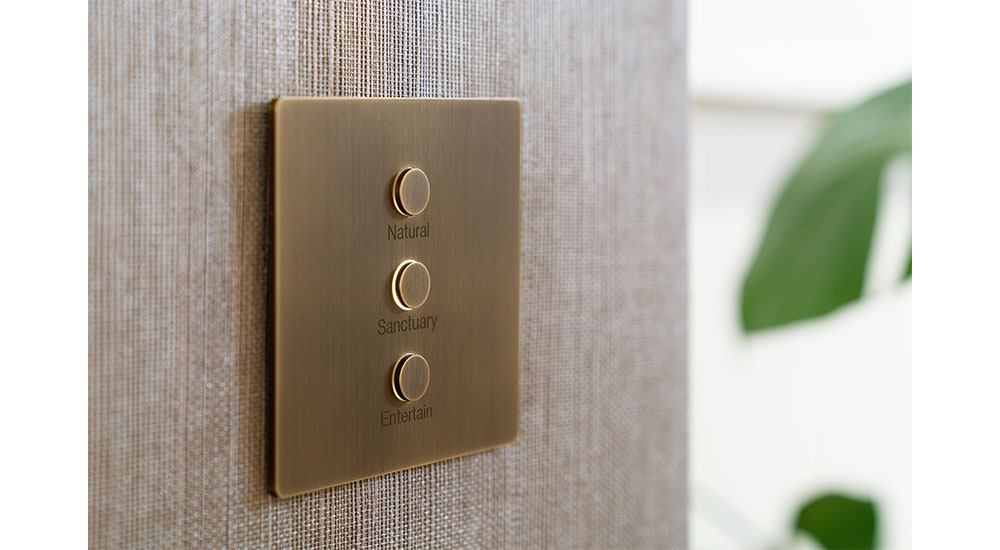
Above photo: A thoughtfully placed control panel can provide convenient functionality while not detracting from the aesthetics of the home. Photo credit: Lutron
As smart tech continues to make advancements, it will be important for designers to educate clients on the impact these advancements have on the global environment with respect to material waste, energy/water usage and air quality. Fortunately, designers can position themselves at the forefront of this wave, helping clients enhance their lives while reducing their environmental impact.
Making the Greatest Sustainability Impact
Integrating smart technology can be simple or comprehensive depending on the client needs, desires and budget and can also be a stepped approach designed for future expansion. In an essence, heating/cooling, lighting, window coverings, water leak detection, audio/visual equipment and security can all be combined into a smart home system that is operated from one or more wall-mounted interfaces and/or from mobile devices.

The key to a successful and cost-effective integration is to plan for smart technology at the onset of the design process, rather than during construction. This would include laying out the system components on the electrical floor plan, including where the hardwired Cat6 cable will be installed to support the mesh hub(s), which connect the Wi-fi system to the modem.
“The idea that everything is wireless is just not accurate or realistic,” said Brian Scott, an integrator with Illumina Inc. “For a truly functional and reliable system, a proper Wi-fi access point is required for every 1,500 square feet of home. Achieving this is easier and less destructive with new construction than remodels, but regardless, it is better to have too much Cat6 cable in the walls than too little given the low incremental cost, allowing for future expansion of the system.”
Features & Equipment to Consider
The following benefits can minimize a home’s environmental footprint when designing an integrated smart technology system.
Energy Efficiency
- Integrating a home’s lighting systems can have multiple benefits from reducing energy consumption, improving safety and enhancing security and lastly. Creating lighting schedules that coincide with the occupants’ circadian rhythms for improved sleep and mood provides health benefits.
- Home audio is commonly incorporated into a smart tech system providing music, streaming, gaming and more. Although the environmental impact of including home audio into a home’s system is not measurable, what is measurable is occupant harmony.
- Smart thermostats reduce heating/cooling needs/costs without compromising comfort.
- Wi-fi-connected dishwashers and laundry machines allow consumers to program the start of a wash cycle to coincide with lower electric grid demands, which can be rewarded with lower utility costs. Additionally, by spreading power consumption over a 24-hour period, the need for expanding the power grid is reduced with minimal impact on convenience.
- Wi-fi-connected refrigeration can notify homeowners via their cellphones if there has been a power outage or a refrigerator door has been left open. Food waste is a major contributor to methane production in landfills, contributing to greenhouse gases.
- Automated window blinds that raise and lower automatically based on temperature sensors that detect solar gain and/or cold directly impact the demands on heating and cooling requirements. Additional benefits are comfort and reduced fading of furnishings and décor, resulting in premature replacements.
- Automated deck screens and swimming pool covers can open and close based on pre-set times or temperature sensors. This reduces heat gain or loss (respectively), saving energy and improving comfort.
- Wi-fi smart electrical receptacle adapters allow one to turn off lights and small appliances from a cellphone to reduce unnecessary powder consumption and reduce the risk of home fires with the ability to turn off a coffee pot or a curling iron remotely.
Water Efficiency
- Voice-activated faucets can save gallons of water everyday with their hands-free operation – not to mention the hygiene benefits.
- Recirculation pumps with preset flow times can reduce time waiting for hot water to be delivered to a faucet or showerhead. There is also time savings convenience for the homeowner.
- Wi-fi-connected leak devices installed on a home’s water heater, well head or main water supply inlet can sense when water is flowing for extended periods. Those devices can then notify the homeowner and/or shut off the water supply. This can help save on utility bills, mitigate water damage and the cost of remediation and provide the homeowner with a discount on their homeowner’s policy.
- Automated landscaping irrigation systems – especially those with moisture probes – can reduce landscaping water waste and help keep water utility bills to a minimum.
Safety
- Integrating security and fire alerts into a smart tech system provides clients with peace of mind, reduces thefts and provides a discount on home insurance premiums.
- Additionally, the convenience of being able to lock and unlock a door remotely for service personnel, domestic help and school-aged children is a wonderful feature for any homeowner.
Material Efficiency
Discarded electronics are a major contributor to toxic waste globally. To ensure your projects have a low environmental impact, Scott emphasizes the importance of early planning for today and future expansion, focusing on equipment and installation reliability and intuitive controls. This can reduce the chance of overwhelming homeowners and avoiding equipment obsolescence/replacements.
Smart home technology can improve quality of life for homeowners, reduce their operating costs with respect to utility bills and insurance premiums as well as their home’s environmental impact. Become acquainted with your local technology integrators who hold a CEDIA certification that focuses on custom electronic design and installation and/or ETA Smart Home Certification professionals to ensure your next project will provide comfort, convenience, safety and security along with functionality and a beautiful aesthetic.