Designers often think in layers: space planning, sightlines, finishes, lighting, storage and flow. Technology often appears as a final layer, which is why it can feel like an unwelcome disruptor rather than a design ally. The best projects flip that script. When a home technology integrator is brought in early, the relationship becomes synergistic rather than reactive. The designer protects the aesthetics, functionality and experience. The integrator helps shape the day-to-day experience of the home. Integrators design systems that make the home function seamlessly, feel intuitive to use and are anchored by a powerful and discreet Wi-Fi foundation. The client ends up with a home that feels cohesive, calm and intentional.
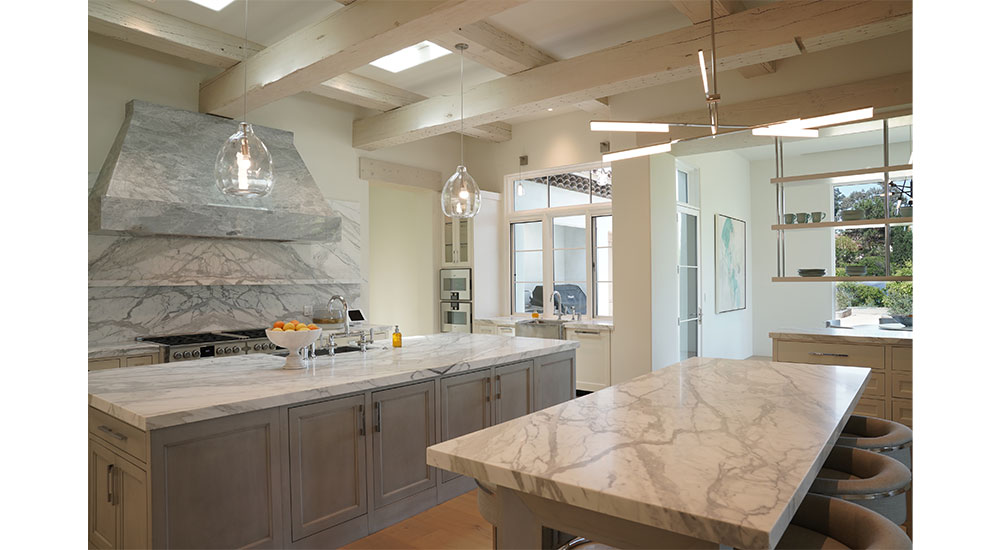
Above photo: Modern Home Systems installed high-performance invisible speakers from Sonance in this kitchen ceiling. Photo credit: Sonance
What Each Professional Brings to the Table
Designers advocate for beauty, comfort and how a space should feel. Integrators advocate for functionality and day-to-day reliability, and they design ways to conceal technology so it is available when needed and invisible when it is not. When those priorities align early, outcomes improve in ways neither side can consistently achieve alone.
A few examples where early teamwork pays off quickly:

- Lighting Fixtures & Lighting Control. Designers shape mood and ambience; integrators design solutions that translate intent into compatible dimming, scenes and intuitive control.
- Motorized Shades & Shade Pockets. Designers select the window shading style, fabric and overall look; integrators design the power, control and automation so the shades are easy to operate and live with.
- Keypads & Wall Controls. Designers protect symmetry and finishes; integrators specify intuitive and design-friendly controls. Early coordination eliminates unsightly “wall acne.”
- TV Placement. If clients want a TV in the kitchen, designers protect sightlines and scale, while integrators design clever solutions that allow the TV to disappear completely when not in use.
- Visible Versus Invisible Speakers. Designers preserve visual rhythm; integrators design systems that balance performance with aesthetic goals and room acoustics.
- Security. Designers protect curb appeal; integrators design discreet surveillance camera coverage and alarm systems.
- Wi‑Fi Access Point Locations. Designers keep ceilings and countertops clean; integrators design high-performance Wi-Fi systems for coverage and discreet placement throughout the home.
A Vinette Designers Will Recognize
A designer finalizes a kitchen with sculptural pendants, a clean backsplash and aligned millwork. Late in the process, the client requests smart lighting control, motorized shades, a bigger TV and high-quality speakers in the kitchen and dining room to use with their Sonos music system. Suddenly, keypad locations conflict with tile, the lighting needs to be rewired, you wonder how to hide that big TV, and speaker locations compete with ceiling details. No one did anything wrong, but the timing forces compromises.
Now imagine the same project with early design coordination with your home technology integrator partner. The designer still leads the vision. The integrator simply helps translate that vision into a plan aligned with the architecture and the client’s wishes.
Finding Integrators Who Collaborate Well
Not every technology integrator is suited to a design-forward partnership. Look for integrators who understand documentation, coordination and respect for design intent. The HTA Design Partner designation was created to help designers identify integrators who have opted into guidelines centered on collaboration and design alignment. Behind that designation is extensive work by the Home Technology Association to define shared expectations, workflows and communication standards that help designers and integrators operate as a cohesive team.
The goal is not to turn designers into technologists or integrators into interior designers. It is to create a shared process where aesthetics and performance support each other from the start. Partnering with the right integrator and adopting a technology-proactive mindset helps reduce change orders while protecting design intent.