Curated by Code: How AI Is Redefining Luxury Design
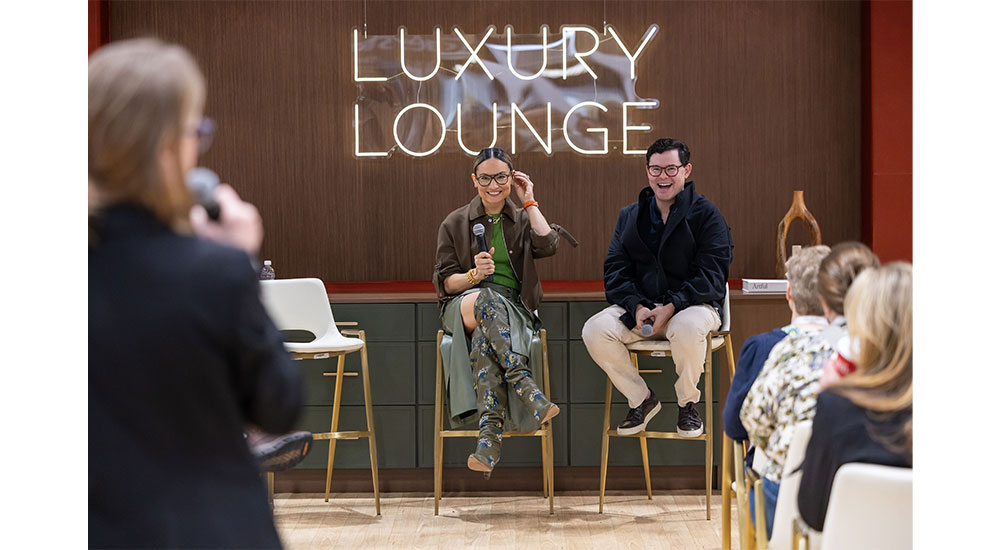
Artificial intelligence is changing the way we work in significant ways, but it does not replace the human judgment that gives luxury design its value. Nicole Fisher of Nicole Fisher Interiors and Russell Goldman of More Wow Design made a clear case for AI as a practical business tool – one that can save time, improve systems and sharpen communication – while drawing firm boundaries around what it cannot do.
Above photo: Nicole Fisher and Russell Goldman made a clear case for AI as a practical business tool while drawing boundaries around what it cannot do. Photo credit: KBIS/Emerald
Where AI Empowers Design
Fisher explained how AI helps protect time and reduce operational drag, letting leaders focus on creative work. Her practical advice:

- Audit your time in 15-minute increments for two weeks.
- Identify repetitive tasks that eat up your day.
- Offload those tasks to an assistant or an AI tool.
- Document repeatable processes with AI-generated playbooks for easier onboarding.
Site visits serve as a key example. Tasks are distilled into detailed checklists: what to bring, who to meet, what to inspect and what to cross-check. AI helps translate knowledge into seamless, repeatable systems. Goldman emphasized that firms benefit by using AI to solve specific business challenges. AI’s strategic use is in addressing workflow hurdles unique to each firm.
How AI Supports (But Doesn’t Replace) Client Work
AI’s role shines in supporting – rather than substituting – relationship management. AI also assists in crafting measured, professional messages, helping designers maintain clarity and boundaries.
AI’s Strengths in Design:
- Streamlining administrative and operational tasks
- Generating and documenting standard operating procedures
- Supporting calm, professional communication
Where AI Should Not Lead
Fisher argued that AI is best for brainstorming and drafting – not making critical decisions in design processes that involve code, structure or construction. Goldman added that, while AI can guide decisions and analyze possibilities, the final say – especially when liability is involved – must remain human. Luxury design depends on authenticity, taste and storytelling—qualities that cannot be automated. Both designers warned against hyper-realistic renderings, which can set false expectations. Their approach: use AI to turn polished visuals into sketch-like images that invite clients to imagine and participate in the vision, rather than expecting literal replication.
AI’s Limits in Design:
- Cannot be the final authority on code, construction or liability
- Risks erasing authenticity and creativity if overused
- Must not be relied on for storytelling or the elusive “human touch”
AI brings real power to design practice, streamlining processes and freeing up designers to focus on what matters most. But it cannot replace discernment, taste or the human connection at the heart of luxury design. The future belongs to firms that blend intuition and technology, using AI to enhance – not overshadow – what makes design truly meaningful.
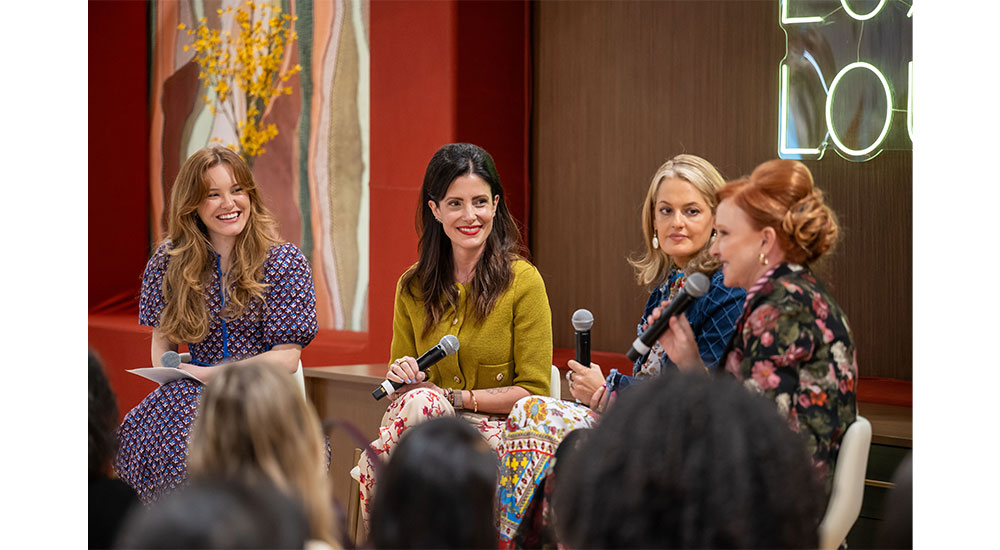
Nikki Levy, Jaque Bathke and Lisa Gilmore of Lisa Gilmore Design discussed how bold color can create the kind of memorable interiors that set designers apart. Photo credit: KBIS/Emerald
The Color of Success: Bold Palettes, Refined Results
Nikki Levy of Nikki Levy Interiors, Jaque Bathke of JAQUE Design and Lisa Gilmore of Lisa Gilmore Design discussed how bold color palette are proving their value not just as an aesthetic choice but as a business strategy. Emerald, cobalt, terracotta, blush and deep green can create the kind of memorable interiors that set designers apart, attract aligned clients and deliver spaces that feel both personal and polished.
Color as a Signature – and a Magnet
Designers who want color-loving clients often need to lead with color themselves. When a portfolio shows confidence, the right clients respond. That visibility helps define a niche and sends a clear message: This studio is not here to replicate trends but to create rooms with identity. The strongest color stories often begin before a single finish is selected. Savvy designers listen for cues in how clients live and what they love. Travel destinations, favorite hotels, dream cars, personal style and even wardrobe choices can reveal a client’s comfort with contrast, saturation and mood. A playful outfit or a strong point of view usually signals openness to bolder design decisions.
Turning Hesitation Into Buy-In
Even clients who love color can hesitate when it is time to commit. Their home is a major investment, and uncertainty is part of the process. The designer’s role is not only to specify well but to sell the vision with clarity and conviction. Loose hand renderings, mood-driven presentations and side-by-side options can help clients feel color before they overanalyze it. Often, once they see the bolder scheme in context, the emotional pull becomes clear. Confidence matters here. Clients frequently test a designer’s certainty. If the designer believes in the concept and communicates genuine care, clients are more likely to trust the move.
Where Color Works Hardest
Color does not need to appear everywhere at once. It can enter through focal moments, layered materials or strategic transitions from room to room.
A few effective entry points include:
- A colorful kitchen island or accent wall
- Wallpaper with depth and pattern
- Stone with natural variation
- Grass cloth for texture and tone
- Tinted or stained glass
- Cabinet hardware, pillows and smaller finish moments
- Ancillary spaces such as powder rooms and libraries
Personal, Profitable, Memorable
Some of the most successful color-driven projects are rooted in personal narrative: a neon-inflected home inspired by a client’s flamboyant style, a blue roof tied to a beloved superhero or an Old Florida palette shaped by a life in performance. These choices feel distinct because they are.
That is the commercial power of color. When used with intention, it creates emotion, strengthens brand identity and delivers interiors clients remember – and talk about.
Click HERE for information on programming at The Luxury Lounge during KBIS 2027.