
In high-end residential projects, expectations are shaped by more than what is seen; they’re informed by experience, reference and anticipation. Today’s clients arrive influenced by travel, media, art, literature and prior projects, with a clear sense of what they want – and the hope that the process will feel as considered as the finished space.
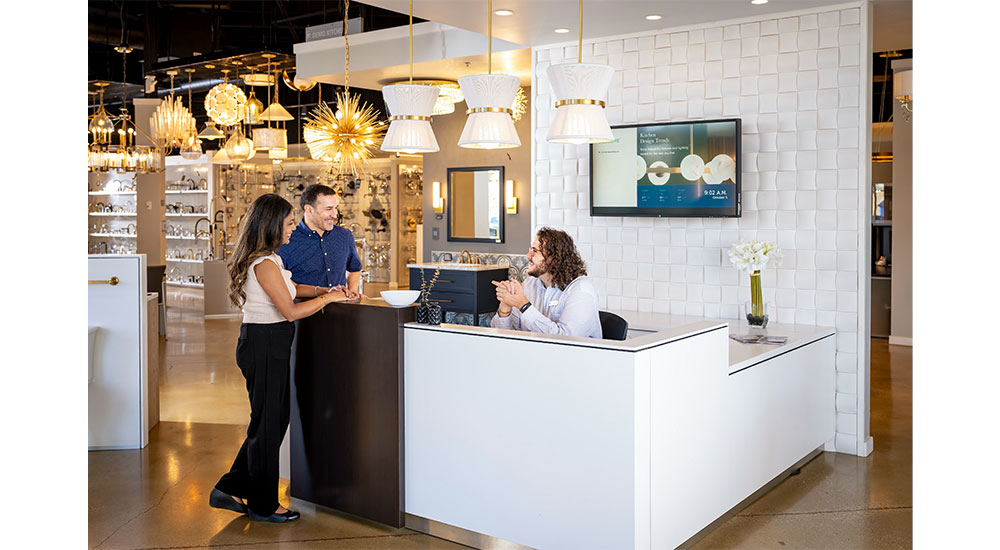
Above photo: Bringing designers, builders and homeowners together in the showroom allows decisions to be made collaboratively, not in isolation. Photo credit: Ferguson Home
Set the Framework Early
Meeting those expectations requires more than product knowledge. It requires structure and steady communication from the first conversation through installation. For clients, the experience reflects the rhythm of their lives, developing over time rather than in a single event. Defining scope, budget and decision-making roles creates a shared framework, particularly on projects involving homeowners, designers and builders. With that foundation in place, teams can move forward with clarity and purpose, allowing the project to unfold with greater clarity.
Make the Showroom a Decision Space
Most clients come prepared with inspiration and opinions. Our role is to listen, then translate that vision into selections that support the whole project. That often means bringing designers, builders and homeowners together in the showroom so decisions are made collaboratively, not in isolation. At this level, the appointment becomes a milestone: Ideas move out of inspiration folders and into a space designed for careful consideration.

Edit With Discernment, not Abundance
Clients value guidance that narrows options and explains tradeoffs, not an excess of choice. Thoughtful editing and context help them see how individual finishes, fixtures and hardware work together throughout the home. That level of attention transforms the showroom appointment into an experience – one defined by care, focus and the feeling of being genuinely looked after.
Slow Down for Confidence
Restraint matters. Clients don’t need more options, they need certainty and trust in the decisions they’re making. Sometimes that means slowing the appointment down – letting clients handle a faucet, see finishes side by side or even take a sample home to view it in the light where it will live, rather than making decisions from a screen or catalog.
Communicate What’s Next (and What’s Changed)
Transparency remains essential throughout the process. Discussing lead times, availability and installation considerations early, then revisit them as projects evolves. A clear sense of what comes next helps clients feel grounded and informed rather than reactive. Clear communication builds credibility. Clients appreciate honesty, even when the information isn’t ideal. Being upfront about timing or availability keeps designers, trade professionals and homeowners focused on solutions instead of surprises.
Maintain Continuity Through the Build
As work progresses, clients look for steadiness as much as speed. They want to feel the project is being guided with intention – that prior decisions are remembered, conversations carried forward and potential challenges are addressed before they become disruptions. Continuity builds confidence in both the process and the team behind it.
Close With Care
The final stages of a project carry equal weight. A thoughtful close – coordination with trade partners, clear documentation and continued availability after installation – signals that the relationship extends beyond the final walkthrough. Follow-through often shapes the lasting impression, and it can be enriched through thoughtfully hosted events, designer conversations or brand partnerships that deepen context and access – reinforcing the showroom as a place of ongoing engagement.
The goal is support from start to finish. When that happens, clients don’t just remember the space, they remember the experience: guided, not rushed. Ultimately, managing expectations at this level is about creating ease – balancing ambition with what allows clients to live comfortably within their home. Done well, the result is a space that feels composed and lived-in, as well as a process that feels equally assured.