With AI-powered search tools accelerating ease of access to vast amounts of information, early-stage customer research is evolving rapidly. What does this mean for product brands? Today’s designers, specifiers and consumers are more informed than ever before they speak to a brand representative, making it crucial that your information is easily searchable and structured for AI-driven discovery. And yet, this cuts to the central paradox of the AI era: the more digital the sales journey becomes, the more valuable human interaction feels. In an oversaturated, tech-driven landscape, standing out is harder than ever – and human connection remains the strongest builder of trust, recognition, and loyalty.
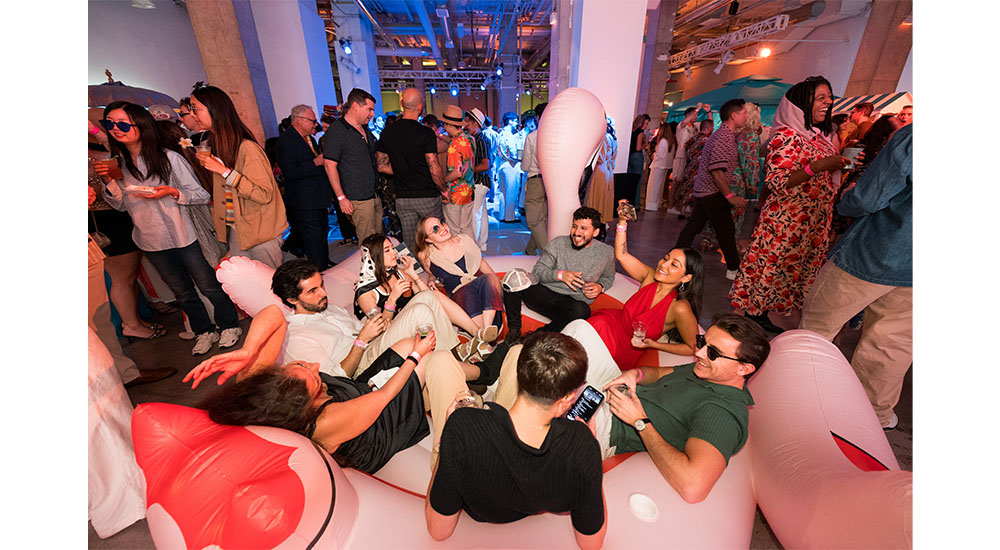
Above: Great brand events create a shared experience. The International Interior Design Association’s (IIDA NY) annual Color Invasion® offers an immersive escape that facilitates community and human connection in the industry. Photo: Johnny Wolf
The Self-Serve Research Boom & Its Limits
Today’s buyers are increasingly turning to independent research, siting through social media, websites and AI tools to compare products and narrow down their options. This means that potential customers are doing much of the heavy lifting before even engaging in a conversation with a sales representative. It’s never been more important for brands to provide accessible, well-structured product information through intuitive, user-friendly platforms. But the rise of information abundance has also introduced a new challenge: noise. With endless options and inputs, decision fatigue sets in quickly. When everything is available at your fingertips, what actually builds trust?
The Psychology Behind Human Trust
We’ve all had the experience of phoning a customer service line, only to be met with an automated system that routes us in circles without delivering a real solution. In that moment, you’re desperate to reach a real human. You want someone to empathize with how you’re feeling, to reassure you that something is being done, and to find the best solution for you. This is a helpful microcosm for how designers and consumers navigate the marketplace. Human connection and interaction provides clarity, real-time problem solving and emotional confidence in decision-making. For large investments like kitchens and bathrooms, this emotional confidence becomes just as important as product performance. Credibility is human.

The Power of In-Person
Being with other people is naturally energizing. Studies have found that our neural activity and overall engagement are significantly higher during in-person interactions than virtual ones. To deepen relationships and build trust with customers, forging in-person connections is key. Think about walking a trade show floor: the buzz of the environment, the experience of feeling a product, the conversations with strangers. These physical interactions create emotional resonance, shaping both perception and memory. And ultimately, memories are the very best marketing.
So how does a product brand design and deliver an impactful in-person experience? The key is empathy: think deeply about your target client or consumer, and put yourself in their shoes. What type of experience are they seeking? What can you do to make their jobs easier, to make them comfortable, to get them excited? People will always remember how a brand made them feel. Let’s break it down into where and how these moments actually happen.
Tradeshows + Industry Events
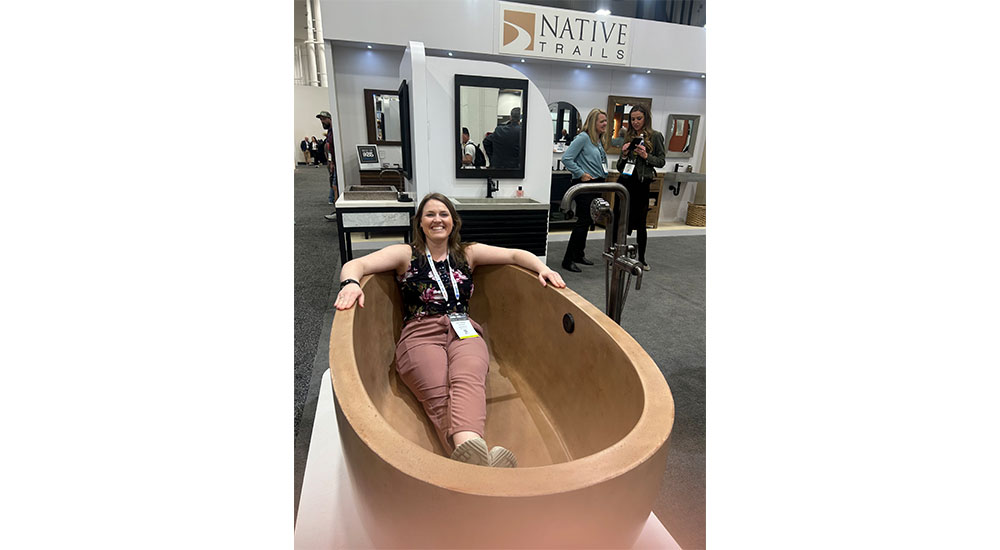
The best way to understand a product is to feel it. A Native Trails tradeshow booth invites visitors to get up close and personal with each piece. Photo: Courtesy UpSpring
Tradeshows and industry events can be a massive driver of large-scale visibility and brand positioning, when approached with intention. What works? For one, a high-energy staff presence is critical. Energy is infectious and sets the tone for how attendees perceive and engage with your brand. Second, give people something to do. An interactive product demo or a hands-on activation creates a moment that cuts through the noise and separates you from the folding table with a stack of brochures next door. Most importantly, make people feel welcome and comfortable enough to explore. The more inviting and intuitive the experience, the more likely attendees are to engage, linger and remember your brand after the event ends.
Showrooms
A showroom is a great place to foster more intimate, one-on-one engagements with future customers. In contrast to the excitement of a trade show floor, your showroom can be a backdrop for more intimate product interactions, thoughtful conversations and deeper trust building. Position your showroom as a resource center and a collaborative workspace, where clients can explore, ask questions and work alongside your team to find the right solution.
Hosted Events & Gatherings
Who doesn’t love a good party? From brand activations to curated dinners to informal cocktail hours, hosted events are another way to deepen brand relationships in a relaxed, social setting. Once again, creating a welcoming and comfortable atmosphere is key to driving a sense of belonging and brand loyalty. Through intentional details and thoughtful design, these gatherings become a powerful way to humanize your brand – revealing personality, building familiarity and turning professional connections into lasting relationships.
Panels & Programmings
Our innate human curiosity and desire for learning doesn’t go away when we leave school, but continues evolving and shaping our professional growth. Participating in panels and educational programming position your brand as a thought leader, while satisfying the industry’s desire for ongoing education. Keep in mind that not all panels carry the same weight. Most likely, you can remember the ones you’ve attended that truly stood out to you – they were the ones that sparked real dialogue, challenged assumptions and fostered an exciting exchange of ideas.
Focus Groups
The focus group is the unsung hero of brand building. While digital surveys have their place in a world of convenience, the in-person focus group provides an unmatched opportunity for direct, real-time feedback from your ideal customers. Compared to an online form, these sessions provide unfiltered, immediate reactions, which lead to deeper, more nuanced insights, and ultimately more collaborative problem solving between brands and their audiences.
Measuring ROI + Extending the Experience
How do you begin to measure the ROI of something as intangible as an in-person experience? Remember that the event is just the starting point, and the real value lies in the follow-up. How are you nurturing the relationships you created on the trade show floor? Show that you remembered a detail from a conversation by referencing a specific need or acknowledging a shared moment. This is what turns a brief interaction into a lasting relationship. The value of in-person engagement is not captured at the event itself, but in the depth of the relationships it leaves behind.
Technology is the Gateway to Human Connection
The design industry should be fully embracing AI search and digital discovery. Use these tools to attract attention, streamline access to information and educate early-stage buyers. But remember that while technology is shaping discovery, conversion happens through human connection. In a complex, tech-driven landscape, the brands that invest in people are the ones that win.
—Cody Latour, associate vice president, UpSpring