
I’ve practiced sustainable design for more than 30 years, and it’s come a long way since the 90s. I’ve made it my mission to educate clients and other designers on how to create sustainable homes and eliminate waste.
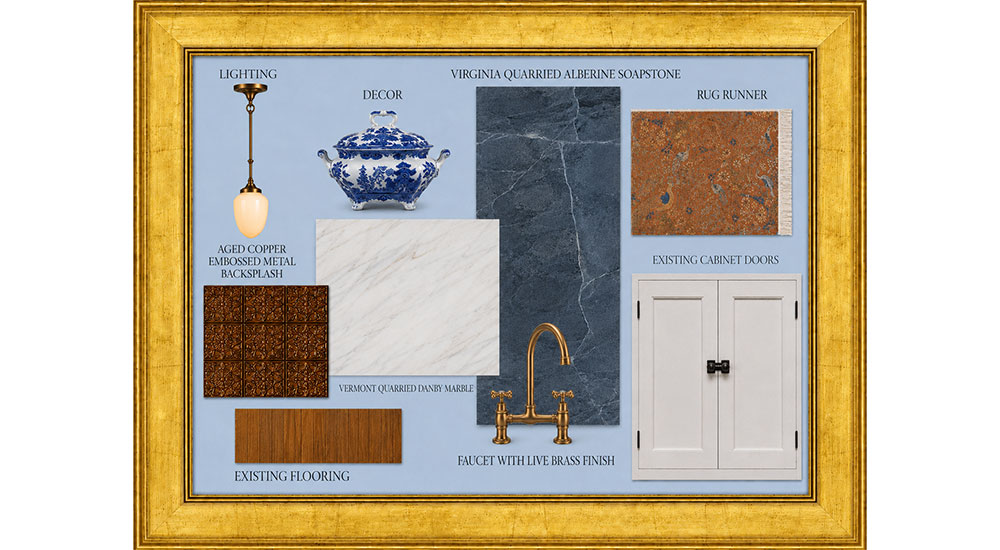
Above: The mood board for Gaylor’s project pairs Virginia-quarried Alberene soapstone and Vermont-quarried Danby marble with existing oak flooring and cabinet doors. Made in the U.S., an aged-copper backsplash and a light fixture made in Oregon are historically appropriate selections.
Image credit: Patricia Gaylor
Beyond “Green”
Since then, “green” design has evolved far beyond organic products. Improvements in energy efficiency, water conservation, indoor air quality and responsible forestry have changed the way we design and build. Along with evolving codes and incentives, these advances have moved sustainable design from a niche idea to an essential part of the design plan. Our homes should be havens – places that support not only how we live but also how we feel. Wellness has integrated with sustainable design, expanding the conversation to comfort, health and the emotional connection to our surroundings.
Designing for Longevity
My design philosophy has always been to create spaces that are timeless, classic and built to outlast the barrage of trends on social media. Thoughtfully designed kitchens built with quality materials should not need replacing every decade or so. They should age well and continue to serve the people who live in them.

Restoring a Historic Pantry
I am currently working on a full-gut renovation kitchen with an adjoining butler’s pantry. The pantry, built 102 years ago, needs only minor updating. Most of what needs to be addressed stems from quick fixes made over time in the name of “improvement,” but those changes often ignore the inherent character of the space.
Restoring the countertop to natural soapstone was my first choice. The material was commonly used in turn-of-the-century kitchens and for good reason: It is durable, practical and has long been a true workhorse material in older homes.
That search led me to Alberene soapstone, which is quarried in Virginia. Specifying domestically sourced natural stone enabled me to create a historically appropriate space while reducing the environmental impact of long-distance shipping. Materials imported from overseas must travel farther to reach the job site – a process that requires more fuel and expels more carbon emissions before the product ever enters the home. Choosing a stone quarried closer to home made sense aesthetically, historically and environmentally. It is a perfect example of how sustainable design can be both responsible and deeply rooted in a home’s character.
A Domestic Alternative to Carrara
For the adjacent baking area in the new kitchen, my client was drawn to the idea of a Carrara marble top, which is traditionally found in old bakeries and working kitchens. Marble has long been valued for pastry making because of its naturally cool surface, and it felt like the right material for this part of the pantry and kitchen plan.
I suggested two options: sourcing a repurposed piece of old marble or specifying Danby marble, which is quarried in Vermont. Danby has a softer, creamier appearance than white Carrara, and its domestic source makes it a more responsible choice. Once again, the goal was not simply to choose something beautiful but to select a material that felt authentic to the space and aligned with the principles of sustainable design.
Materials with Intention
In the end, lower-impact choices are more than checking a box. It’s about choosing materials with intention – surfaces that are appropriate to the home and mindful of their source. Whether it is a piece of reclaimed marble, a domestically quarried stone or a material selected that will last for generations, these choices help create interiors that feel grounded, responsible and enduring. To me, that is the real heart of sustainable design.