
Making a Statement with Lighting
When creating our kitchen and bath projects, we often overlook the everyday essentials we take for granted. Chandeliers, sculptural pendants and artisan sconces advance interiors beyond functionality. Even light switches can make a project outstanding, yet we often find ourselves running to Home Depot at the last minute because we forgot an outlet cover or a switch plate.
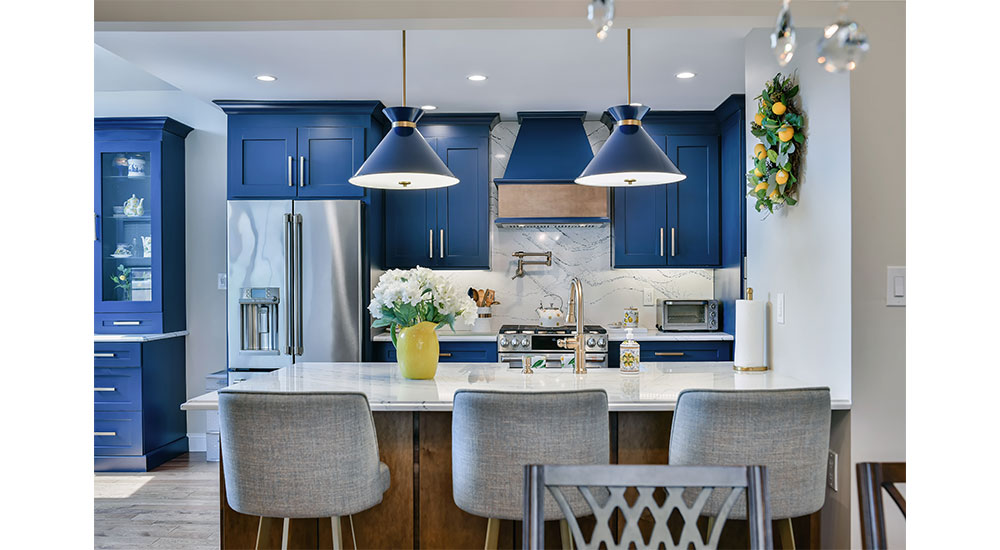
Above image: This kitchen by Lori Miller is an example of layered lighting using custom-colored pendants for task and decorative illumination. Recessed ceiling lights provide general illumination, under-cabinet lighting is used for tasks, and accent lighting in the breakfast bar adds function and depth. Photo credit: Ric Marder Imagery
Let’s think of lighting as the couture accessories of a space – curated pieces that signal taste and craftsmanship. In addition to being functional, they don’t have to be an eyesore; they have the power to loudly say “luxury” when used correctly.
In terms of decorative lighting, we are often challenged with finding the perfect pendant for a small or oversized island. This can turn into the most fun scavenger hunt and become a defining feature of the design.

Let’s Talk About Layers
Much like in fashion, layering lighting is key to making every project both functional and aesthetically appealing. With a unique mix of visual and tactile layers, we can make a room feel distinctive, lived-in and dynamic. How powerful is it that we can affect human emotion simply?
So, how do we layer lighting to enhance a space and create a luxury lifestyle? By understanding the different types of lighting and how they work.
Let’s start with the most streamlined of all: recessed lighting. Recessed fixtures allow us to fully illuminate a room, whether on a dimmer or at maximum brightness. They can increase overall light, highlight artwork or architectural details and open up spaces to make them feel larger.
Next is task lighting. Specifically designed to support activities such as cooking, reading, studying or working, task lighting reduces eye strain, illuminates workspaces and can be incorporated in various ways. Examples include lamps, sconces, pendants and under-cabinet lighting – all of which provide functional illumination while adding visual interest.
But what about chandeliers and cove lighting? These serve as ambient lighting – general illumination that sets a mood and softly brightens a space.
Multi-Purpose Illumination
Where it gets interesting is that pendants, recessed lights, lamps, sconces and strip lights can also function as ambient lighting. Often the crown jewels of a room, these fixtures are multifunctional: They set the tone, create a statement and offer incredible versatility.
Under-cabinet lighting, for instance, can now be achieved in countless ways. It can be hardwired and concealed behind a small rail, subtly visible with a slim profile or tucked in with LED strip lights.
Recently, I’ve also seen a surge in battery-operated and rechargeable options – ideal for temporary solutions and those areas where we may want to avoid outlets or where hard-wiring may get tricky. Those options are also perfect for areas where we want style without permanent installation.
As designers, we must remember that all these forms of lighting elevate our interiors, transforming them into luxury homes people love to live in. So let your designs proudly shine – and light up everyone’s lives!