Over morning coffee on the first day of Salone del Mobile.Milano, Salone president Maria Porro and Marva Griffin Wilshire, founder of SaloneSatellite, spoke about the role of the design in the turbulent world of today. They suggested that people seeking clarity in understanding the present state of events would do well to look to the past – specifically, to heritage design. Focused, purposeful creativity has been a stabilizing influence on society over time. Successful designers have a talent for zeroing in on the both the functional and the psychological needs of people through a disciplined process of reflection and projection.
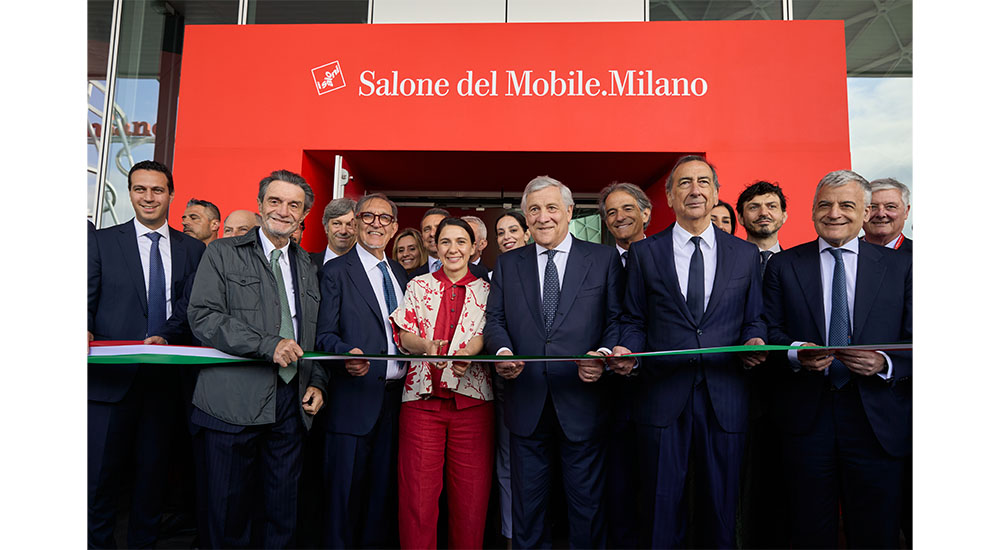
Above: The ribbon-cutting ceremony marking the opening of Salone del Mobile.Milano 2026. In attendance are Sen. Ignazio La Russa, President of the Senate of the Republic; On. Antonio Tajani, Vice President of the Council of Ministers and Ministry of Foreign Affairs and International Cooperation; Giuseppe Sala, Mayor of Milan; Attilio Fontana, President of the Lombardy Region; Maria Porro, President Salone del Mobile.Milano and Claudio Feltrin, President FederlegnoArredo. Photo: Salone del Mobile.Milano
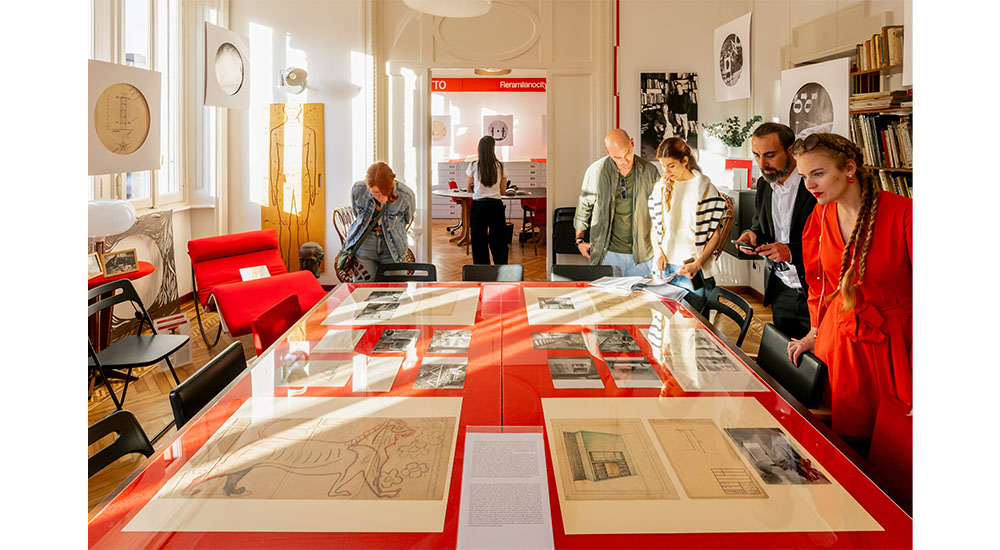
Visitors at the Fondazione Albini during La Notte Bianca del Progetto. Photo: Salone del Mobile.Milano
The focus on the role of design as a steadying influence was continued in special events and the content of the fair itself. For the “Common Archive – La Notte Bianca del Progetto (The White Night of the Project)” event, nearly 20 of the city’s historical design and architectural archives were opened to the public. Of the opportunity, Porro said, “Milan will present itself for one evening, not as a stage, but as a living memory, an essential legacy for research, education and the transmission of knowledge.”
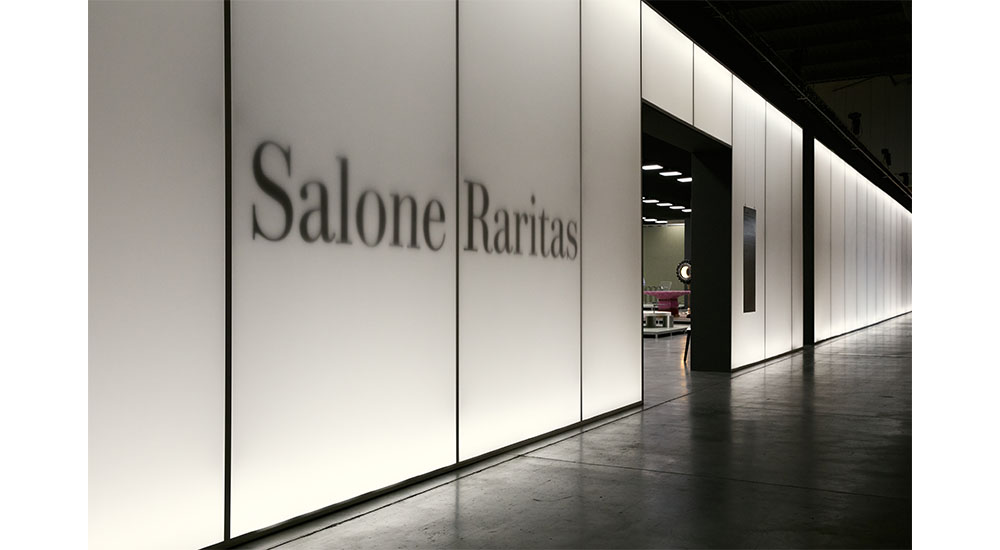
Photo: Courtesy Salone del Mobile
A new section of the show, called Salone Raritas, also reinforced the idea of design as a singular force. Curator Annalisa Rosso assembled 28 unique galleries from 12 countries, featuring limited editions and outsider creations that used rarity as a language. Every object told a story bridging craftsmanship, culture and contemporary vision.

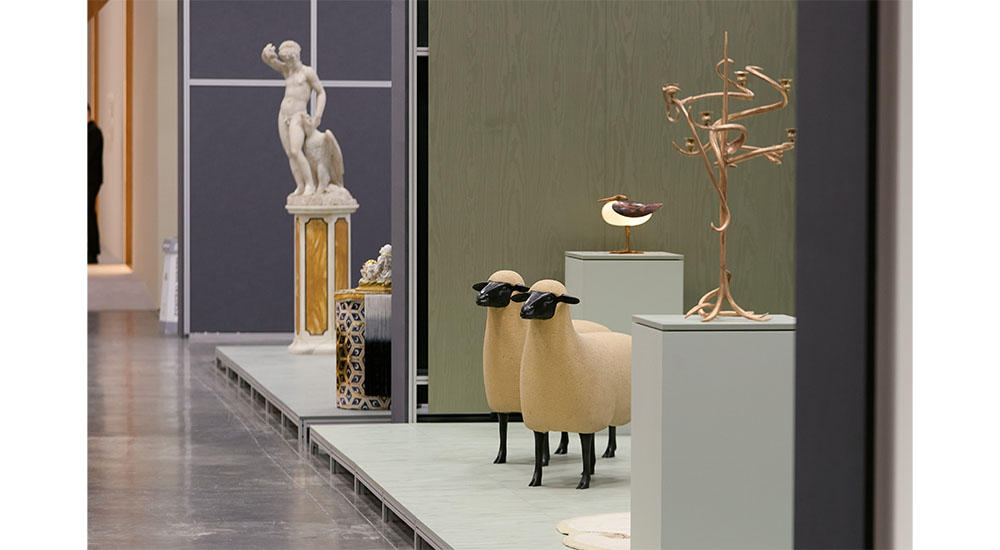
Mitterrand Gallery at Salone Raritas. Photo: Courtesy Salone del Mobile
Show Floor Observations
Noticeably absent at this year’s Salone was any mention of “luxury.” Instead, inconspicuous consumption ruled product design and presentation.
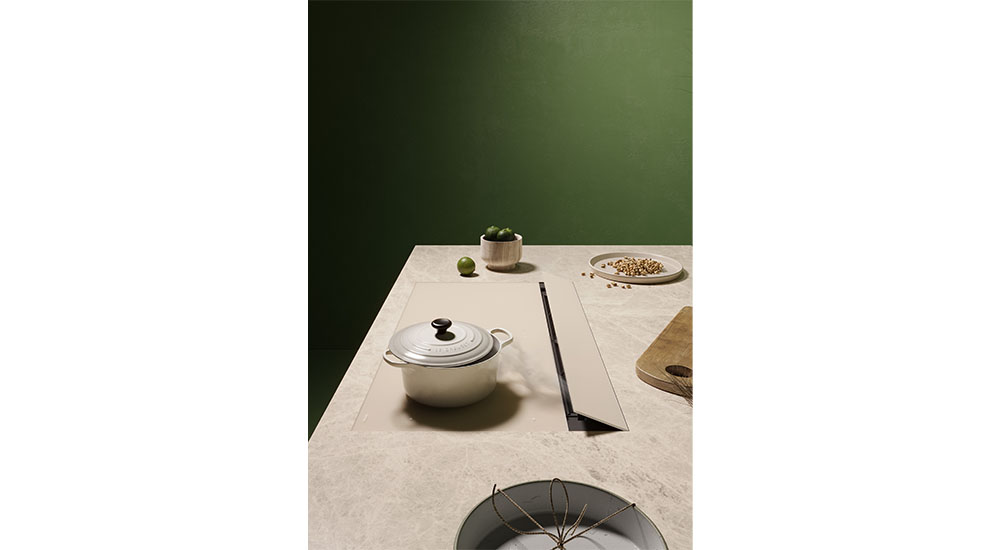
The Brera Slim cooktop and downdraft vent from Falmec blend into the counter surface. Photo: Falmec
In the kitchen, this meant appliances that were unfussy in design and a clad in a quiet matte finish. Examples include Falmec’s Brera Slim cooktop, ASKO’s Celsius oven and the exquisite Aura range from Glem Gas. Warming drawers have been upgraded in function, now acting as steaming compartments.
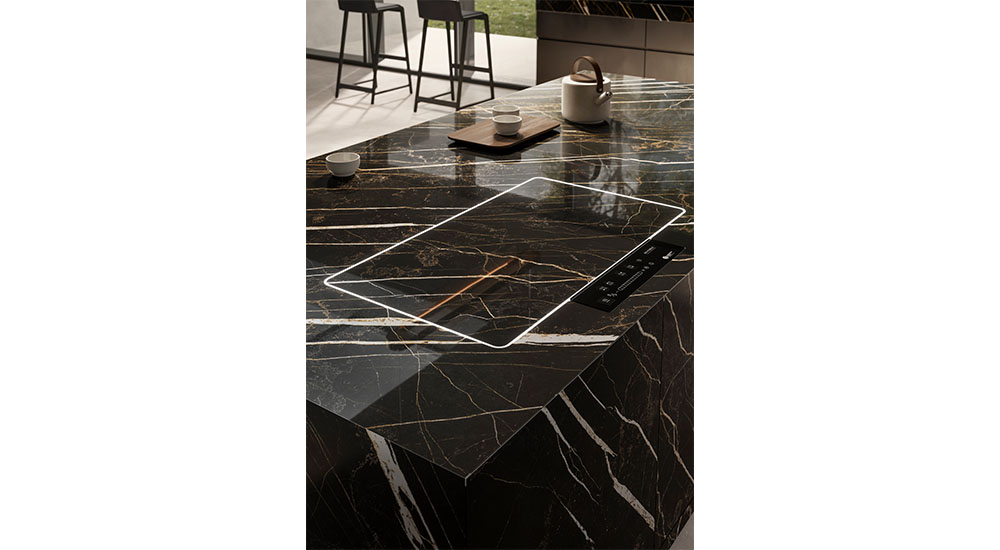
In its Ghost product, Casalgrande Padana integrates cooking technology into the porcelain slab cladding the kitchen island. Photo: Casalgrande Padana
Cabinets
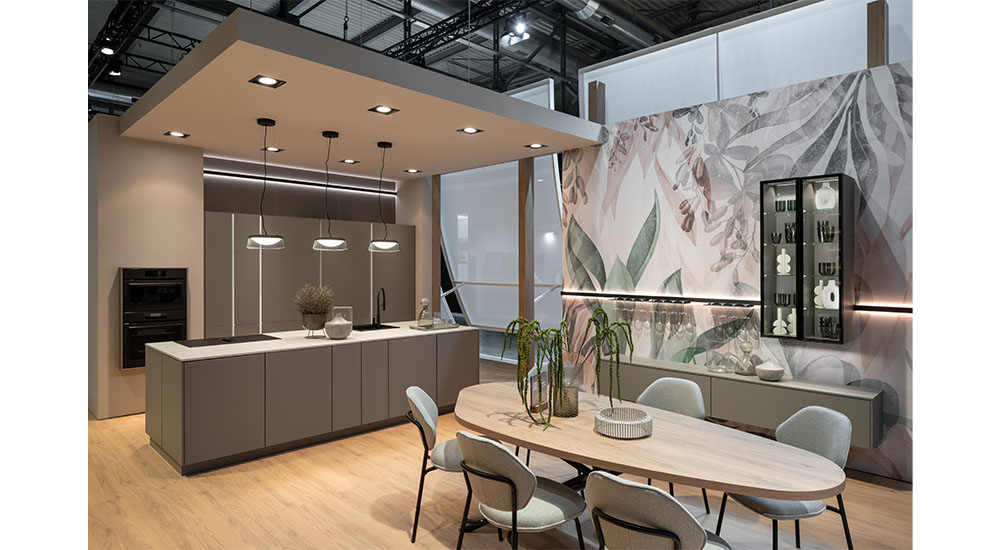
An understated design from Nobilia integrates into the living space. Photo: Saverio Lombardi Vallauri
Cabinets continued the pared-back ethos in a number of ways. Solid door fronts and drawers were often supersized, the better to show off the finishes of the large continuous planes of laminate or wood. Integrated finger pulls or push-to-open hardware precluded the use of distracting decorative hardware.
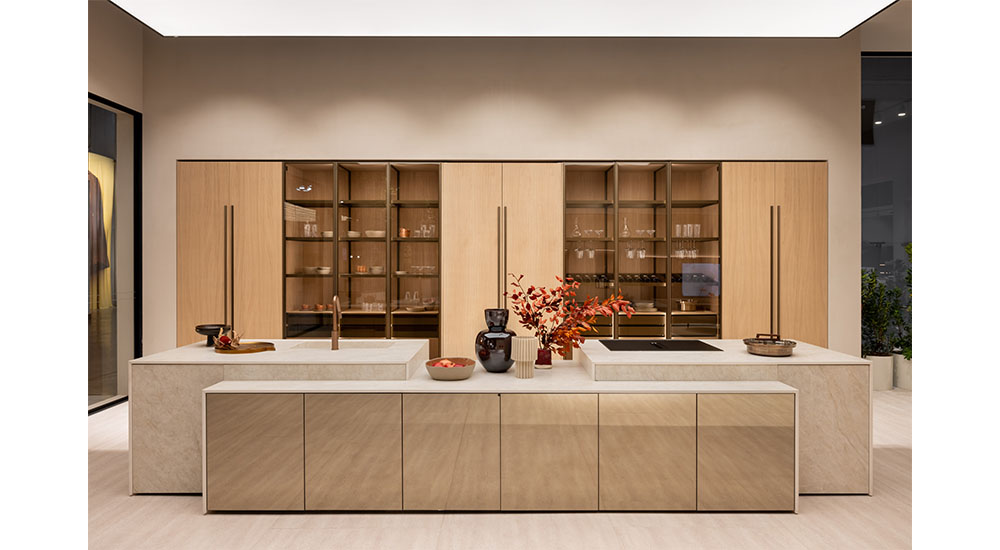
At the Stosa Cucine booth, the island massing exhibited a reassuring solidity while the glass cabinets tempered the installation with lightness. Photo: Saverio Lombardi Vallauri
Perhaps reflecting our collective desire for transparency, glass doors were surging. Glass doors put the onus on homeowners (or stylists) to curate the contents of their cupboards, establishing a needed sense of order in a chaotic world. In an evolution of the open plan, full-height freestanding cabinets – double-faced in glass – were used as subtle spatial dividers.
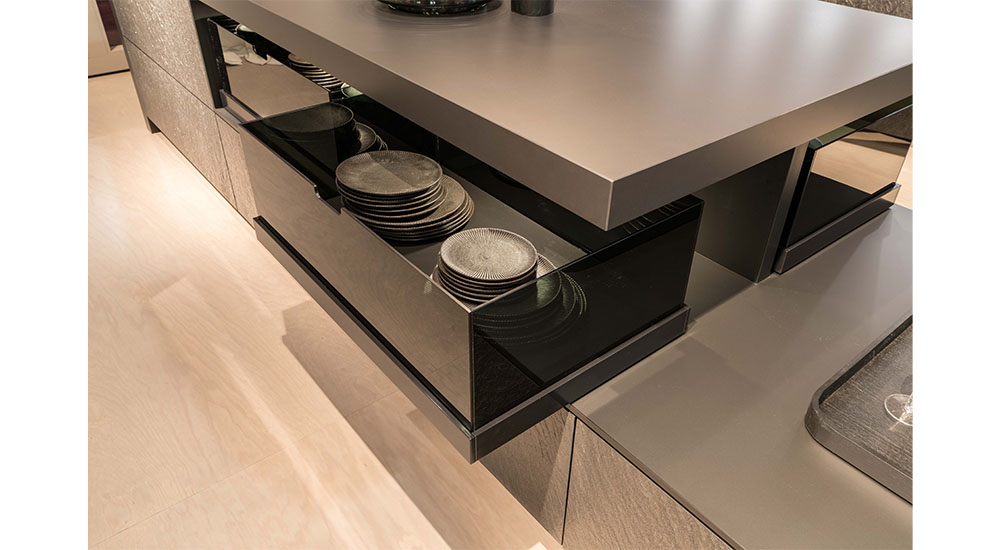
The use of glass extended to these drawers by Häcker Kitchens, fabricated of polymer glass in a metallic carbon color. Photo: Häcker Kitchens
In the Bath
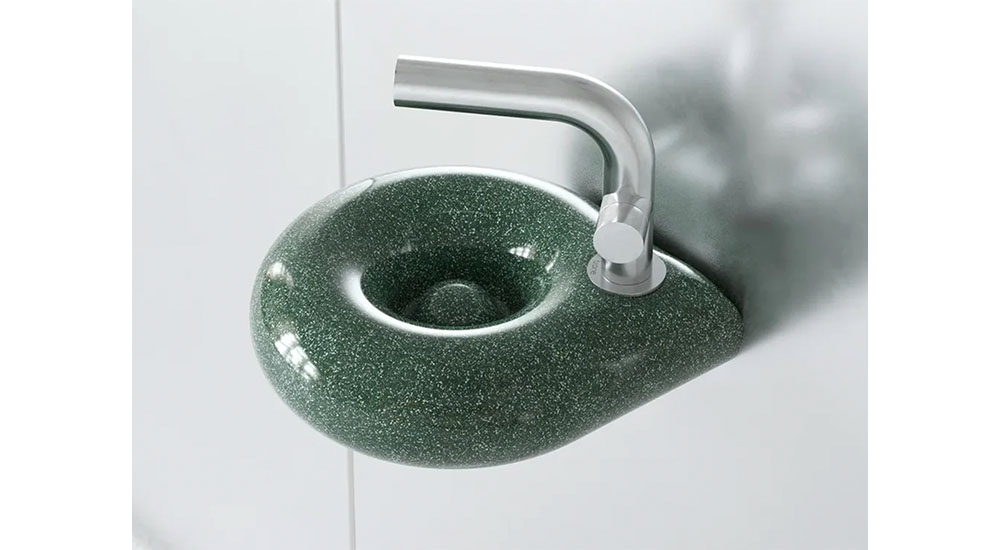
The Orbe hand basin takes its rotundness to the max, with even the drain cover a sphere. Photo: Trone
In the bath, cabinet treatments were much the same as in the kitchen – no frills and meticulously detailed. Floating vanities were the rule, and were frequently paired (or tripled) with complementary wall-storage units.
As far as surfaces were concerned, few if any 10-foot slabs with gaudy patterns or glittery veining were on display. Instead, surfaces sported smaller and denser aggregate, with special attention given to realistic textures. Neolith debuted an adobe-like product.
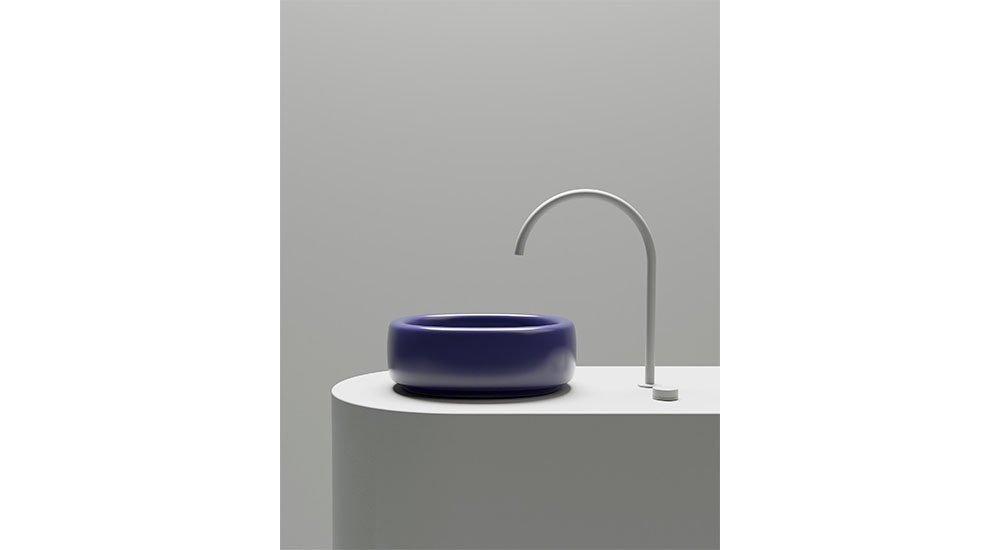
Valdama’s aptly named Bold sink made a statement in shade and shape. Photo: Valdama
Color, form and shape all worked to reassure. Rich earth, forest and ocean hues were solid and grounding. Curves and circles, whether radius corners for counters and cabinets or puffy, donut-like rims on bathroom sinks and tubs, extended a comforting embrace. While obvious in appearance, there are deeper implications of the geometry – not just a softer look, but a reference to circularity in both the sustainability and historical sense.
A Matter of Salone
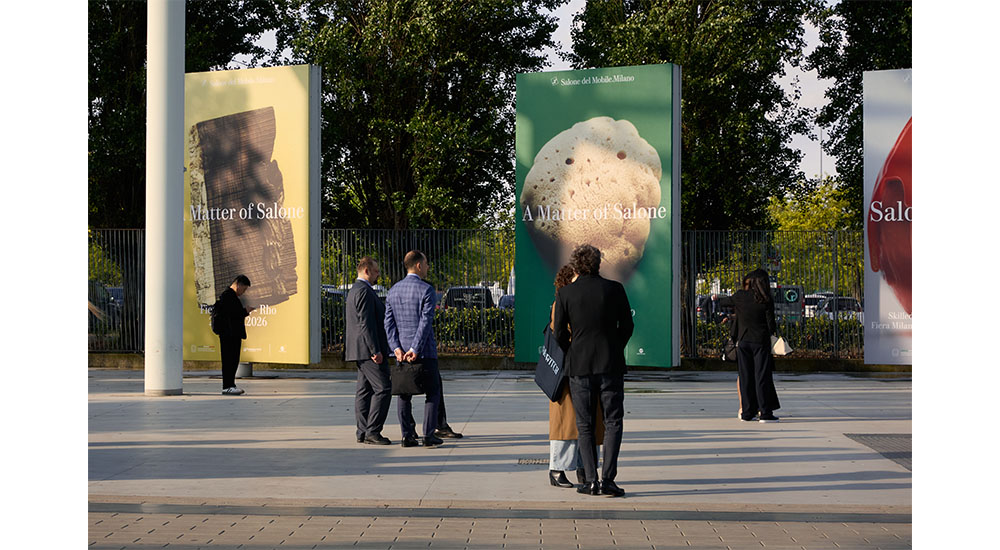
Photo: Salone del Mobile.Milano
Visible throughout Milano, the visual campaign “A Matter of Salone” posed food for thought for visitors to the city’s celebration of design. Signage with huge photos of wood, a flower petal, a sea sponge and a stone sparked a realization that the phrase had a dual meaning – one definition of matter focuses on materiality; another definition of the word revolves around significance. The message was that design is no longer just a question of form or function: it is a process by which what is tangible is transformed into meaning and value.
Federico Grassi, creative director of Motel409, the agency that devised the campaign, said, “We didn’t want to illustrate design, but to evoke it. To experience it visually and sensorially, letting the material itself tell the story – and the Salone was, as always, the space in which this transformation could take place.”