
For individuals confined to their home – whether because of age, disability or chronic illness – their residence becomes both sanctuary and lifeline. But it can also be a place of isolation, risk and daily challenges.
Today, technology is rewriting that story. From voice-activated assistants to telehealth platforms and intelligent lighting to wearable health trackers, the modern home can be transformed into a hub of safety, independence and connection. The key is not just adopting gadgets but integrating them thoughtfully into a person’s life – meeting their needs, respecting their dignity and empowering them to live fully.
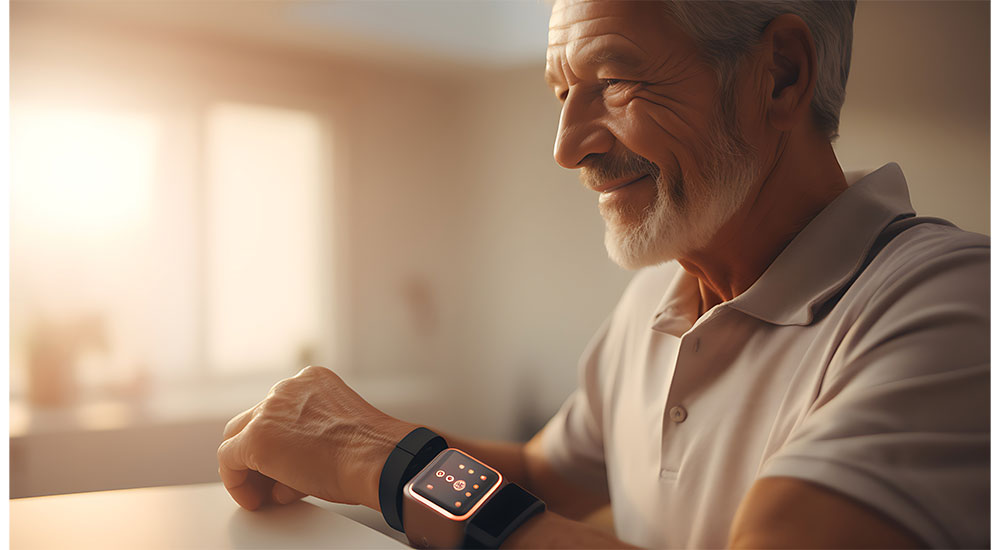
Above photo: Condition-specific wearable health trackers like CPAP machines integrate with mobile apps, giving users and providers a clear picture of ongoing health trends.
Photo credit: Zamin/stock.adobe.com
Eliminating Isolation
Information and communication technology has become a lifeline, enabling regular check-ins with family, friends and healthcare providers. Video calls, secure messaging apps and even simple text alerts allow for real-time updates on health conditions. A daughter across the country can see her father’s face every morning. A nurse can assess a patient’s wound healing without stepping through the door.

For individuals with speech or hearing impairments, specialized apps like Voiceitt, Predictable, Talkitt or Voice4U interpret vocal patterns or convert text to speech, ensuring communication remains clear and accessible. For the deaf or hard of hearing, visual alerts, vibration bracelets and bed shakers can signal everything from a doorbell ring to a smoke alarm – bridging the gap between safety and independence.
Safety Meets Simplicity
The smart home revolution has moved far beyond convenience; it’s now a cornerstone of accessible living. Voice-activated assistants like Amazon Alexa, Google Home or Apple HomeKit can control lighting, adjust thermostats, lock doors and even open windows. For someone with mobility challenges, that means no more struggling to reach a switch or cross the room to adjust blinds.
Automated lighting – whether through occupancy sensors, voice-enabled switches or circadian lighting systems – can prevent falls, support healthy sleep cycles and create a more comfortable environment. Smart locks and remote-controlled doors enhance both security and autonomy. A caregiver can unlock the door for a visiting nurse from miles away, while the resident remains safely inside. Even automatic window openers and motorized blinds can be life-changing, allowing fresh air and natural light at the touch of a button or a simple voice command.
Care at the Kitchen Table
Telehealth has emerged as a powerful tool for delivering medical care without the need for travel, a critical advantage for those who are medically homebound. Through secure video consultations, patients can receive follow-up care, medication adjustments and even certain diagnostic assessments. Remote patient monitoring systems such as Medicare-qualified devices track vital signs, medication adherence and other health metrics, sending data directly to healthcare providers. While research continues into how telehealth compares to in-person care, its benefits are undeniable: reduced exposure to illness, lower transportation costs and the ability to involve family members in care discussions from anywhere in the world.
Care That Fits the Individual
Mobile health technologies are making care more personal than ever. Apps can track everything from blood glucose levels to daily activity, offering tailored recommendations and alerts.
Smart pill dispensers ensure medications are taken on time, with reminders sent to both the user and their caregiver. Wearable health trackers monitor heart rate, oxygen saturation and sleep quality, alerting medical teams to potential issues before they escalate. Condition-specific devices like CPAP machines integrate with mobile apps, giving users and providers a clear picture of ongoing health trends.
The beauty of mHealth lies in its adaptability; solutions can be scaled to match the user’s comfort level with technology, starting simple and expanding as confidence grows.
Technology as a Partner, not a Crutch
Perhaps the most profound impact of home technology is its ability to foster independence. For many, this isn’t about doing everything alone, it’s about having the tools to live life on their own terms. That might mean panic buttons placed strategically throughout the home for immediate assistance. Mailbox sensors can alert when mail has arrived, reducing unnecessary trips outside. Electronic shower controls can maintain safe water temperatures and prevent scalding. Water leak detectors not only send alerts but automatically shut off the water supply to prevent costly damage. Even entertainment systems, when integrated with voice control and closed captioning, can help individuals stay engaged with the world – watching the news, joining virtual events or connecting with loved ones.
Designing for the Whole Person
Technology works best when it’s part of a holistic approach that considers the person’s environment, abilities and goals. That’s where the interprofessional team comes in – architects, system integrators, designers, contractors, occupational therapists and, most importantly, the homeowner themselves. Planning at the earliest stages ensures that every feature – from Wi-Fi placement to smart lighting – is optimized for accessibility and ease of use. It also allows for customization, because there is no one-size-fits-all solution.
Overcoming Barriers
While the benefits are clear, challenges remain. Many people still have privacy concerns around monitoring devices. Of course, technology adoption means hurdles for those unfamiliar or uncomfortable with new tools. Cost barriers have and will always be a factor, which can be addressed through grants, government programs and nonprofit assistance. Resources like the USDA Single Family Housing Repair Loans and Grants, Starkey Hearing Foundation and America’s VetDogs can help offset costs for eligible individuals.
From Smart Homes to Healthy Homes
Looking ahead, the integration of healthy home technologies will further enhance quality of life. Imagine a home that not only responds to your voice but also will adjust lighting to match your circadian rhythm or monitors indoor air quality and alerts you to allergens. Tracking energy usage to save money and reduce environmental impact aids the user as well as the environment. For the medically homebound, these innovations aren’t luxuries, they’re essential components of a safe, supportive living environment.
Technology alone isn’t the solution, it’s the bridge. The real transformation happens when these tools are paired with empathy, thoughtful design and a commitment to dignity. For the medically homebound, the right technology can mean the difference between isolation and connection, dependence and autonomy, vulnerability and safety.
In the words of accessibility pioneer Selwyn Goldsmith, “Buildings themselves can be disabling when they are not designed to accommodate the needs of all users including those with disabilities.” The same is true for our homes. By integrating smart, accessible technology, we can ensure that home is not a place of limitation but a place of possibility.