For designers tasked with creating a kitchen that can accommodate frequent entertaining, the challenge lies in balancing aesthetic appeal, pragmatic flow and robust functionality. Such kitchens must serve as social hubs, culinary workspaces and seamless connectors to ancillary spaces, all while supporting activities ranging from intimate gatherings to boisterous soirées.
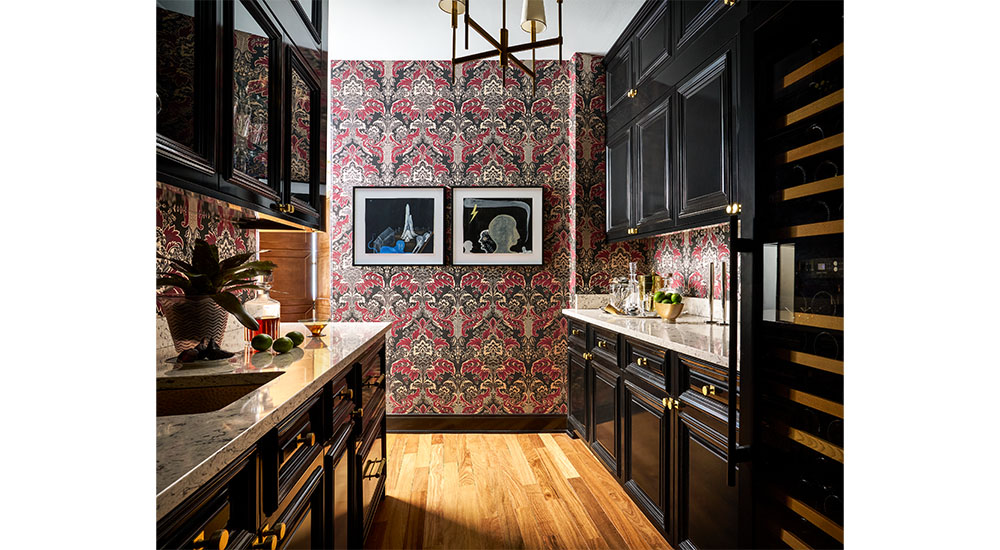
Above: Chicago-based designer Gregory Socha treated his own butler’s pantry as both a conduit (it links the kitchen with living spaces) and a focal point. “I wanted it to be moody and sexy, but functional; a great place to make the perfect Old Fashioned.” It houses his expansive collection of glassware and entertaining accoutrements as well as a column wine fridge. Photo: Ryan McDonald Styling: Darwin Fitz
Here we’ll take a look at key considerations and strategies for crafting kitchens that are both inviting and efficient for the entertainer’s lifestyle.
Layout as the Foundation: Connectivity & Circulation
At the heart of any kitchen designed for entertaining is thoughtful spatial planning. The classic work triangle – linking sink, cooktop and refrigerator – remains relevant, but must evolve to integrate zones for social interaction, beverage service and food prep. Open-plan designs are especially accommodating; they dissolve boundaries between kitchen, dining and living areas, encouraging guests to circulate and converse freely. If a client is hesitant to commit to a completely open plan, consider partial walls, glass partitions or architectural cut-outs that demarcate areas without fully enclosing them.

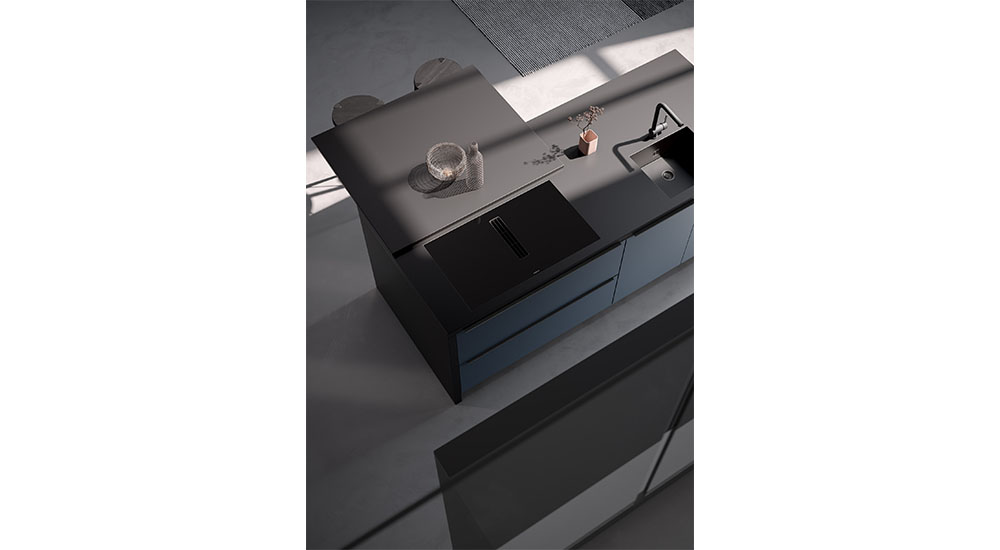
The Flying Bridge movable countertop by Häcker Kitchens expands the surface area of kitchen islands to provide room for guest seating or buffet setups. hackerkitchensus.com
Kitchen islands are a great catalyst for entertaining, with different shapes offering functional options. Rectangular islands can offer expansive worktops and straightforward seating arrangements. L-shaped configurations can be divided into offer dual zones – one for food preparation and another for casual seating – making it easy to transition from cooking to mingling. U-shaped islands can create a cozy, semi-enclosed hub that fosters communal gathering. Curved and oval islands soften the look of the space and encourage fluid conversation, allowing people to interact without sharp corners dividing groups.
Bar design is pivotal for entertaining. Selecting between a wet bar (with a sink) and a dry bar (without) depends on the needs and scale of the entertaining style.
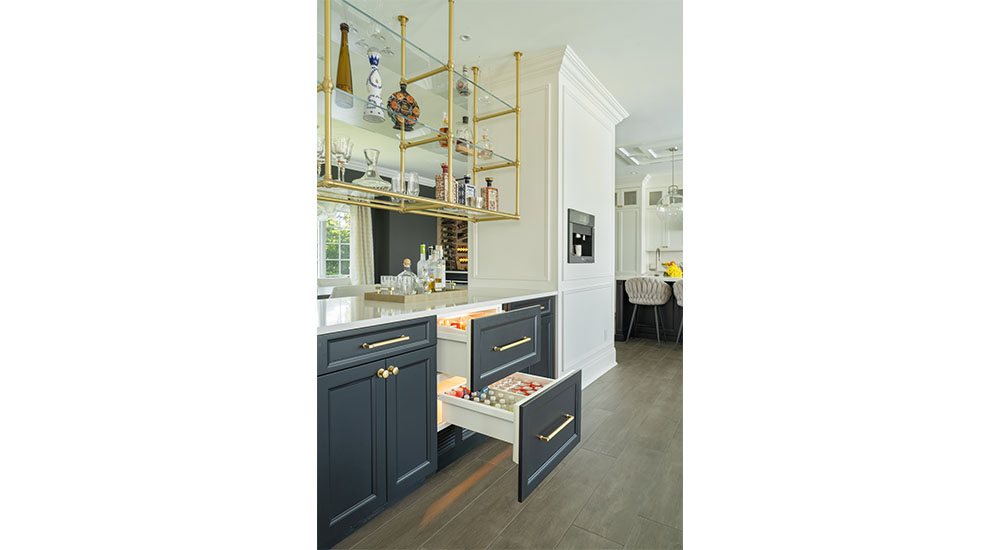
After opening the wall between kitchen and dining room the dining room, designer John Starck of Showcase Kitchens of Long Island created dual-access storage on both sides of the pass-through bar and beverage center. Custom brass shelving maintains an open sightline to water views. Photo: Tim Cree, Creepwalk Media
Wet bars offer greater functionality for mixing drinks, rinsing glasses and prepping garnishes. They require plumbing, but enable a higher level of autonomy for guests and bartenders. Wet bars are best sited near or within the main kitchen, or positioned in a transitional space leading to the dining or living area.
Dry bars rely on proximity to a main or secondary sink for clean-up and prep, but can be installed anywhere, even in hallways or alcoves. Dry bars are ideal for smaller spaces or for occasions focused on wine or non-mixed beverages. Storage for glassware and spirits remains crucial; display shelving can double as a visual focal point.
Appliances: Performance & Placement
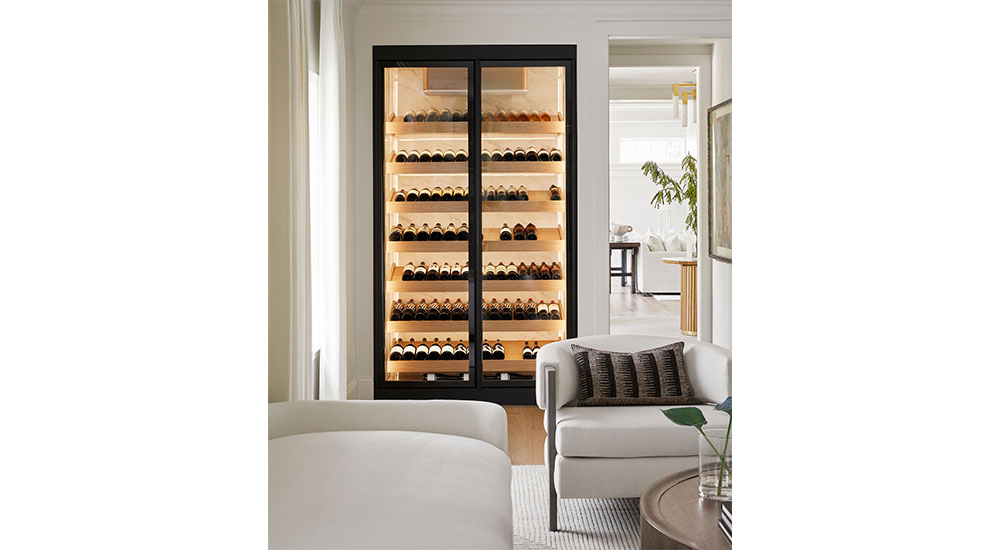
Designed by Maryland-based Feather Hill Interiors, this lounge, positioned off the main living areas, anchors the home’s entertaining space. Crisply framed in black, the illuminated wine storage unit adds a refined note to the room that elevates both casual gatherings and special occasions. Photo: Keyanna Bowen
Appliances must be attuned not only to daily culinary needs but also to the rhythm of entertaining. Professional-grade ranges, double ovens and robust ventilation systems can handle high-volume cooking. Integrated speed ovens or drawer microwaves offer flexibility for warming appetizers or quickly preparing secondary dishes.
Dual refrigeration units, column fridges or under-counter beverage coolers streamline access to and organize chilled wines, mixers and hors d’oeuvres. Locating a secondary refrigerator near the dining area can expedite service. Dedicated ice makers and wine columns are indispensable for cocktail-forward gatherings.
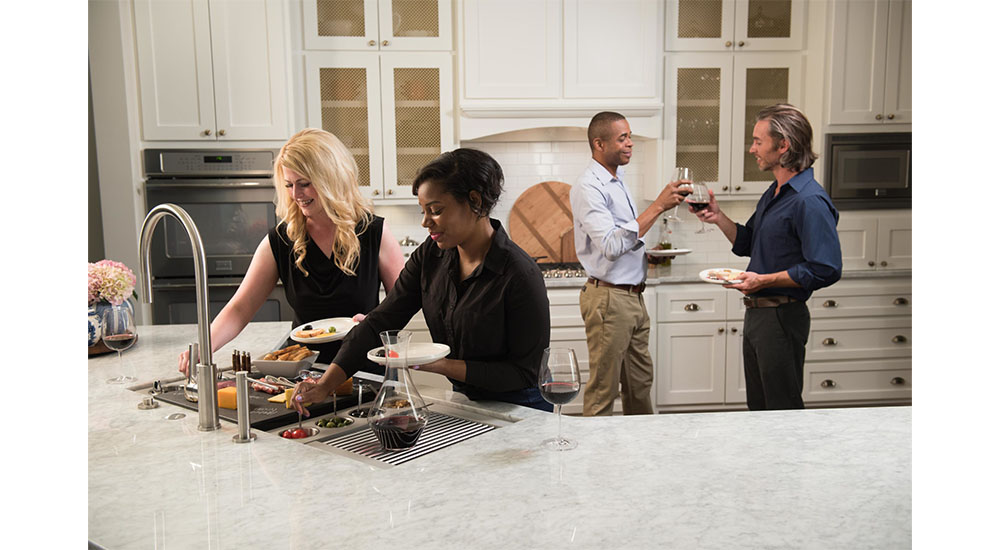
Accessories smooth the transition from prep to serving in this versatile workstation sink by The Galley, which becomes a touchpoint for socializing in the kitchen. thegalley.com
For better or worse, clean-up is part of the celebratory scene. Installing two dishwashers – one in the main kitchen and one in a pantry or ancillary space – enables continuous cleanup without interrupting the flow of the event. Drawer-style models can elevate wet bar installations.
When it comes to placement, appliances should be located within distinct functional zones to minimize cross-traffic. For example, beverage centers and ice makers positioned at the periphery of the kitchen allow guests to serve themselves, while the busy main cooking and prep areas remain reserved for homeowners or staff.
Materiality & Color: Setting the Tone for Hospitality
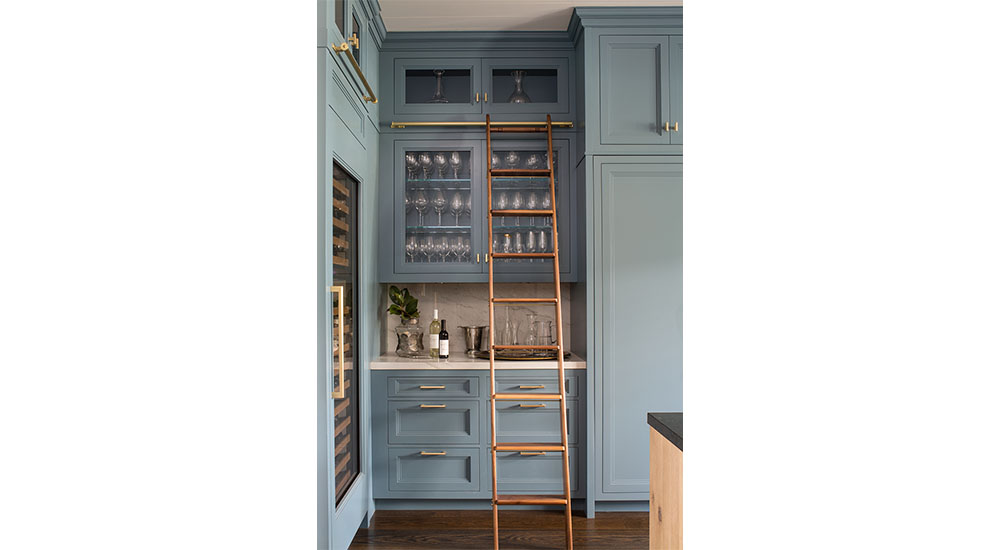
Dedicating a color-washed, compact corner of the kitchen to beverage service, designer Caren Rideau of Santa Monica, Cal. utilized the full height of the room. Photo: Meghan Beierle-O’Brien
Material selections and color palettes serve as silent hosts, shaping guest perceptions and the overall mood of the space.
In kitchens geared toward entertaining, materials should blend durability with drama. For countertops, prioritize non-porous, stain-resistant surfaces such as engineered quartz, porcelain slab or sealed natural stone.
Statement backsplashes – whether in metallic tile, colored glass or patterned stone – amplify the festive atmosphere, particularly if they’re backlit.
Caren Rideau of Santa Monica-based Kitchen Design Group, said, “Adding a pop of color through paint or wall coverings can truly elevate a space. It not only reflects the personality of the homeowner but also injects excitement into any area. Whether it’s through an accent wall, stunning wallpaper, beautiful tiles or bold paint choices, the right color can make all the difference. It’s an opportunity to showcase individuality and create an environment that resonates with your style.”
Specialized Storage: The Entertainer’s Super Power
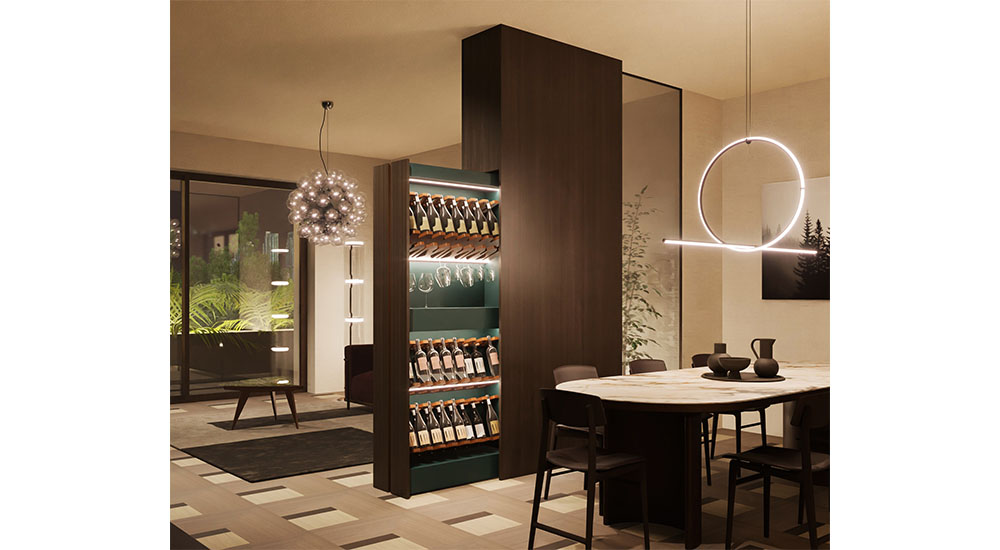
From Protek, Bigfoot Chianti is a space-conscious, non-refrigerated, pull-out wine storage unit that includes a dedicated shelf for glassware and a soft-closing drawer for tasting accessories. Motorized operation, LED lighting, built-in electrical outlets and an electronic lock are optional. protekdesign.it
Frequent hosts require storage that transcends the conventional. Beyond ample standard cabinetry, these specialized features offer solutions both practical and stylish:
– Pull-out pantries: Maximize accessibility to dry goods, snacks, and specialty ingredients with full-extension pull-outs located near food prep zones.
– Custom beverage centers: Incorporate dedicated cabinets for wine, spirits, mixers, and glassware, ideally adjacent to the wet or dry bar.
– Servingware storage: Deep drawers for platters, chafing dishes and serving utensils should be situated close to the prep and dining transition area.
– Concealed trash & recycling: Integrate touch-to-open bins and recycling stations to maintain a clutter-free environment during events.
Creating a kitchen for frequent entertaining is a multifaceted endeavor that demands rigorous attention to layout, appliance specification, material selection and cabinet configuration. By focusing on these features, designers can deliver kitchens that are as memorable as the gatherings they host.