
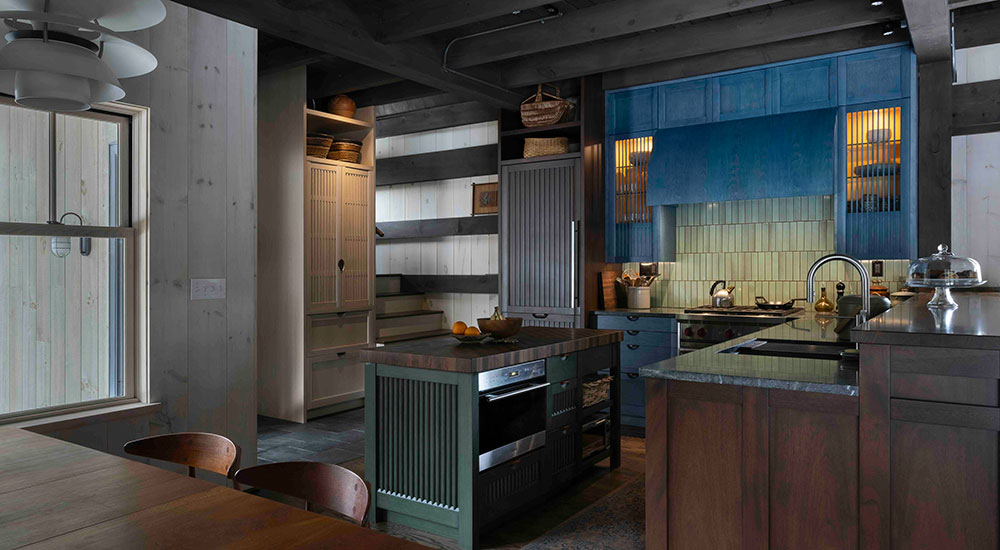
Dutch Made Custom Cabinetry has announced the introduction of Katachi, a bespoke cabinetry and furniture collection designed in Maine by renowned designer Scott A. Stultz. Representing the first comprehensive product collection developed during Dutch Made’s recent renaissance, Katachi establishes a new design framework for luxury cabinetry — one rooted in architectural integrity, timeless craftsmanship, and the relationship between material and form.
The name Katachi derives from a Japanese concept that has no direct English translation yet embodies a philosophy central to the collection: the inseparable connection between form, material, craftsmanship and the natural world. Drawing inspiration from traditional Japanese architecture, Scandinavian modern design and the evolving Japandi movement, Katachi offers designers an entirely new vocabulary for creating deeply personal spaces throughout the home.
Designed exclusively for Dutch Made, Katachi is a frameless cabinetry collection built around three foundational door styles, multiple panel configurations, nine distinctive kōshi screen variations, exclusive hardware, bypass door systems and a curated selection of heirloom-quality furniture pieces. Together, these elements create more than 300 possible style combinations, enabling designers to move seamlessly between Japanese, Scandinavian, Arts & Crafts, transitional and contemporary design expressions while maintaining a cohesive aesthetic language.
At the heart of the collection are the kōshi screens. Derived from the vertically slatted screens found in traditional Japanese architecture, the kōshi elements are a set of vertical profiles that repeat across a door panel, introducing rhythm, depth and shadow to cabinetry surfaces. Kōshi are available in square, half-round and gothic profiles, with the collection allowing varying sizes and spacings to create a multitude of available textures and patterns.

The collection emerged from a multi-year collaboration between Stultz and Dutch Made’s design and manufacturing teams. Working closely with master craftsmen and prototype specialists, including sculptor-turned-cabinetmaker Ryan Goff, Stultz refined each detail through an iterative process of sketching, modeling, prototyping and full-scale implementation.
That implementation culminated in Shinrin No Ie (“Forest Home”), a coastal Maine home that was Stultz’s own residence. Inspired by traditional Japanese minka farmhouses and designed to showcase the full potential of the Katachi collection, the home serves as a living demonstration of the collection’s versatility and architectural character.