
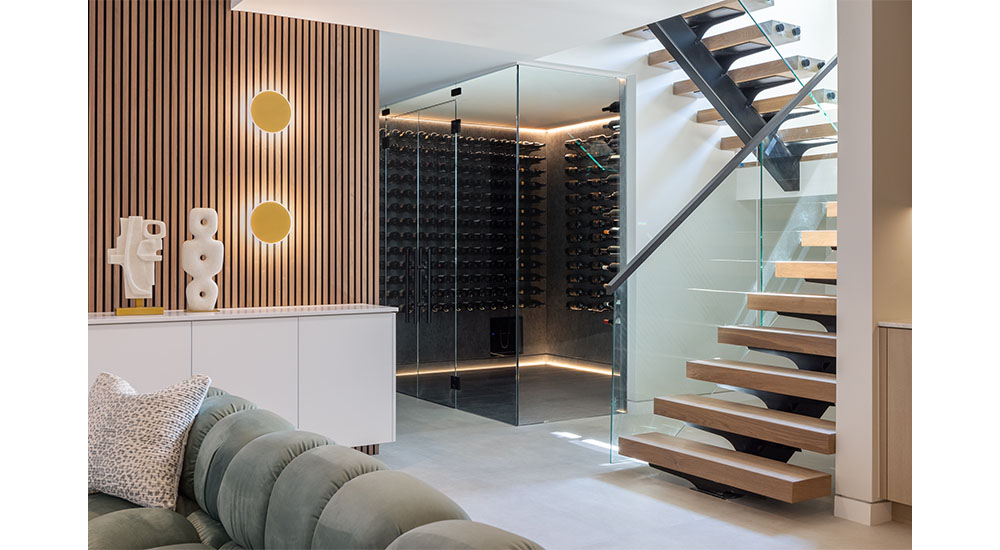
At Kuchar, all of our designs tell a story – and as with all storytelling, every single plot point, character and experience matters. The narrative of a space isn’t limited to its biggest rooms or flashiest design moments; rather, supporting spaces mean just as much as the background characters in a movie or as the minor players on a TV show. Here, I’m sharing a few ways we prioritize transitional spaces.
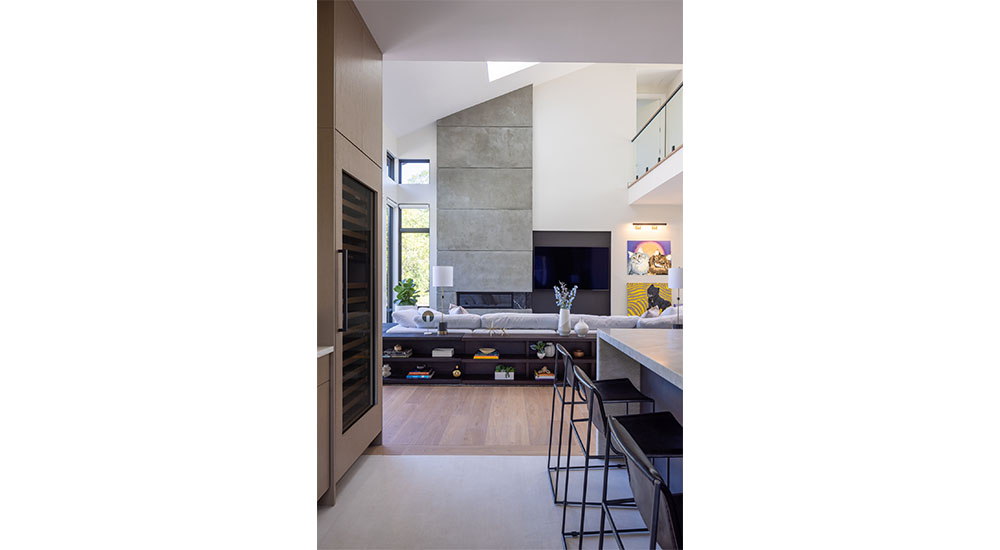
The kitchen and living spaces make a major impact in this Chicago-area home, while its supporting spaces, including the upstairs landing, offer a cohesive transition from room to room. Photo: Wittefini Photography
Transitional Spaces Build the Narrative
When we first begin a new project, it’s crucial to start by fully understanding the context and function of a space. An urban family abode requires a vastly different layout than an empty nester’s vacation home, and a space’s history and background must factor into the design. Case in point: In an early-1900s residence on Chicago’s south side, we worked to ensure that the home’s historic bones and details were considered in the design plan. Each detail and selection that followed honored this era by utilizing this principle as a guide.
Only after determining context can we get to work on the larger design elements within rooms. Not every space can be a main character, and we delineate based on needs and budget. If a family enjoys frequent movie nights in a living space or a bachelor plans to host elaborate dinner parties in his dining room, we’ll put extra attention into those “starring” spaces. That’s not to say every “star” needs to make a bold statement. A project’s most memorable design vignettes can be subtle, neutral or simple. The magic is found by bringing cohesion between these moments.
Perfecting the Details
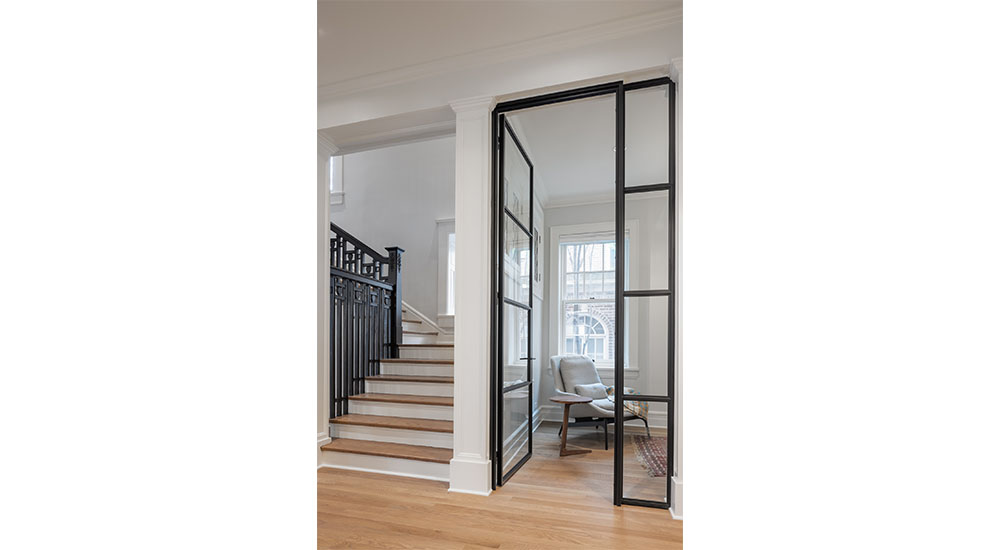
Kuchar referenced details in the existing house – like the original stair railing – in new features such as doors. Photo: Wittefini Photography
There’s a famous quote that says we’re most alive in moments of transition, and why shouldn’t it also ring true in design? In the aforementioned historical residence in Chicago, we incorporated the home’s original woodwork and windows into our design. This gave us the opportunity to play with some more industrial-leaning framework, which we utilized in stairways and doorways. Not only did this design choice add interest to areas that don’t typically serve as headliners (e.g. doorways and transitional areas), but it also allowed us to seamlessly blend old and new, modern and historical.

Blending Functionality and Design
Often, the role of transitional spaces is less functional and more utilitarian – but that doesn’t make their importance or through-line any less crucial. In a residential project in Libertyville, Illinois, stairways feature prominently between the home’s three floors. Rather than creating a unique design moment – potentially pulling focus from the home’s more prominent living spaces and wine cellar – we designed the staircase and hallway to both blend into and highlight the living spaces’ design.
The wood featured in the floating staircase matches that of flooring, cabinetry and other accents throughout the home, ensuring a connection between dining, living and sleeping areas. The upstairs hallway is lined with glass railings, allowing a full line of sight to the beauty of the space downstairs. In its supporting role, it works to elevate the main living room.
It’s proof that no matter how a transitional space is being used, its success lies in its cohesiveness with the rest of the project. It must act as a bridge (literally or metaphorically) between higher-profile design elements. As we look toward our upcoming work, we’re excited to experiment with more creative ways to utilize texture, materiality and color to tell the stories of each project – giving each supporting character and moment its space to shine.
—Sarah Kuchar-Parkinson is Principal & Creative Director of Kuchar