As vice president of the corporate design studio of KB Home, Gena Kirk oversees 30 design teams across the country, working closely with homebuyers to personalize their homes.
Kirk shares her thoughts on what’s cooking in kitchen design exclusively with KBB.
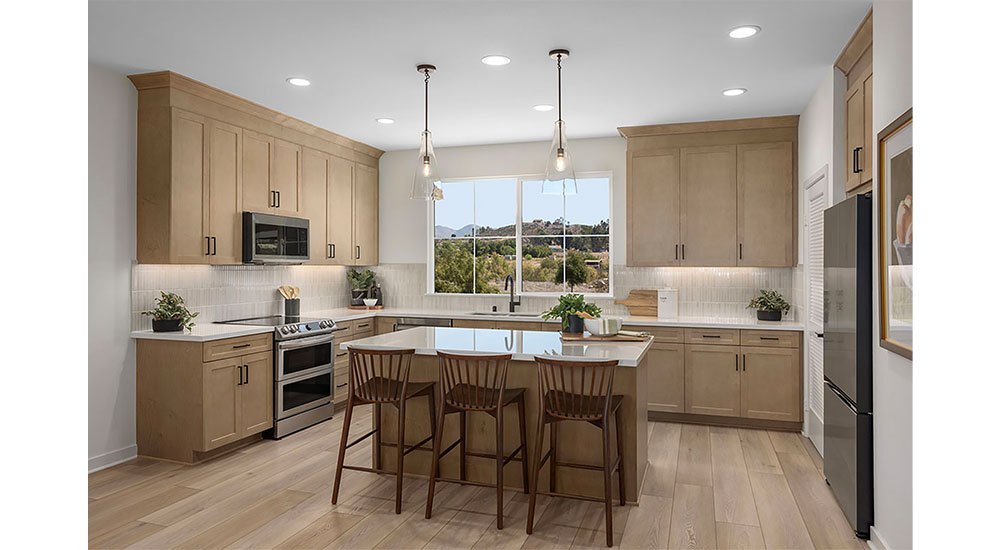
“Kitchens in 2026 are embracing warmth and texture in a big way. We’re seeing a shift away from bright white and towards taupe, creamy whites, mushroom grays and beautiful natural wood stains. While the classic shaker door isn’t going away, it’s certainly evolving as thinner profiles take the lead. Integrated appliances, minimal hardware and seeded glass accents all contribute to a streamlined aesthetic that feels curated, yet livable. Kitchen trends for the coming year will be all about reducing visual clutter while still elevating design details that bring personality and function to the space.”
Gena Kirk’s take on the bathroom: “We’re seeing a continued shift toward spa-like environments that bring nature indoors, especially in the bathroom. Textured materials and natural tones are taking center stage, and larger walk-in showers with oversized tile or innovative cladding products are becoming increasingly popular as they blend continuity and functionality. Zero-threshold showers and frameless surrounds are also gaining traction, as they not only provide a seamless, expansive feel but also support aging in place.”

Below are additional design trends that Gena Kirk sees as gaining ground in 2026.
The New Natural
After years of painted cabinets and all-white kitchens, natural wood is continuing to make a big comeback. While light-toned oak remains popular, richer tones like walnut and darker oaks are returning with saturated stains. Wood is showing up throughout the home, from ceiling beams and accent walls to furniture. Flooring is embracing this trend with options like wood-look tile that mimic natural grain in herringbone and wide plank styles. This trend reflects a desire to reconnect with nature and create a cozier, more inviting environment.
Nostalgia Revival
The trend of nostalgia has evolved beyond a single retro style, becoming a layered approach that blends various historical influences, from familiar palettes and forms of the 1970s to cherished retro aesthetics. Interiors are a rich tapestry of stories and styles, featuring authentic materials like dark woods, velvet and leather, which bring warmth and a sense of history to a space. This approach prioritizes designs with a nod to the past while providing a modern approach for today’s living.
Color Myths
The idea that colors are simply “in” or “out” is a myth. While cool grays have seen a sharp drop in popularity, they haven’t disappeared. The trend is pairing new neutrals with rich, moody colors, like burgundy and chocolate. These combinations and contrasts, from high-contrast black and white to monochromatic or color drenching in rooms, are what make space feel current. There is also a surge in cool-toned, dark and richly saturated colors. You’ll see this trend reflected in the use of sophisticated blue-blacks and a variety of cool-toned blues.
The Mix-Up
Mixed metals are a key trend in home design, moving away from single finish looks to create a layered aesthetic. While classic finishes like chrome and brushed nickel remain staples, we will increasingly see a combination of different metals for a dynamic and sophisticated feel. A key pairing is brushed gold and chrome, or bronzed gold and black stainless.
Another Layer
Instead of focusing on perfection, homeowners are using walls as three-dimensional canvases, embracing a “glimmer mindset” to find delight in small, everyday moments. By hanging woven baskets, weavings and sculptural pieces, you can create intentional moments of joy that add texture to any space. This also aligns with a growing emphasis on sustainability, as a preference for recycled or handcrafted elements over fast consumption products. In the end, these tactile and collected walls celebrate imperfection as a design feature, creating a home that feels authentic and deeply personal.
The Suite Life
Today’s homes are working harder than ever to adapt to the needs of modern families. We’re seeing the traditional “flex room” evolve into something more substantial: a dedicated secondary or junior suite complete with its own private bathroom and, in many cases, a kitchenette or beverage station. This trend in multi-generational design creates a flexible space that can seamlessly transition over time from a launchpad for a young adult to a comfortable, accommodating suite for an aging parent. This shift supports a desire for a home that is as adaptable as the families who live in it.
—Gena Kirk, vice president of corporate design studio, KB Home