Energy consumption at the industrial, residential and commercial levels is steadily increasing — a key theme that shaped the discussions at CEDIA Expo/CIX 2025. AI datacenter needs are piling on additional pressure. Automotive electrification rates are approaching 5%. Grid security is an increasing consideration just as decarbonization and sustainability are being reconsidered and, in some cases, re-prioritized and even deprioritized.
Couple all of this seismic change with regional shifts in politics, economics and consumption around employment, population health and technology — even natural disasters like wildfires — and suddenly, personal energy independence is a lever that many American families may soon pull. And this is before resilience enters the conversation.
Energy is at an inflection point that few could have anticipated just a few years ago.
Here are the 10 leading trends in personal energy independence for 2026, according to CEDIA Expo experts:

- Net Zero Homes — With the right steps taken on both sides of the equation (energy generation and energy consumption), homes can be net zero or even net positive.
- Solar Panel Integration — Decreasing prices and increasing efficiency make solar a compelling proposition.
- Battery Storage — Batteries are getting better and less expensive every year and, as a result, are foundational to resilient, net-zero homes.
- Building Materials — Advances in insulation, glass and roofing (including solar roofs and cool roofs) are making American homes more efficient to cool in the warm weather and heat in colder times.
- Smart Home Technology — AI technology is being integrated into smart home systems that enable autonomous economies and efficiencies, so homeowners need to do less to save energy. Home Energy Management Systems (HEMS) are also becoming a practical reality for homeowners.
- Heat Pumps — Heat pump technology has advanced considerably in recent years and has been shown to deliver significant savings by moving heat/cool from one source (outside in or inside out, depending on the season) vs. generating new heat/cool.
- Better Appliances — Washing machines, dryers, refrigerators, dishwashers, ovens and other home appliances are better and more energy efficient than ever before.
- Lighting — LED, dimming and control technologies are making residential lighting a much more efficient proposition.
- Shading — Shading is an ancient energy management practice experiencing a new epoch in performance and automation.
- Design — Also an ancient practice that has manifested in regional designs that shape the look of homes, towns and cities from Scandinavia to the Mediterranean to Central America, energy management has been elevated to a critical priority by the latest generation of designers and architects.
“Energy is a conversation for every new build, upgrade, and purchase,” said Jason McGraw, group vice president and show director of CEDIA Expo/CIX. “And systems integrators are increasingly critical to that conversation. Systems integrators make homes smarter, safer, more energy-efficient and more resilient. That’s a compelling proposition for homeowners!”
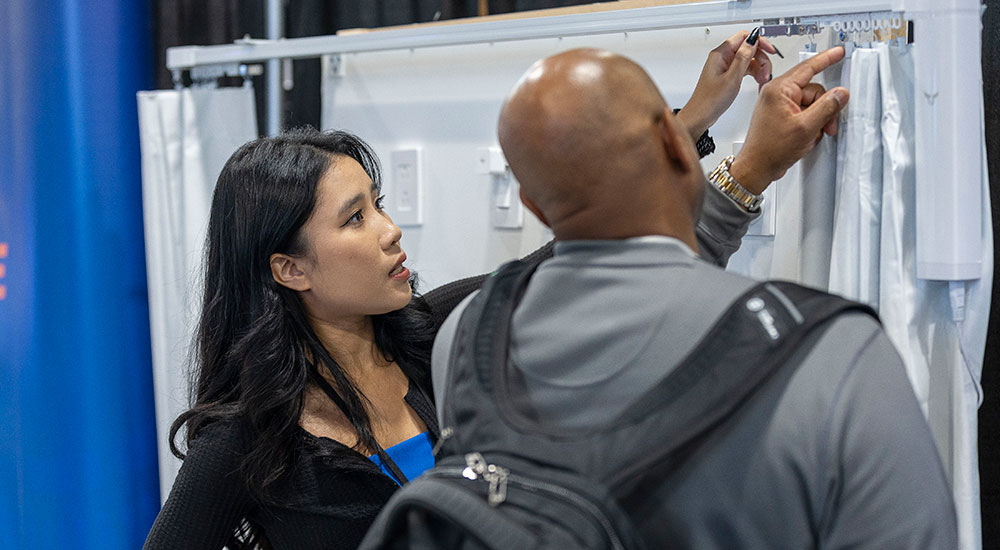
Three companies shaping the future of residential energy management were among the standout exhibitors at CEDIA Expo/CIX this year.
Airzone offers advanced HVAC control technologies that significantly reduce household energy consumption through intelligent zoning and climate optimization. Infratech enhances whole-home efficiency and comfort with its precision electric heating control systems, built to deliver warmth while minimizing wasted energy. Closing out this featured group, Shelly provides a suite of highly adaptable, energy-efficient automation and control solutions that integrate seamlessly with leading professional smart-home ecosystems, enabling homeowners to monitor better, manage, and reduce energy consumption.
CEDIA Expo/CIX will return to Denver from Tuesday, Sept. 1, to Friday, Sept. 4, 2026.