The InFocus Movement: What Happened When I Stopped Bringing My Phone Home
Does being available 24 hours a day actually make us better at what we do? It’s a question I’ve been answering for myself for about ten years.
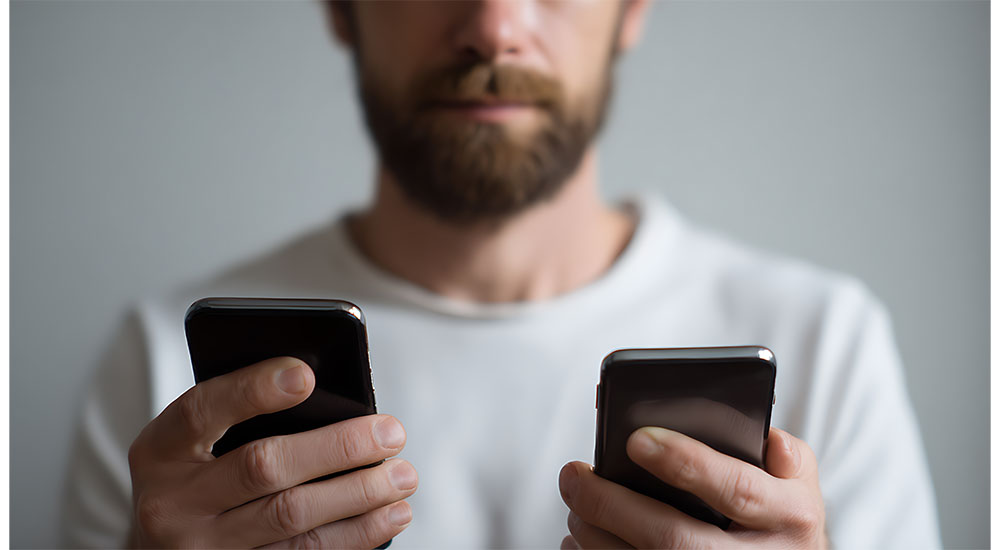
For years, I was attached to my BlackBerry, carrying two phones and tending to them every hour of the day. I believed my constant availability was the key to Fabuwood’s success. I juggled multiple tasks at once and answered emails at midnight that weren’t even relevant by morning.
The turning point came when I was picking out a new phone. As I weighed the options, it hit me: I didn’t own my phone. My phone owned me. There’s a reason they call it a smartphone. It outsmarts you. That night, I left my phone in my car after work, and I never brought it home again. To this day, no smartphone, tablet, or internet device has come through the door of my home.
Without the constant distraction, I learned there is no such thing as multitasking. Splitting attention across 10 things means giving each one 10 percent. When I focus on something 100 percent, I do a much better job. I used to think the phone in my pocket was what let me go 100 miles per hour. It turns out focus is what drives speed.

I wanted a smartphone-free environment at Fabuwood, and at first, people laughed. But at Fabuwood, when something hasn’t been done before, we see that as the reason to do it. In 2022, I started with about 20 leaders and key employees. I asked them how much time the people on their teams would gain each day without a smartphone. Answers ranged from one to four hours, with an average of two. That’s 20 to 30 percent of the workday. Then I asked them to check their own screen time, and they were shocked. It’s easy to see the problem in others and much harder to see it in ourselves. Many agreed to a 30-day trial, and everyone who tried it stayed with it.
Next, I called an emergency meeting and told the whole company we were facing our biggest competitor. People were surprised, because we never talk about competitors. The competitor was the device in their pocket, fighting us for their time and attention. I had been told to prepare for anger, even people leaving. We did not lose a single employee. InFocus became official policy in 2023.
Within six months, productivity rose 20 percent based on our internal metrics. Conference rooms became phone-free InFocus rooms with device shelves outside, and even visiting bankers and attorneys follow the rule. Today, more than 100 of our 1,400 employees have given up their personal smartphones completely, and many more have brought InFocus into their homes.
To make it work, we give employees company devices with the tools they need, and those devices work only on Fabuwood’s Wi-Fi. Teams and Outlook are not allowed on personal devices, so when people go home, they are home. If an issue keeps needing attention in the middle of the night, we build a better system so it doesn’t. Instead of constantly reacting to problems, we ask why they happen and how to prevent them. That is what makes InFocus a culture, not a phone ban.
The feedback that means the most has been personal. One employee came to my office and, through tears, told me he had shared InFocus with his wife. They decided to put their phones away for the evening. Normally, when a conversation got uncomfortable, one of them picked up a phone. That night there was no escape, so they kept talking, all night. He told me, “We’ve been married for eight years with two kids, but I did not know my wife until last night, and she didn’t know me. After today, we’re starting a brand-new marriage.” They both gave up their smartphones.
The impact reaches beyond our walls. A visitor who heard about our policy during a meeting went home and told his family. They made a rule that anyone whose phone rang during dinner would pay the whole bill. It turned out to be the best dinner they’d ever had. Today, more than 10 companies have formally adopted InFocus in some form, and many others have asked for our advice.
We’ve also brought the philosophy into what we know best: cabinetry. In 2025, FreePower wanted to feature its wireless charging technology throughout our booth. I told them that putting phone chargers all over our kitchens went against InFocus. To their credit, they came back with the InFocus Drawer, a kitchen drawer with built-in wireless charging that keeps the phone out of sight.
At its heart, InFocus is not about rejecting technology. It’s about restoring choice: making phones tools we use when we need them, not distractions that dictate our attention. I believe this will become the new norm for successful companies. So I’ll leave every reader with one question: Do you own your smartphone, or does your smartphone own you?
Learn more about InFocus here.
—By Joel Epstein, Fabuwood CEO