
Confindustria Ceramica (the Italian Association of Ceramics) and the Italian Trade Agency announced the winners of the 2026 Ceramics of Italy Tile Competition. For the first time, the competition expanded its reach to firms worldwide, receiving an exceptional response from the international design community, with entries showcasing outstanding architectural and interior design projects featuring Italian ceramic and porcelain tile from Ceramics of Italy member brands.
The award ceremony took place on Sept. 23, as part of the “Building, Dwelling, Thinking” event program at Cersaie 2026.
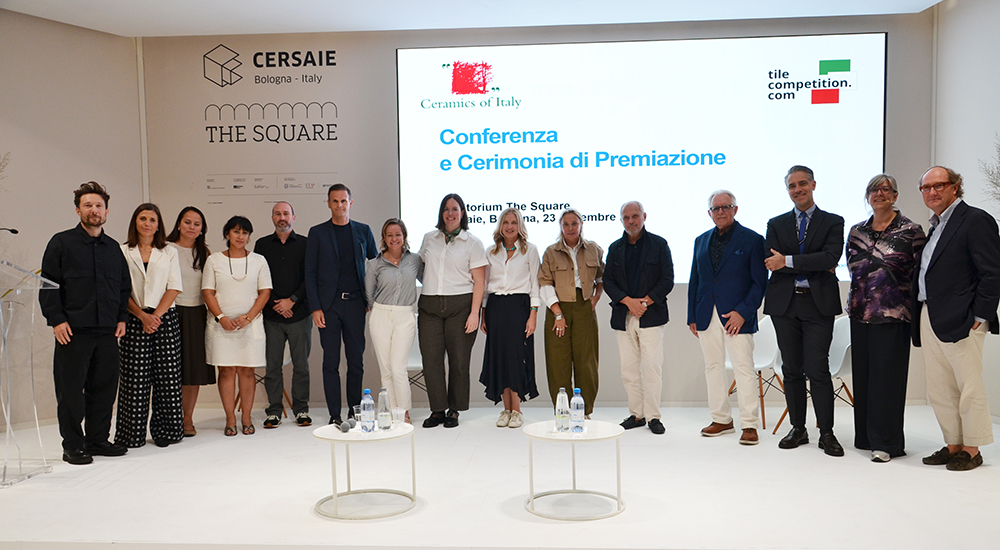
Organized annually by the Italian ceramic industry and Cersaie, the Ceramics of Italy Tile Competition recognizes the world’s top projects that showcase the creativity, versatility and performance of Italian ceramic surfaces across four categories: Commercial, Residential, Outdoor and Design & New Applications. This year, the international jury evaluated an impressive number of entries, considering functionality, aesthetic appeal, sustainability and the amount of Italian ceramic materials used as guiding criteria. The projects spanned across Australia, Canada, Croatia, Ireland, Italy, Malta, Poland, Spain, Switzerland, the United Kingdom and the United States

The distinguished international jury was chaired by Steve Clem, principal at Atlanta-based firm TVS, and included Alfonso Femia, architect, designer, founder and president of Atelier(s) Alfonso Femia; architect Donatella Bollani, who specializes in design, sustainability, and communication and is the former deputy editor of Domus; and Filippo Manuzzi, chairman of the Confindustria Ceramica Promotional Activities and Fairs Commission.
“Serving as chair of this year’s jury was an exciting opportunity to see the remarkable range of architectural and design work being created with Italian ceramic and porcelain tile around the world,” said Clem. “The global expansion of the competition brought forward an impressive diversity of projects, demonstrating how ceramic surfaces can serve not just as finishes, but as integral elements of the architecture. The winners and honorable mentions reflect the creativity and innovation that continue to expand the possibilities of ceramic design.”
The winner in the Residential category was “Spoonbill” in Manalapan, Fla., designed by the studio 610 Interiors, which features tiles from Leonardo Ceramica and ABK. Overlooking a tranquil protected basin, the residence interprets contemporary luxury through a restrained architectural language and a refined minimalist sensibility. Conceived as gallery-like spaces, the interiors are unified by ivory and soft white ceramic surfaces that create a seamless connection between indoor and outdoor environments. Its continuous dialogue with the waterfront and integration into the surrounding landscape define a living experience centered on well-being, where materials, light and architecture come together in perfect balance.
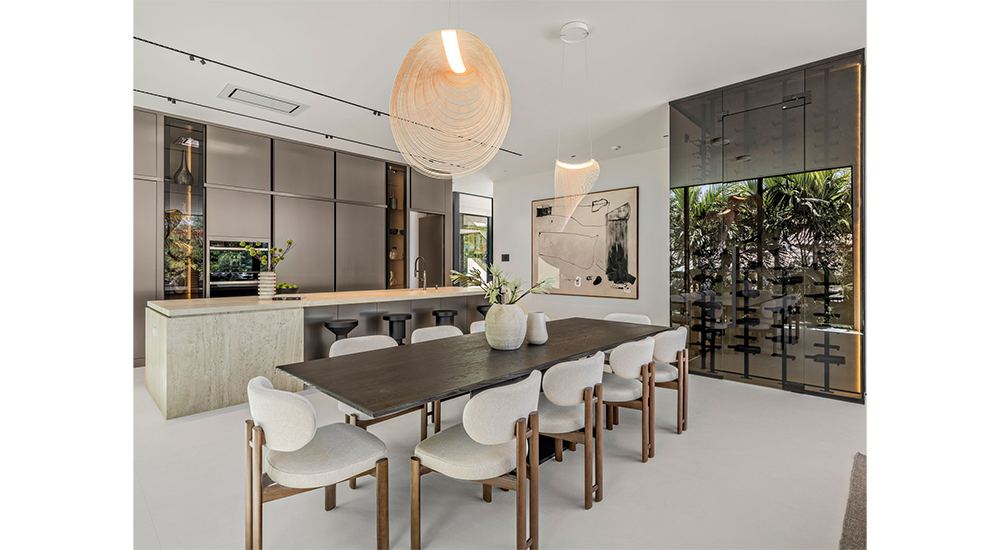
Spoonbill by 610 Interiors
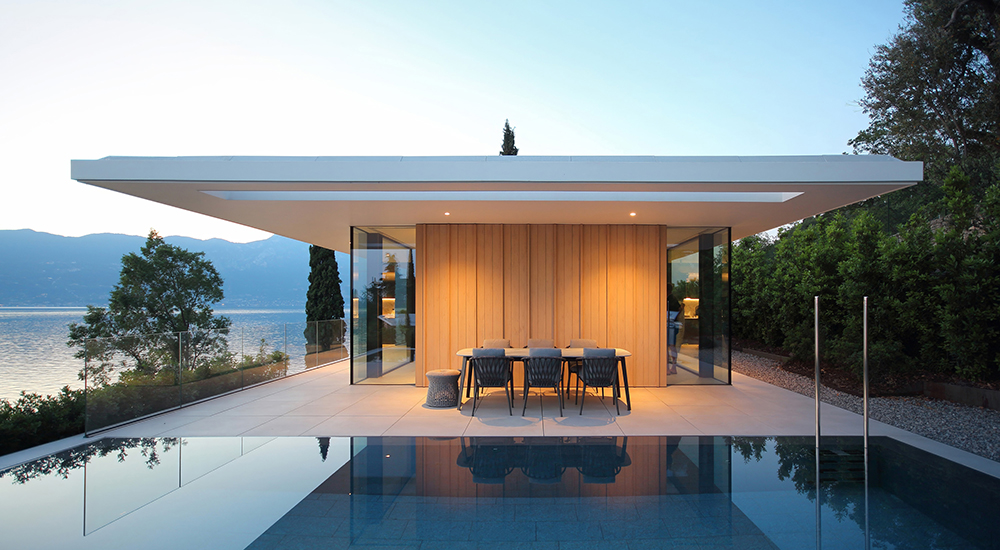
In the Outdoor category, the winner (pictured at top) was “Villa Delago” in Torri del Benaco, Italy, by JM Architecture, which features the use of ceramic surfaces by Casalgrande Padana. Nestled on one of the natural terraces overlooking Lake Garda, the villa blends seamlessly into the landscape, preserving the site’s century-old olive trees and cypress trees. The single-storey pavilion, organized around two generous courtyards, establishes a continuous dialogue with the outdoors through a wraparound portico, defined by a slender white aluminium structure that enhances the porcelain stoneware surfaces. The swimming pool follows the site’s natural topography, while the roof – conceived as a fifth façade and clad in large-format ceramic slabs – emerges as one of the project’s defining architectural features.
The Commercial category winner was “Terradamari Resort & Spa Marina di Modica – Tapestry by Hilton” in Marina di Modica, Sicily, by Studio Chiara Caberlon. The project features tiles from Coem, Fioranese and Ceramica Sant’Agostino. Within the luxury hospitality landscape, Terradamari Resort & Spa interprets relaxation and well-being through architecture deeply integrated into the Sicilian landscape. Designed by Chiara Caberlon, the resort offers expansive sea views and a design that, through ceramic surfaces, reinterprets traditional motifs and natural textures in a contemporary language. Sustainable materials and local solutions complete a project attentive to the environment, the local area, and people.
In the Design and New Applications category, the winner was “Icebergs Bar and Kitchen at Sydney Airport T3” in Sydney, designed by the Lazzarini Pickering Architetti studio using tiles from Franco Pecchioli Ceramica. The project brings the atmosphere of Bondi Beach’s iconic long lunches to the dynamic setting of Sydney Airport’s Terminal 3, offering travellers an immersive retreat within the constant flow of the terminal. Suspended forms, handcrafted glazed tiles from Tuscany and carefully orchestrated lighting evoke the colours and reflections of the Pacific. Ceramic surfaces, wrapping counters and monolithic tables, become the defining feature of the space. Sustainability is expressed through durable materials designed for intensive use and an energy-efficient lighting scheme that maximises the contribution of natural daylight.
The jury also selected five projects as Honorable Mentions.
The Residential category honorable mention was “Private Villa – Bay Hill” by Brooks Design Studio. The project, based in Orlando, Fla., utilizes products by Ceramiche Keope. Designed to dissolve the boundary between indoors and outdoors, this luxury residence creates a seamless spatial continuity between the home’s living spaces and its outdoor patios. Large-format ceramic surfaces in a soft gray tone, inspired by the understated elegance of concrete, establish a unified material language that enhances the dialogue with the surrounding landscape. Completing the project, glass mosaic-effect ceramic surfaces enrich the pool edge, reinterpreting the refined tradition of Italian mosaic craftsmanship through a contemporary design approach.
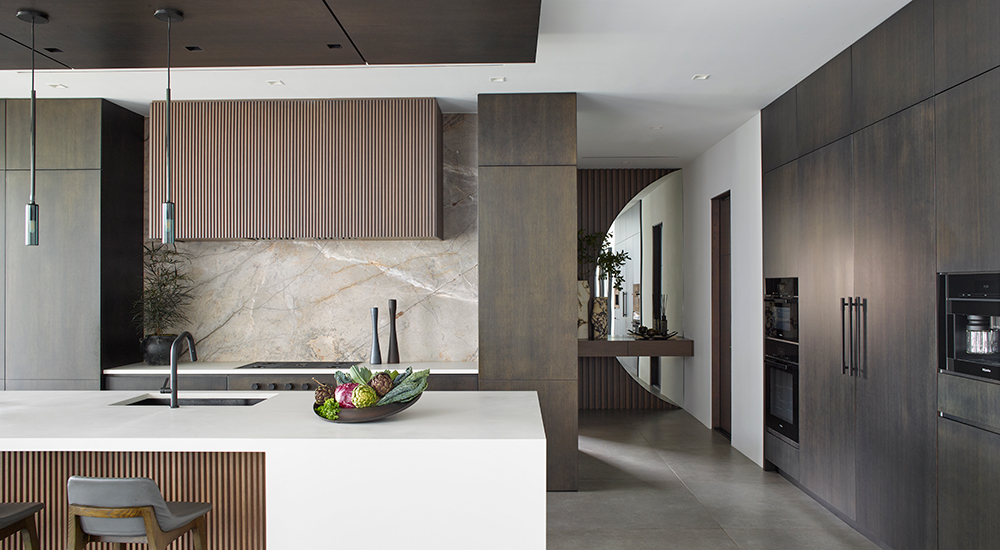
Private Villa – Bay Hill by Brooks Design Studio
The honorable mention in the Commercial category was “AC Hotel Savannah Historic District” in Savannah, Ga. Designed by the firm Design Continuum, the project showcases tiles from Emilceramica, Florim, Cooperativa Ceramica d’Imola and Italgraniti. References to natural textures and the relationship with the river reflect a design approach rooted in sustainability, recognized with LEED Platinum certification.
The “The Atrium House” in Miami by the studio Space & Forms received the honorable mention in the Outdoor category and uses products from Ceramiche Caesar products. This single-family residence reinterprets one of the most widespread housing typologies in the United States, striking a balance between tradition and contemporary design, openness to the landscape and domestic privacy.
In the Design and New Applications category, the first honorable mention went to the “Towerhill House” project in Mono, Ontario, Canada, created by Studio Maggs with tiles from Ceramica Vogue, Laminam, Ragno and Ceramiche Refin. Designed during the height of the pandemic, the residence was born from the clients’ desire to create a retreat of peace, privacy and freedom, in constant dialogue with the outdoors.
The second mention in the category was the “Staples Table” by London-based studio SMITHS, featuring slabs by Casalgrande Padana. Created as an interactive installation to present the potential of ceramics to London’s architectural community, the table challenges a purely aesthetic view of porcelain stoneware by highlighting its strength and construction versatility.