Year over year, the design and construction community looks to trade shows as a pulse check. For architects, builders and designers who walk the show floor, the expectation is often straightforward: see what new products are launching, what materials are trending and where the market is headed.
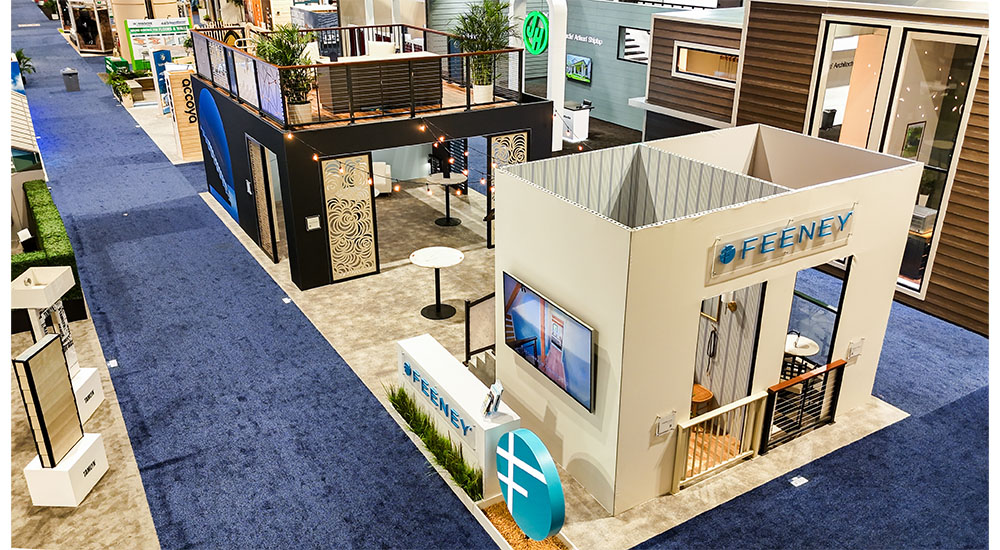
Above: At Design and Construction Week, the Feeney booth featured design partners Kerrie Kelly Studio and Etch Design Group and brand partners Cosentino, Fabuwood, Urban Bonfire, Azzurro Living, FreePower and Kichler. Photo: Courtesy of Feeney
The takeaways from the traditional trade show experience are valuable, but how impactful are they at leaving a lasting impression or telling a story after the show buzz has died down? The brands that prioritize creating an immersive experience over a simple product display tend to go further. Rather than presenting products in isolation, these brands create environments that immerse the guest in how design elements work together in the real world. The most memorable trade show moments are often never built alone. They are the result of designers, manufacturers and brand partners building something together.
The Limits of the Solo Booth
A well-executed solo brand booth can communicate product quality, brand identity and technical capability. What it rarely communicates is context. Products shown in isolation ask visitors to do their own imaginative work, picturing the countertop beside the cabinetry, the lighting above the surface it’s meant to illuminate, the railing within the broader outdoor living space it anchors.

Collaboration rounds out the visual storytelling, where visitors to trade shows can experience the full picture at once. When complementary brands build around a shared creative vision, the environment does the contextualizing. Visitors feel more inclined to gather, sit and enjoy the space the way they would in real life.
The Art of Connection
The most effective multi-brand activations are built around a unifying idea, not just a collection of products. At IBS 2026 for example, Feeney scrapped the traditional booth layout and instead created a space that functioned more like a curated design environment, with indoor and outdoor vignettes reflecting current architectural trends.
Design partners Kerrie Kelly Studio and Etch Design Group were joined by brand partners Cosentino, Fabuwood, Urban Bonfire, Azzurro Living, FreePower and Kichler, each contributing to a cohesive narrative rather than competing for attention within it. The result was a space that could speak to architects, interior designers, builders and end users simultaneously – in a way no single exhibitor could have achieved alone.
Feeney’s presence also extended to the West Hall on the KBIS side, where collaborative installations highlighted the role of integrated design throughout the home.
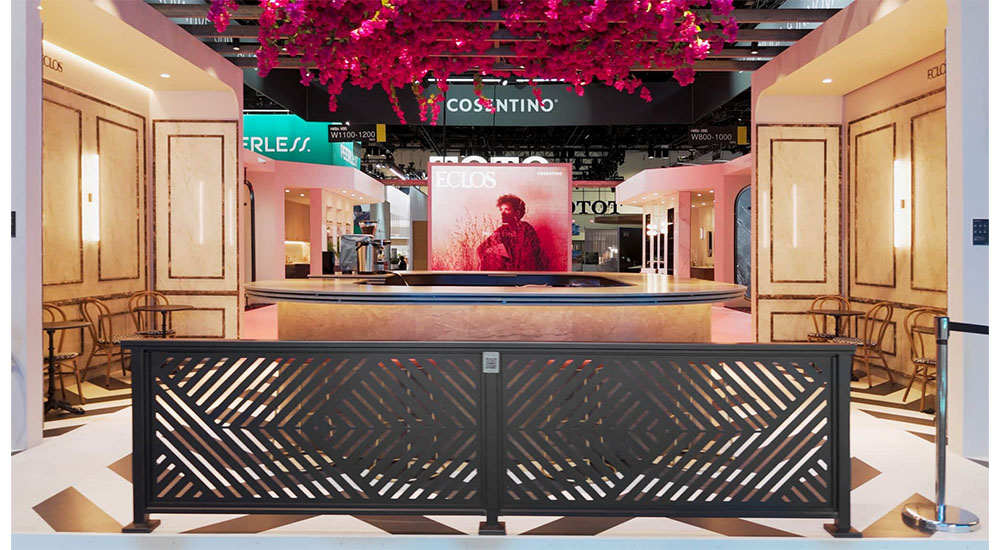
At the Cosentino booth (above), DesignRail Custom with LaserCut and glass infill complemented premium surface applications, while the Urban Bonfire booth showcased DesignRail Custom with LaserCut infill within a luxury outdoor kitchen setting. Together, these installations demonstrated how architectural details can elevate both residential and outdoor environments.
Co-Creation Produces More Relevant Products
Cross-brand collaboration doesn’t just improve how products are presented, it influences what gets made in the first place. When manufacturers work closely with designers and complementary brands, they gain insight into how their products are used, specified and combined in the field. That feedback loop tends to produce more considered, market-responsive work than what happens inside any single brand’s development cycle.
Designers bring cultural context. They’re tracking shifts in how people want to live, work and move through space. When that perspective is integrated early in the process – rather than consulted at the end – the results tend to feel more current and more purposeful.
Shared Stages at Trade Shows = Expanded Reach
With each brand collaboration also comes expanded audience reach. Each brand partner brings its own network, social following and industry community. Post-show coverage that one brand publishes reaches one audience. The same story told across six brand channels multiplies with meaningful overlap among the specifiers and decision-makers who matter most. In the kitchen and bath space, where purchase decisions are research-intensive and involve multiple influencers, that kind of distributed reach has real value.
Collaboration as a Long-Term Strategy
What makes cross-brand collaboration worth pursuing extends well beyond the show floor. The relationships formed through a shared activation tend to outlast the event itself. Those partnerships often evolve into co-developed products, shared editorial coverage and word-of-mouth referrals that traditional booth displays rarely achieve on their own. For manufacturers and designers alike, collaboration is a long-term investment in relevance, reach and work that reflects how the industry operates.
—Brittney Morales, Brand Manager, Feeney Inc.