Let’s face it, the world is a busy place, and everyone is working in survival mode trying to stay afloat. It seems to be the repetition of wake up, rush, rush, become inundated with emails and text messages and go home. Most often, it feels as though the only place where we can safely breathe is in our homes. We crave more space, less chaos and a sense of having our lives in order. Our living areas need to reflect this so that we can regulate our nervous system and create emotional well-being.
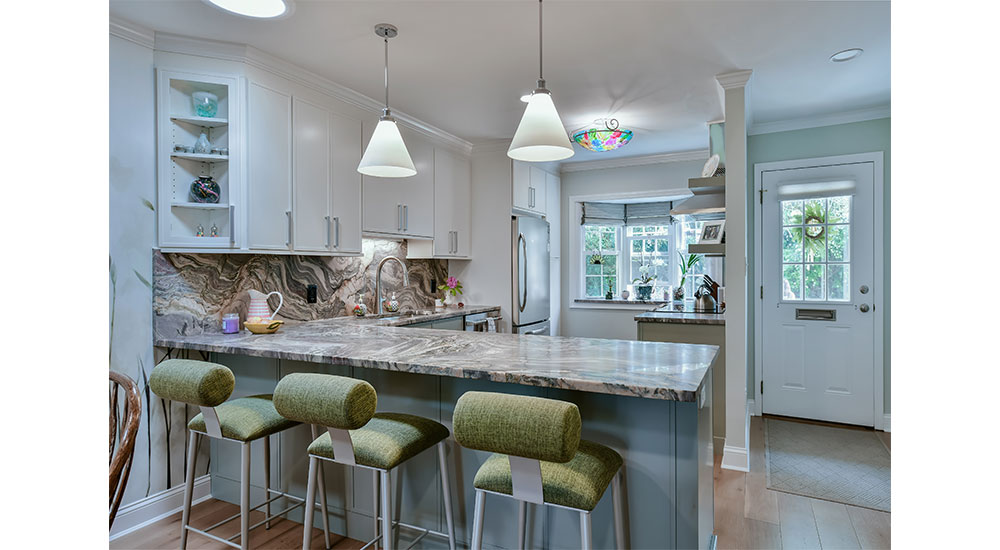
Above photo: Designer Lori Miller created this kitchen with sustainability in mind. She specified a quartzite countertop, recycled glass chandelier, sustainable fabric on the wrought-iron chairs designed by Wesley Allen and low-VOC paint for an elegant and playful design. Photo credit: Ric Marder
We must also stop using products with off-gassing and stop killing our animal eco-system. Using more sustainable choices and recycled materials in our kitchen and bath projects can improve indoor air quality (low-VOC, no off-gassing), reduce exposure to toxins and endocrine disruptors and provide more ethical and environmentally conscious living – reducing subconscious stress.
Where to Begin
Let’s start with eating and sleeping, since those are main functions necessary for survival. Choose organic mattresses that are made of avocados, wool and cotton, as well as latex mattress toppers made from seaweed. Sofas, chairs and other fabrics for the home can be made from vegan leathers or even recycled glass, cork and rubber. Some plant-based leathers are made from cactus, pineapple and/or mushrooms.

Let’s pivot to the kitchen and talk about countertops. Natural materials are available in the form of quartz, quartzite, marble and even soapstone. When designing a sustainable kitchen, the hottest material topping the charts is Taj Mahal – a gorgeous quartzite with a warmer undertone than the perfect white marble. Add in stately FSC-certified walnut wood cabinets, appliances that are energy star rated and a backsplash made of recycled glass. LED lighting and a great skylight can help conserve energy, while counter stools upholstered in faux suede provide the finishing details and layered materials needed for decorating with sustainability as a priority.
When the concept of sustainable design first arose, people were concerned with sick building syndrome, and designing without off-gassing was the primary goal. In 2026, we are now focused on quality of life and not just our health. We care for the planet, our emotional health and our physical health.
Timeless Design Can Be Eco-Friendly
Kitchens and baths designed with longevity in mind reduces waste and renovation cycles, encourages emotional attachment to spaces and saves clients money in the long run. For a long time, we saw a pattern of homeowners purchasing disposable furniture and items that did not cost a lot but had no meaning. We now see the tides turning and people paying more attention to quality. Antiques are surfacing as a hot shopping item, and classic forms with subtle modernity are coveted. This helps reduce waste and increase sustainability.
Many of us joke that the Pantone Color of the year is Cloud Dancer. We loudly proclaimed on our social media pages: WHITE? And yet, in some strange way, this almost makes sense. White is historically associated with purity, innocence and cleanliness, while it also makes spaces feel visually larger and cleaner. This is what we are craving. Maybe Cloud Dancer fits right in with what’s trending: organic and sustainable design.