
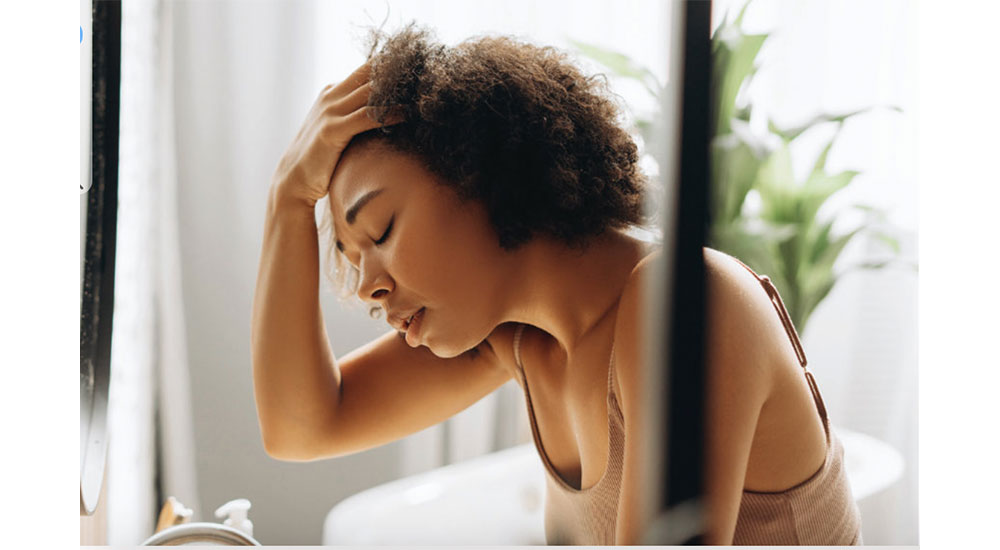
Bathrooms are often promoted as spa-like, places to unwind and let stress disappear. And while they provide comfort, they are the most vulnerable spaces in the home. Here, falls remain the leading cause of injury. At the same time, the bathroom provokes its own emotional stress: the fear of slipping, feeling exposed or worrying about needing help. What should be a restorative environment can quickly become unsettling.
Above photo: When bathrooms are designed through the lens of neurodesign, they can shift from places of anxiety to places of assurance.
Photo credit: Maria Vitkovska – stock.adobe.com
This matters because vulnerability is not only emotional but also physiological. When the body senses risk, the nervous system reacts. Heart rate rises, cortisol floods the bloodstream and muscles tighten. These changes reduce balance and coordination, ironically making accidents more likely. In other words, both physical hazards and emotional unease compromise safety in ways that are deeply connected.
As a trainer in aging in place and a specialist in neurodesign, I believe we must address both. When bathrooms are designed to calm the nervous system, they go beyond functional protection. They provide confidence, dignityand the ability to handle daily routines with ease.

The Physiology of Emotional Safety
When people feel unsafe or stressed, the sympathetic nervous system (fight-flight-freeze) activates. Our systems flood our bodies with stress hormones like adrenaline and cortisol, increasing heart rate and alertness but reducing balance and fine motor skills
The opposite is true when spaces calm the nervous system. Environments that feel intuitive, familiar and soothing allow the parasympathetic (rest and digest) nervous system to engage. A calm mind creates a steadier body.
Materials, Shapes & Textures that Regulate
Humans have evolved with strong pattern and shape biases because our survival once depended on quickly interpreting our surroundings. The brain constantly scans for edges, contours and repeating forms to decide what is safe. Sharp angles trigger vigilance, while curves and balanced patterns reassure the nervous system.
Smooth, matte finishes feel grounding underfoot and to the touch, while highly reflective or slick surfaces create a subtle sense of instability. Textures that signal warmth and familiarity, such as natural stone, wood veneers or tactile tile, help the body return to homeostasis.
Engaging the Senses for Well-being
Bathrooms are inherently sensory spaces, and the way we engage those senses determines how safe we feel. Sound can either calm or disrupt. A noisy fan or the loud sounds created by surfaces like ceramic, porcelain, tile and glass can amplify noise and activate stress responses. Conversely, acoustically absorbent finishes support calm. Scent plays a similar role; natural aromas encourage relaxation, while strong scents create unease.
Some therapeutic bathing systems integrate sensory modalities like aromatherapy, chromo-therapy and hydrotherapy. A bath that pairs warm water with gentle essential oils and shifting light frequencies does more than create atmosphere. It lowers cortisol, regulates breathing and supports parasympathetic activation.
Dignity as a Safety Factor
Bathrooms also test privacy. The fear of losing independence or dignity can be as destabilizing as a slippery floor. Design that preserves dignity, like thoughtful door placement and discreet adaptive features, promotes confidence and calm. When adaptive elements like grab bars or seating blend seamlessly into the design, the space feels empowering rather than clinical. This aesthetic coherence reassures the nervous system.
Conclusion: Safe Bathrooms Redefined
Bathroom safety cannot be defined only by physical barriers. It should also account for the emotional states that either destabilize or steady the body. Calmness, dignity and sensory comfort activate a rest-and-digest response that lowers risk at its root.
Bathrooms are, by nature, are vulnerable spaces. Yet when designed through the lens of neurodesign, they can shift from places of anxiety to places of assurance. The safest bathrooms are not just where slips are less likely; they are where the nervous system feels secure, the body feels steady and the person feels respected. For homeowners, that means moving through a vulnerable space with confidence. For designers, it is an opportunity to redefine safety as emotional and physiological harmony.